

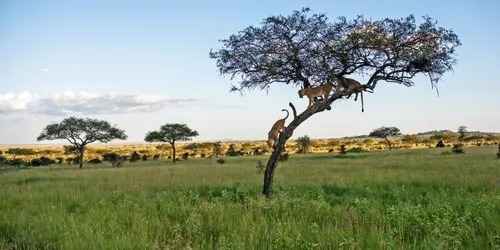
A Kenya and Tanzania safari is the ultimate East African adventure for travelers from the United States. In one trip you can watch lions on the plains of the Masai Mara, follow the Great Migration across the Serengeti, descend into the Ngorongoro Crater and photograph elephants beneath Mount Kilimanjaro. Because the two countries share a border and a single great ecosystem, combining them is easier than many Americans expect.
This guide explains how a Kenya and Tanzania safari works for visitors from the USA: how to get there, how the border crossing works, how long you need, the best time to travel, entry rules for US citizens and sample routes that combine the highlights of both countries.
In This Guide
- Why Combine Kenya and Tanzania?
- Getting There from the USA
- Crossing the Border
- 2 Classic Routes
- When to Go
- Entry Rules for US Citizens
- Planning Tips
- Frequently Asked Questions
Why Combine Kenya and Tanzania?
Kenya and Tanzania are East Africa's two great safari countries, and each has its own strengths. Kenya offers the Masai Mara, Amboseli's elephants with views of Kilimanjaro, the rhinos of Lake Nakuru and the wild north of Samburu. Tanzania offers the vast Serengeti, the Ngorongoro Crater, the baobab-studded Tarangire and the beaches of Zanzibar.
The Masai Mara and the Serengeti are actually one continuous ecosystem divided by an international border. The wildebeest, zebras and gazelles of the Great Migration move between them through the year, so a Kenya and Tanzania safari lets you follow the herds rather than hoping they are in one place during your vacation.
For Americans flying a long way, combining both countries also makes the journey more worthwhile. Instead of one park, you see several very different landscapes, from open grassland and volcanic craters to swamps, lakes and forests. Read our comparison of Kenya vs Tanzania safaris and our guide to how the two countries form one wild land.
Getting There from the USA
Most travelers from the USA begin a Kenya and Tanzania safari in Nairobi, Kenya's capital, which is East Africa's main aviation hub. Kenya Airways operates nonstop flights between New York's JFK Airport and Nairobi's Jomo Kenyatta International Airport, taking around 15 hours. Many other routes connect through hubs in Europe and the Middle East, such as Amsterdam, London, Doha, Dubai, Istanbul and Addis Ababa.
In Tanzania, the main gateway for northern safaris is Kilimanjaro International Airport, near Arusha. There are no nonstop flights from the USA, but one-stop connections run through the same hubs. A popular option is to fly into Nairobi and out of Kilimanjaro, or the reverse, so you avoid backtracking.
Our detailed guide to flights from the USA to Kenya and Tanzania covers airlines, hubs and layover tips.
Crossing the Border
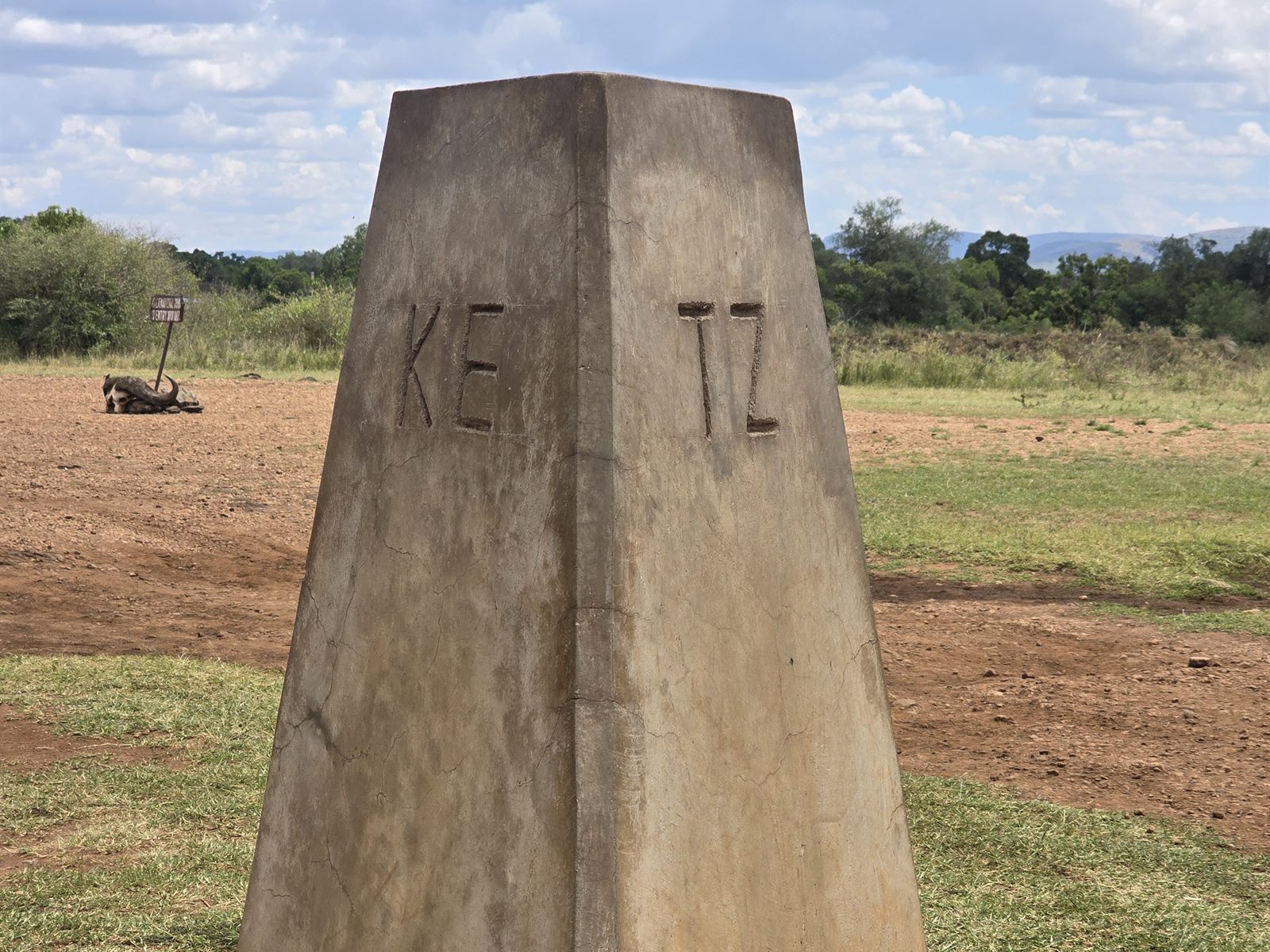
The most common land crossing on a Kenya and Tanzania safari is at Namanga, between Nairobi and Arusha. The drive from Nairobi to Arusha takes about five to six hours, including border formalities, and passes through Maasai country with views of Kilimanjaro on clear days.
Safari vehicles registered in one country generally cannot operate game drives in the other, so you usually change vehicles and guides at the border. Your safari company arranges this handover, so the process is smooth. Shared shuttle buses also run between Nairobi and Arusha.
Although the Masai Mara and the Serengeti meet, there is no regular tourist crossing directly between the two parks. Travelers either cross at Namanga or Isebania by road, or take a short regional flight. Flying between the Mara and the Serengeti saves time and is popular on shorter trips.
2 Classic Kenya and Tanzania Safari Routes
Route 1: The Migration Circuit (10 to 12 Days)
This route follows the herds across both countries and suits travelers who want the classic big-cat and migration experience.
- Days 1 to 3: Masai Mara, Kenya, for big cats and, from July to October, river crossings.
- Day 4: Lake Naivasha or Lake Nakuru to break the journey.
- Day 5: Nairobi to Arusha via the Namanga border.
- Days 6 to 9: Serengeti National Park, following the migration.
- Days 10 to 11: Ngorongoro Crater and return to Arusha for your flight home from Kilimanjaro.
Our 6 Day Masai Mara, Serengeti and Ngorongoro Safari is a shorter version of this circuit.
Route 2: Elephants, Craters and Beaches (12 to 14 Days)
This route adds Amboseli and Tarangire for elephants and ends on Zanzibar's beaches.
- Days 1 to 3: Amboseli, Kenya, for elephants beneath Kilimanjaro.
- Day 4: Cross at Namanga to Arusha.
- Days 5 to 6: Tarangire National Park and its baobab trees.
- Days 7 to 9: Serengeti National Park.
- Day 10: Ngorongoro Crater.
- Days 11 to 14: Fly to Zanzibar for beaches and Stone Town.
See our 4 Day Tarangire, Serengeti and Ngorongoro Safari and 5 Day Zanzibar Island Tour, and in Kenya our 6 Day Amboseli and Masai Mara Safari.
When to Go on a Kenya and Tanzania Safari
East Africa can be visited all year, but the seasons affect where the wildlife is and what the weather is like.
- July to October: the migration is usually in the Masai Mara and northern Serengeti. This is peak season and the most popular time for a Kenya and Tanzania safari, matching US summer vacations.
- December to March: the herds gather in the southern Serengeti and Ndutu for the calving season, when hundreds of thousands of wildebeest are born.
- April and May: the long rains bring green landscapes, lower prices and fewer visitors.
- June and November: transition months, often good value with improving or short-rain weather.
Read our guides to the Great Migration month by month, the best time to visit Tanzania and the best time to visit Kenya, as well as our guide to the best time for a safari from the USA.
Entry Rules for US Citizens
US citizens need permission to enter both countries on a Kenya and Tanzania safari. Kenya uses an online Electronic Travel Authorization, applied for through the official Kenya eTA portal. Tanzania requires a visa, which US citizens can apply for online through the Tanzania eVisa portal.
Note that the East African Tourist Visa covers Kenya, Uganda and Rwanda, but not Tanzania, so you need separate permissions for a Kenya and Tanzania safari. If you leave Kenya for Tanzania and return to Kenya to fly home, check whether your Kenya eTA covers re-entry or whether you need a new one.
Your passport should be valid for at least six months beyond your travel dates, with blank pages for stamps. A yellow fever vaccination certificate may be requested when crossing between the two countries. See our step-by-step guide to the Kenya eTA for US citizens and the Tanzania eVisa.
Key Differences Between Kenya and Tanzania
Understanding how the two countries differ helps you plan a balanced Kenya and Tanzania safari. Kenya's parks are generally closer together and closer to Nairobi, so drives are shorter and it is easy to see a lot in a week. The Masai Mara is compact and packed with wildlife, and private conservancies around it offer night drives and walking safaris that are not allowed inside most national parks.
Tanzania's northern parks are larger and feel more remote. The Serengeti alone covers almost 5,700 square miles, about the size of Connecticut, and the Ngorongoro Crater is a unique, self-contained world of wildlife inside an ancient volcano. Distances are longer, so many travelers use light aircraft to move between parks.
Culturally, both countries share the Maasai people and the Swahili language, but each has its own character. Kenya's capital is a modern, fast-paced city with attractions such as the Giraffe Centre and Nairobi National Park, while Arusha is a smaller, relaxed town at the foot of Mount Meru. A Kenya and Tanzania safari lets you experience both.
A Typical Day on Safari
Days on safari follow the rhythm of the wildlife. You wake early, often before sunrise, with coffee or tea brought to your room or tent. Morning game drives begin as the sun comes up, when predators are most active and the light is soft and golden for photography.
Depending on the park and your plans, you may return to the lodge for breakfast and lunch or stay out all day with a picnic. The middle of the day is a time to rest, swim or read while animals shelter from the heat. In the late afternoon you head out again, watching the plains come alive as temperatures fall, before returning to the lodge for dinner and stories around the fire.
On a Kenya and Tanzania safari, travel days between parks also bring their own highlights: roadside markets, Maasai herders, the Great Rift Valley escarpment and, if the clouds clear, the snowy summit of Kilimanjaro.
Responsible Travel
Tourism plays a major role in protecting wildlife in East Africa. Park fees fund rangers and conservation work, and many lodges and camps support local schools, clinics and community conservancies. Choosing operators and lodges that employ local people, respecting wildlife distances and buying crafts directly from communities all help ensure your Kenya and Tanzania safari benefits the people and animals you came to see. Learn more about conservation partnerships in our guide to Masai Mara conservancies.
Health and Safety
Before your trip, check the latest health advice for Kenya and Tanzania from the CDC, and talk to your doctor or a travel clinic about vaccines and malaria prevention at least six weeks before you leave. Our safari vaccines guide for US travelers explains the details.
Safaris in both countries are well established, and the main parks are safe for visitors traveling with a reputable operator. Read our guide Is Kenya safe for tourists? for practical advice.
Where You Stay
Accommodation on a Kenya and Tanzania safari ranges from comfortable lodges to luxury tented camps. Many travelers like the consistency of staying with one lodge group across both countries. In Kenya, our new packages use Sopa Lodges in Amboseli, the Masai Mara, Lake Nakuru, Lake Naivasha and Samburu, while Tanzania offers lodges and camps on the rim of the Ngorongoro Crater, in the central Serengeti and in Tarangire.
Read our guides to where to stay in Ngorongoro and Masai Mara camps and lodges.
Planning Tips for Your Kenya and Tanzania Safari
- Allow enough time: 10 to 14 days is ideal for a Kenya and Tanzania safari, as long flights and the border crossing take time. See our guide to how many days you need for a safari.
- Book early for summer: July and August are the busiest months, so reserve lodges six to twelve months ahead.
- Use open-jaw flights: fly into Nairobi and out of Kilimanjaro, or the reverse, to save time.
- Consider short flights: a light-aircraft hop between parks can replace a long drive.
- Bring US dollars: newer, undamaged bills are widely accepted for tips and extras. See our guide to US dollars on safari.
- Pack light: soft duffel bags are best, especially if you take small planes. See our safari packing list.
Wildlife You Can See
A Kenya and Tanzania safari gives you an outstanding chance of seeing the Big Five: lion, leopard, elephant, buffalo and rhino. The Ngorongoro Crater and Lake Nakuru are among the best places in East Africa to see rhinos, while the Masai Mara and the Serengeti are famous for lions, cheetahs and leopards.
Beyond the Big Five, you can see giraffes, zebras, hippos, crocodiles, hyenas, wild dogs in some areas and more than a thousand bird species across the two countries. Read our guide to the Big Five in Kenya and our Serengeti National Park guide.
Photography Tips
East Africa is a dream for photographers, and a little preparation goes a long way. Bring a camera with a zoom lens of at least 200 to 400 millimeters for wildlife, plus a wider lens or your phone for landscapes and camp life. Extra batteries and memory cards are essential, as charging may only be possible at the lodge. A beanbag helps steady your camera on the vehicle window or roof hatch, and a dust cover protects your gear on dry tracks.
The best light is early in the morning and late in the afternoon, which is also when animals are most active. Ask your guide to position the vehicle with the sun behind you, and be patient: waiting quietly at a sighting often brings the best behavior. Read our Kenya photography safari tips for more advice.
Adding a Beach or Mountain
Many Americans finish a Kenya and Tanzania safari with a few days on the Indian Ocean. Zanzibar, off the coast of Tanzania, is a short flight from Arusha or Nairobi and offers white sand beaches, turquoise water and the historic streets of Stone Town. Kenya's coast, including Diani Beach, is another excellent choice.
Adventurous travelers can also climb Mount Kilimanjaro, Africa's highest peak, which is easily combined with a Tanzania safari. Read our guides to climbing Kilimanjaro, the Kenya safari and beach guide and our safari and Zanzibar honeymoon guide.
Traveling as a Family
A Kenya and Tanzania safari is a wonderful family vacation, especially during US summer and winter breaks. Choose a route with shorter drives, family-friendly lodges with pools and a private vehicle so you can travel at your own pace. Our guide to a family safari from the USA has detailed advice.
Why Travel With a Local Operator
Booking your Kenya and Tanzania safari with an East African operator means local knowledge, flexible planning and guides who know the parks well. A local team can handle border crossings, vehicle changes, regional flights and park permits, and adjust your route if the migration moves earlier or later than usual. You also support local jobs and conservation in the places you visit.
Our Kenya-based team plans trips across both countries, from short Mara breaks to grand two-country circuits. Read our guide for Americans planning a Kenya safari for a step-by-step planning timeline.
Frequently Asked Questions
Can I visit Kenya and Tanzania on one trip? Yes. Many travelers combine both countries, crossing by road at Namanga or taking a short regional flight.
How long should a Kenya and Tanzania safari be? Ten to fourteen days is ideal. Shorter trips are possible with regional flights.
Do US citizens need visas for both countries? Yes. You need a Kenya eTA and a Tanzania visa, both available online.
Is there a direct flight from the USA to Kenya? Yes. Kenya Airways flies nonstop between New York JFK and Nairobi.
Which is better, Kenya or Tanzania? Both are excellent. Combining them gives you the best of each.
When is the best time for a Kenya and Tanzania safari? July to October for the migration in the Mara and northern Serengeti, or December to March for the calving season in the south.
Plan Your Kenya and Tanzania Safari
Ready to plan the trip of a lifetime? Our team can design a Kenya and Tanzania safari around your dates, interests and budget, with flights, border crossings and beach extensions handled for you. Contact us for a free, tailor-made itinerary, or explore our Kenya safari packages and Tanzania safari packages.