

Serengeti National Park: Ultimate Guide
Serengeti National Park in northern Tanzania is one of the most famous wildlife destinations in the world. It covers about 14,763 square kilometres of endless plains, woodland and rocky outcrops, and it is a UNESCO World Heritage site. The name comes from the Maasai word “Siringet”, which means “endless plains”, and the first time you see the horizon here you will understand why.
In this guide you will learn about the history of Serengeti National Park, its wildlife, the Great Migration, the best time to visit, how to get there, the weather and how entry fees work. If you would like a ready-made trip, see our Tanzania itineraries.
History of Serengeti National Park
The area was first protected as a game reserve in the 1920s, and Serengeti National Park was formally established in 1951 to safeguard its ecosystems and wildlife. This protection came at a cost for the Maasai people, who had long grazed their cattle on these plains and were moved out of the park. The debate over land rights and conservation ethics continues today.
Over the decades, the park has become central to wildlife conservation. Lions, elephants and black rhinos have all faced pressure from poaching and habitat loss, and many conservation projects now work to protect biodiversity and support the communities living around Serengeti National Park.
Wildlife and Habitats in Serengeti National Park
The park is not one single landscape. It is a mix of habitats, each with its own wildlife:
- Open grasslands: home to huge herds of grazers and the predators that follow them
- Woodlands and acacia savanna: good for leopards, giraffes and elephants
- Riverine forests: found along rivers such as the Grumeti and Mara, with colobus monkeys, hippos and crocodiles
- Kopjes: rocky outcrops where lions rest and cheetahs scan for prey
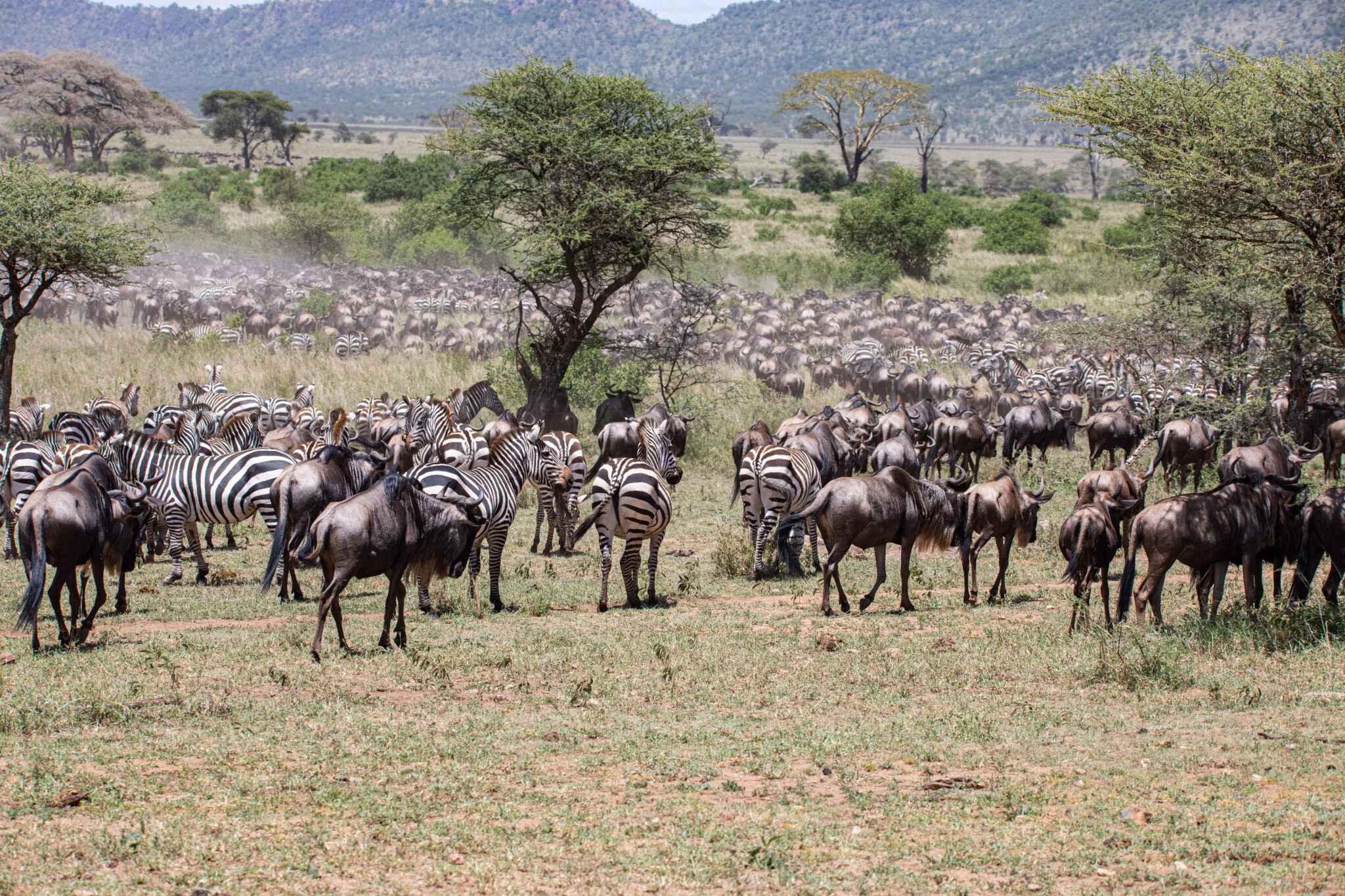
An estimated 1.5 million wildebeest and about 200,000 zebras live in the ecosystem, together with giraffes, elephants, buffalo and more than 500 bird species. The migrating herds shape the whole ecosystem, influencing predator and prey numbers and recycling nutrients across the plains.
The Great Migration in Serengeti National Park
The Great Migration is the best-known event at Serengeti National Park. Each year, wildebeest and zebras follow the rains in a circular route in search of fresh grass and water.
- January to March: The herds gather on the nutrient-rich southern plains, where hundreds of thousands of calves are born.
- April to June: The animals move north-west through the central and western parts of the park.
- June to July: The herds reach the Grumeti River, where the first dramatic crossings take place.
- July to September: They arrive in the northern Serengeti and cross the Mara River into Kenya’s Masai Mara.
- October to November: The herds return south to the Serengeti plains.
River crossings are among the most dramatic wildlife scenes anywhere, as the herds face strong currents and crocodiles. Because timing depends on the rains, treat these dates as a guide rather than a fixed schedule. You can read more about the Kenyan side of the journey in our guide to the Wildebeest migration in Kenya.
Best Time to Visit Serengeti National Park
The best time to visit Serengeti National Park depends on what you want to see.
- June to October: This is the dry season, and it is ideal for river crossings and for general game viewing, since animals gather near water.
- January to March: This is the calving season in the southern plains, with newborn wildebeest and many predators on the hunt.
- April to May: These are the wetter months. The park is green and quiet, with fewer visitors and lower rates at many lodges.
Whatever the month, Serengeti National Park offers good wildlife viewing, so you can plan around your budget and schedule.
How to Get to Serengeti National Park
Most visitors start in Arusha, which is about 335 km from the central Serengeti by road.
- By air: Scheduled and charter flights from Arusha serve airstrips such as Seronera and Lobo, and take roughly 1 to 1.5 hours. This is the fastest option.
- By road: A guided safari from Arusha takes about 8 to 9 hours, depending on the route and the road conditions. Many travellers combine the drive with a stop at Ngorongoro Crater or Tarangire.
For most visitors, a guided safari is the easiest and safest way to travel, as the guide handles permits, park rules and navigation.
Weather and Climate in Serengeti National Park
Serengeti National Park has two main seasons.
- Dry season (June to October): Warm days of about 25°C to 30°C, cooler nights that can drop to around 10°C, and very little rain.
- Wet season (November to May): The short rains fall in November and December and the long rains from March to May. Some tracks become harder to use, but the landscape turns green and the birdlife is excellent.
Pack light layers, a warm jacket for early morning game drives, a hat and sunscreen.
Serengeti National Park Entry Fees
Entry fees support conservation in the park. Rates depend on nationality and age: non-East African adults and children pay different amounts per day, and young children can enter free. Because Tanzania National Parks (TANAPA) updates its fees from time to time, check the current rates on the official TANAPA website before you book. When you book with us, park fees are included in your quote.
Why Visit Serengeti National Park?
Serengeti National Park combines rich history, varied habitats and the Great Migration in a single destination. It is recognised by UNESCO as a World Heritage site, and every visit supports the work of protecting this ecosystem for future generations.
Ready to plan your trip? Contact Yulle Adventures for a free, tailor-made quote, or browse our Tanzania itineraries.