

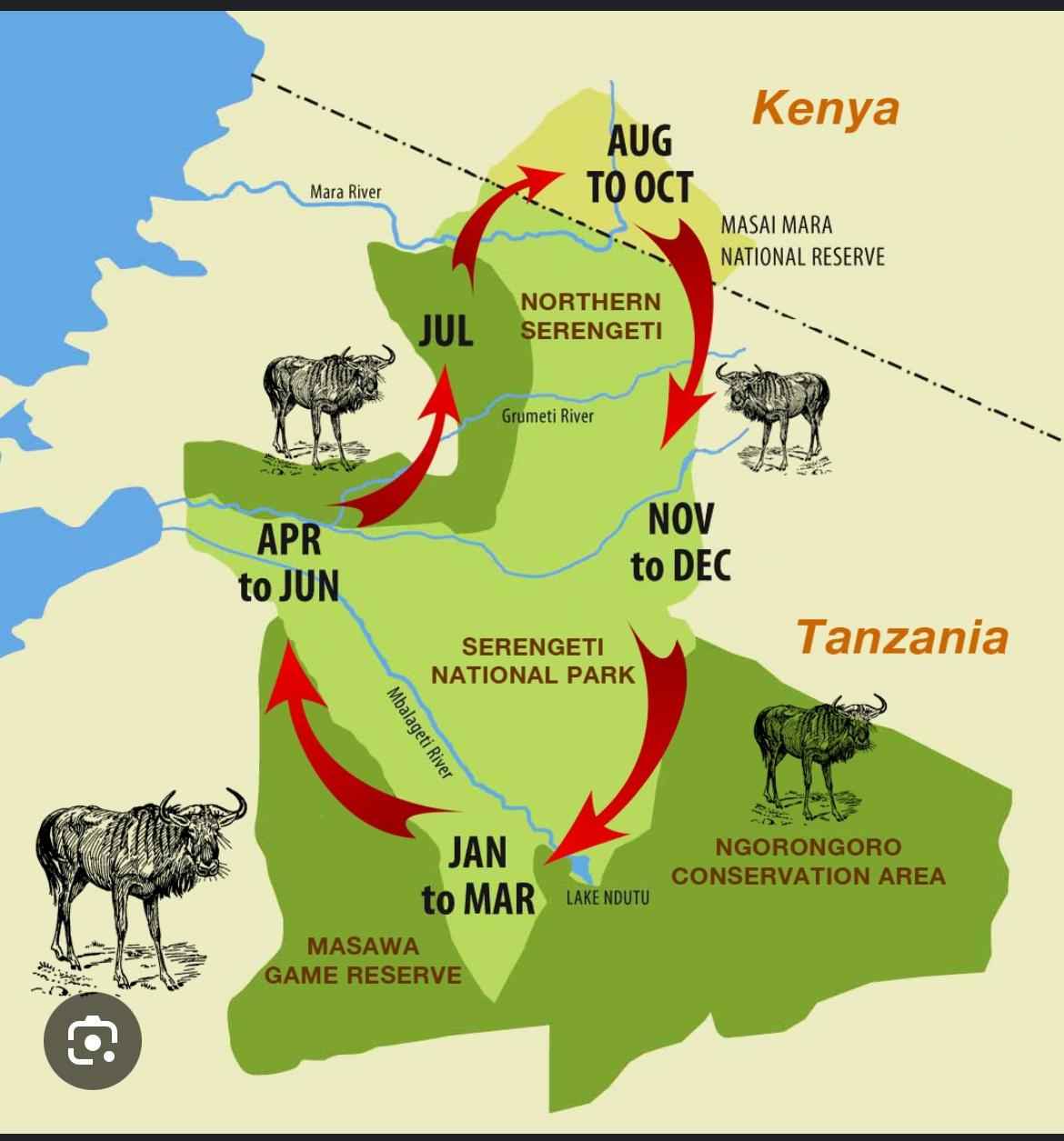
Great Migration Cycle: Month by Month
The Great Migration cycle is the never-ending journey of around 1.5 million wildebeest, together with hundreds of thousands of zebras and gazelles, through the Serengeti in Tanzania and the Masai Mara in Kenya. It is not a one-off event that happens on a single date. It is a continuous, circular loop of roughly 800 kilometres or more, driven by rain and fresh grass, and it never really stops.
This guide follows the Great Migration cycle month by month, explains why the herds move, and helps you choose the best time and place to see it. If you would like help planning, see our wildlife safari packages.
What Is the Great Migration Cycle?
The Great Migration cycle is the year-round, clockwise movement of herds around the Serengeti-Mara ecosystem, an area of grassland and woodland that straddles the border between Tanzania and Kenya. There is no fence between the Serengeti National Park and the Masai Mara National Reserve, so the animals move freely across the border in search of food and water.
The herds are led by hunger, not a calendar. The timing shifts from year to year with the rains, so the dates below should be treated as a guide rather than a promise.
Why Do the Herds Move?
The main driver of the Great Migration cycle is rainfall. Rain brings fresh, green grass, and the herds follow it. The short grass of the southern Serengeti plains is rich in minerals, which suits mothers feeding calves. The long grass of the northern Serengeti and the Masai Mara stays green through the dry season, when the southern plains dry out. So the animals spend the wet season in the south and the dry season in the north, then return when the rains come back.
The Great Migration Cycle Month by Month
| MonthsWhere the herds areWhat happens | ||
| January to March | Southern Serengeti and Ndutu area | Calving season |
| April to May | Central and western Serengeti | Herds head north; mating season begins |
| June to July | Western Serengeti and Grumeti River | First river crossings |
| July to October | Northern Serengeti and Masai Mara | Mara River crossings |
| October to December | Northern Serengeti, then back south | Return journey |
January to March: Calving in the South
The herds gather on the nutrient-rich plains of the southern Serengeti and the Ndutu area. In a few short weeks, usually peaking in February, hundreds of thousands of calves are born. Many can stand within minutes of birth. This is also a time of intense predator action, as lions, cheetahs and hyenas hunt the young. It is a great time for photographers and for anyone who wants to see the Great Migration cycle at its most dramatic without river crossings.
April to May: Heading North
As the long rains arrive, the grass in the south grows tall and the herds begin to move north-west, passing through the central Serengeti around Seronera. Columns of animals stretch for kilometres. The rains make roads muddy and some camps close, but the landscape is green, prices are lower and the park is quiet. The rut, or mating season, begins towards the end of this period.
June to July: The Western Corridor
The herds reach the Grumeti River in the western Serengeti. The crossings here are less well known than those on the Mara River, but they can be spectacular, with large crocodiles waiting in the water. Not every herd takes this route, and some move straight north. Timing varies, so speak to a guide about where the action is.
July to October: The Mara River
This is the most famous part of the Great Migration cycle. The herds gather in the northern Serengeti and then cross the Mara River into Kenya’s Masai Mara, usually from around late July or August. Crossings can happen at any time of day, and the herds often hesitate on the bank for hours before one animal takes the plunge and the others follow. They then spread across the Mara plains, where they graze until around October. Read more in our guide to the wildebeest migration in Kenya.
October to December: The Return South
As the grass in the Mara thins and the short rains begin, the herds head back across the Mara River into Tanzania and move south through the eastern Serengeti. By December, they are back on the southern plains, ready to calve, and the Great Migration cycle starts again.
Where to Watch the Great Migration Cycle
- Southern Serengeti and Ndutu (January to March): Best for calving and predator action.
- Central Serengeti (April to May): Good for large columns of animals with fewer vehicles.
- Western Serengeti (June to July): Best for Grumeti crossings.
- Northern Serengeti (July to October): Excellent for Mara River crossings on the Tanzanian side, usually quieter than Kenya.
- Masai Mara (July to October): The most popular place for crossings, with easy access from Nairobi and a wide range of lodges. For park details, see our guide to the Masai Mara safari.
For a closer look at the Tanzanian side, read our guide to Serengeti National Park.
Tips for Following the Great Migration Cycle
- Pick your moment. Choose calving for newborns and predators, or July to October for river crossings.
- Book early. Camps close to the action sell out many months ahead, especially from July to September.
- Stay several nights. Crossings are unpredictable, and a longer stay gives you more chances.
- Use a good guide. Experienced guides read the herds and know where to wait.
- Be patient. Herds can wait for hours before they cross.
- Respect the animals. Keep a respectful distance and avoid blocking crossing points.
- Remember the border. Tanzania and Kenya are separate countries with their own park fees and entry rules. Check visa and park requirements for each before you travel.
Plan Your Great Migration Safari With Yulle Adventures
Whether you want to see calves born in the Serengeti or herds plunging into the Mara River, the Great Migration cycle offers one of the greatest wildlife shows on Earth. Yulle Adventures can plan trips in Tanzania, Kenya or both. Browse our Tanzania safari packages and Kenya safari packages, visit the Magical Kenya tourism website for travel information, or contact us for a free, tailor-made quote.