

Meru National Park is one of Kenya's great hidden wildernesses: a land of rivers, doum palms, tall grass and rugged hills where you can drive for hours without seeing another vehicle. It is also the place where Joy and George Adamson raised Elsa the lioness, the story that inspired the book and film Born Free and changed how the world thought about wild animals.
This guide shares seven wonderful reasons to explore Meru National Park, along with the wildlife you can expect, its remarkable recovery story, the best time to visit, how to get there and how to combine it with Samburu, Ol Pejeta and other parks in central and northern Kenya.
In This Guide
- About Meru National Park
- 7 Wonderful Reasons to Visit
- Wildlife Guide
- A Remarkable Recovery
- Best Time to Visit
- Getting There
- Combine Meru With Other Parks
- Frequently Asked Questions
About Meru National Park
Meru National Park lies east of Mount Kenya, on the lowlands below the Nyambene Hills, about 350 kilometres from Nairobi. It covers roughly 870 square kilometres and forms the heart of the wider Meru Conservation Area, which also includes Kora National Park and the Bisanadi, Mwingi and North Kitui national reserves. Together they protect a huge, wild stretch of country along the Tana River.
The landscape is surprisingly varied. In the west, rains from the Nyambene Hills feed more than a dozen rivers and streams that flow across the park towards the Tana, lined with doum palms, raffia palms and riverine forest. Further east, the land becomes drier, with open bush, tall grasslands, acacia woodland and rocky outcrops, or kopjes, that make perfect lookouts for lions and leopards.
Because it sits where the wetter highlands meet Kenya's dry north, Meru National Park is home to both classic savannah species and northern specialities, giving it a wildlife mix that few other parks can match.
7 Wonderful Reasons to Explore Meru National Park
Here are seven reasons why Meru National Park deserves a place on your Kenya itinerary.
1. Walk in the Footsteps of Born Free
In the late 1950s, game warden George Adamson and his wife Joy raised an orphaned lion cub named Elsa. When Elsa was grown, the couple released her into the wild in what is now Meru National Park, teaching her to hunt and survive on her own. Joy's book Born Free, published in 1960, became an international bestseller, and the 1966 film made Elsa famous around the world.
Elsa's story helped inspire a new attitude towards wildlife and conservation, and later led to the founding of the Born Free Foundation. Today, visitors can see Elsa's grave beside the Ura River and the site of the Adamsons' former camp. Standing in this quiet corner of Meru National Park, it is easy to imagine Elsa padding along the riverbank.
2. A True Wilderness With Few Crowds
Meru National Park receives only a small fraction of the visitors who travel to the Masai Mara or Amboseli. That means quiet game drives, unhurried sightings and the feeling of having the wilderness to yourself. Lions resting in the shade, a herd of elephants crossing a river or a leopard on a kopje can often be enjoyed without another vehicle in sight. For travellers who have already seen Kenya's famous parks, or who simply prefer solitude, this sense of space is one of Meru's greatest gifts.
3. Rivers, Springs and Doum Palms
Water defines Meru National Park. The Rojewero, Ura, Bisanadi and other rivers wind through the park, fed by springs and the rains of the Nyambene Hills, before joining the mighty Tana on the southern boundary. Their banks are lined with stately doum palms, whose branching trunks give the park a distinctive, almost tropical look.
The rivers attract elephants, buffaloes and waterbuck, while hippos and crocodiles live in the deeper pools. Swamps and springs in the west create green oases even in the dry season, which is why wildlife remains in the park all year.
4. Rhinos in a Protected Sanctuary
Meru National Park has a fenced rhino sanctuary where both black and white rhinos are protected by dedicated rangers. Rhinos were reintroduced after poaching wiped out the original population, and the sanctuary has since become an important part of Kenya's rhino conservation network. Game drives inside the sanctuary give you a good chance of seeing white rhinos grazing in the open grassland, while the shyer black rhinos browse in thicker bush.
If you want to learn more about rhino conservation in Kenya, read our guide to Ol Pejeta Conservancy, home to the last two northern white rhinos.
5. Northern Specialities
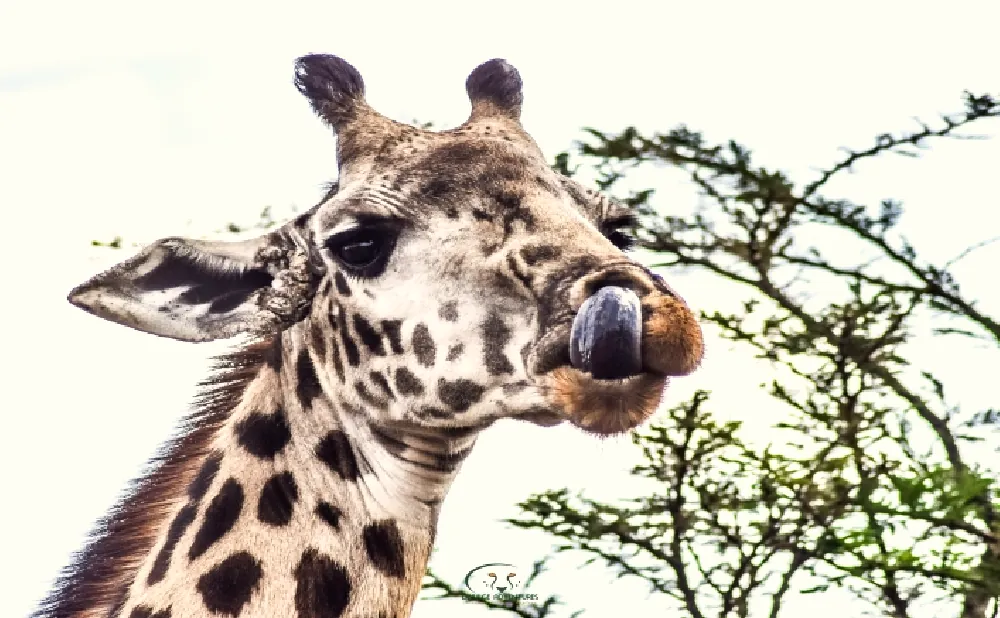
Because it borders Kenya's arid north, Meru National Park is one of the few places where you can see several dry-country species alongside the familiar Big Five. Look out for the reticulated giraffe with its bold, net-like pattern, the endangered Grevy's zebra with narrow stripes and large round ears, the long-necked gerenuk standing on its hind legs to feed, the beisa oryx and the elegant lesser kudu. Several of these animals belong to the Samburu Special Five, which you can learn more about in our Samburu National Reserve guide.
6. Adamson's Falls and the Tana River
The Tana is Kenya's longest river, and it forms the southern edge of Meru National Park. Downstream, near the boundary with Kora National Park, the river pours over rocks at Adamson's Falls, named after George Adamson. The falls are especially impressive when the river is high after the rains, and the drive there passes through remote country rich in wildlife.
Across the Tana lies Kora National Park, where George Adamson lived and worked with lions for many years until his death in 1989. His camp, Kampi ya Simba, and his grave can be visited with a guide on a longer excursion.
7. Over 400 Bird Species
With rivers, swamps, forest and dry bush all in one place, Meru National Park is a fantastic destination for birders. More than 400 bird species have been recorded, including Pel's fishing owl along the rivers, the Somali ostrich, vulturine guineafowl, palm-nut vultures, golden pipits, kingfishers and a wide variety of hornbills. For more birding ideas around the country, see our guide to birdwatching in Kenya.
Wildlife Guide to Meru National Park
Meru National Park is home to a wide range of animals. Some are easy to see, while others reward patience and a good guide.
- Lions are found throughout the park and are often seen resting near rivers or on rocky outcrops.
- Leopards live in the riverine forest and kopjes, and are most active at dawn and dusk.
- Cheetahs hunt in the open grasslands of the east.
- Elephants move between the rivers and the bush, often in large family groups.
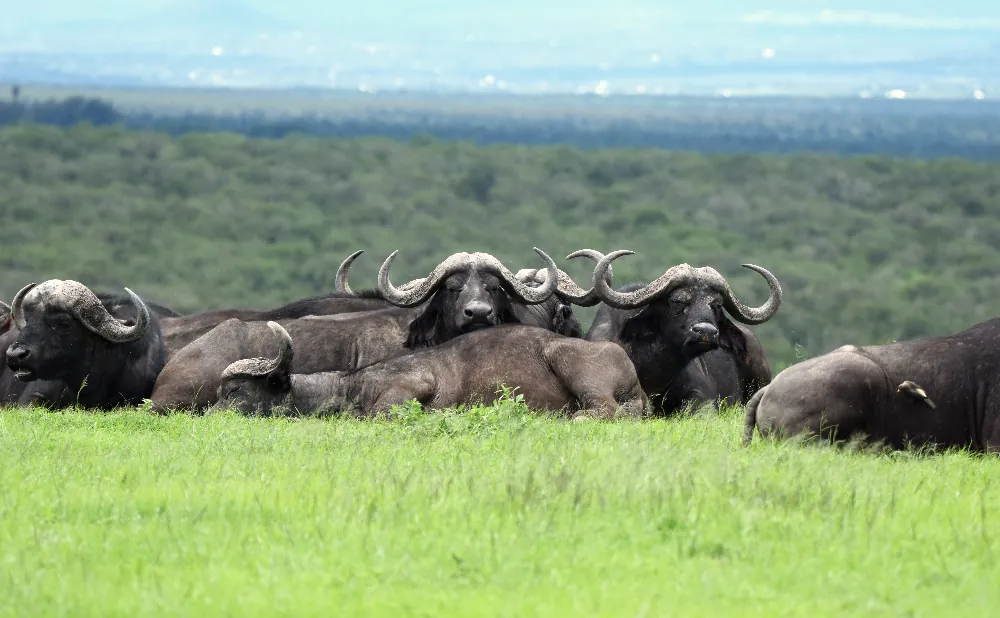
- Buffaloes are common near water and in the swamps.
- Rhinos, both black and white, live in the protected sanctuary.
- Hippos and crocodiles are found in the Tana and the deeper rivers.
- Antelopes include lesser kudu, gerenuk, beisa oryx, waterbuck, impala, eland, Coke's hartebeest and dik-dik.
- Zebras and giraffes include Grevy's zebra, common zebra and reticulated giraffe.
- Smaller animals such as servals, caracals, striped hyenas, aardwolves and several mongoose species.
Tall grass can make game viewing more challenging after the rains, so the dry season is usually best for photography. To understand how Meru fits with Kenya's other big game areas, read our guide to the Big Five in Kenya.
A Remarkable Recovery
Meru National Park has not always been so peaceful. In the 1970s and 1980s, poaching hit the park hard. Elephants and rhinos were killed in large numbers, including the park's original white rhinos, and tourism almost disappeared. For a time, Meru was considered unsafe and many people forgot about it.
From the late 1990s and early 2000s, the Kenya Wildlife Service, working with international conservation partners, launched a major rehabilitation effort. Ranger patrols and security were strengthened, roads and bridges were rebuilt, and a large translocation brought elephants and other animals back into the park. The rhino sanctuary was established, and lodges and camps reopened.
Today, wildlife numbers have recovered strongly, and Meru National Park is once again a safe, rewarding destination. Its comeback is one of Kenya's great conservation success stories, and every visitor helps support it through park fees and local employment. For general safety advice when travelling around the country, see our guide Is Kenya safe for tourists?
Best Time to Visit Meru National Park
Meru National Park can be visited all year, but conditions change with the seasons.
- June to October: the long dry season and the best time for game viewing. Grass is shorter and animals gather near the rivers.
- January to February: a second dry spell with hot days and good wildlife viewing.
- March to May: the long rains. Some roads, especially black cotton soil tracks, can become difficult, and grass grows tall.
- November to December: the short rains bring green landscapes, migrant birds and fewer visitors.
Days are hot in the lowlands, so early morning and late afternoon drives are the most comfortable and the most productive. See our Kenya month-by-month guide to plan the rest of your trip.
Getting There
By road: Meru National Park is around six hours' drive from Nairobi, passing through the farmland and towns around Mount Kenya before descending through Meru town and the Nyambene Hills. The main entrance is Murera Gate. The drive itself is scenic, with views of Mount Kenya on clear mornings.
By air: scheduled and charter flights land at Mulika airstrip inside the park, taking about an hour from Nairobi. Flying in saves time and makes Meru easy to add to a longer itinerary.
Inside the park, a four-wheel-drive vehicle is essential, as tracks can be rough and some river crossings are tricky. Travelling with an experienced driver-guide who knows the park helps you find wildlife and navigate safely. Remember to apply for your Kenya eTA before you travel; our Kenya visa guide explains how.
Where to Stay
Accommodation in Meru National Park is limited, which helps keep it uncrowded. Options include a well-known lodge built on a kopje with sweeping views over the plains, named in honour of Elsa, and a handful of tented camps and bandas along the rivers. Public campsites are also available for self-sufficient travellers. Because choice is limited, booking early is wise, especially in the dry season. We can recommend the best option for your style and travel dates.
Combine Meru With Other Parks
Meru National Park fits beautifully into a central and northern Kenya safari. Here are some easy combinations:
- Samburu National Reserve: another dry-country park famous for the Special Five, a few hours to the north-west. See our Samburu guide.
- Ol Pejeta Conservancy: rhinos, chimpanzees and big cats near Nanyuki. Read our Ol Pejeta guide.
- Aberdare National Park: misty forests, waterfalls and rare wildlife in the highlands. Read our guide to Aberdare National Park.
- Mount Kenya: hike to Point Lenana before or after your safari. See our Mount Kenya hiking guide.
- Masai Mara: end with the open plains and big cats of Kenya's most famous reserve.
Our 6 Day Samburu, Nakuru and Masai Mara Safari can be tailored to include Meru for a true off-the-beaten-track adventure.
Tips for Visiting Meru National Park
- Allow at least two nights to explore the rivers, the rhino sanctuary and Elsa's grave without rushing.
- Bring sun protection, as the lowlands can be very hot in the middle of the day.
- Use insect repellent in the evenings near rivers and swamps.
- Pack binoculars to spot birds and wildlife in tall grass and along riverbanks.
- Read Born Free before you go to bring the landscape and its history to life.
- Respect park rules, stay in your vehicle except at designated sites and keep a safe distance from animals.
For a full kit list, see our Kenya safari packing list.
A Suggested Two-Day Visit
On your first morning, set out at sunrise along the rivers in the west of the park, where elephants and buffaloes come to drink and lions often rest in the shade of doum palms. After breakfast, continue to the rhino sanctuary for the chance to see white rhinos grazing on open grassland, then return to camp during the heat of the day.
In the afternoon, visit Elsa's grave beside the Ura River and the site of the Adamsons' camp before a sundowner on a kopje with views across the plains.
On the second day, take a longer excursion towards the Tana River and Adamson's Falls, watching for gerenuk, lesser kudu and Grevy's zebra in the drier bush along the way, and enjoy a picnic lunch by the river before returning in the late afternoon.
Photography Tips for Meru
The light here is one of the park's hidden treasures. Early mornings bring soft golden light over the doum palms and rivers, while late afternoons turn the grasslands amber and throw long shadows across the kopjes. Photographers who plan around these hours are rewarded with images that feel very different from the classic open plains of southern Kenya.
- Use a zoom lens of around 100 to 400 mm for wildlife, and a wide lens for river scenes and landscapes.
- Look for frames such as palm fronds, riverbanks and tall grass to add depth to your pictures.
- Use a beanbag on the vehicle window to keep your camera steady during long sightings.
- Protect your gear from dust on dry tracks with a cover or bag.
- Be patient at rivers, where elephants, buffaloes and birds come and go throughout the day.
For more ideas, read our Kenya photography safari tips.
Frequently Asked Questions
Why is Meru National Park famous? It is famous as the place where Joy and George Adamson released Elsa the lioness, whose story became the book and film Born Free, and for its rivers, rhino sanctuary and uncrowded wilderness.
Can you see the Big Five in Meru National Park? Yes. Lions, leopards, elephants, buffaloes and rhinos all live in the park, with rhinos protected in a fenced sanctuary.
Is Meru National Park safe? Yes. After a period of poaching decades ago, the park was rehabilitated and is now well protected and safe for visitors.
How many days should I spend in Meru? Two to three nights allow time to explore the rivers, the sanctuary and the Tana without rushing.
How does Meru compare with Samburu? Both offer northern species, but Meru is greener, with more rivers and fewer visitors, while Samburu is drier and more open.
Plan Your Meru Safari
Meru National Park offers something increasingly rare in Africa: a wild, beautiful and uncrowded park with a powerful story. Whether you are drawn by Born Free, the rhinos, the rivers or simply the peace of the bush, it is a wonderful addition to any Kenya safari.
- Explore our Kenya safari packages
- Discover other wild corners in our Tsavo National Park guide
- Plan your trip with our complete Kenya safari planning guide
Ready to discover Born Free country? Contact us and we will create a tailor-made Meru safari for you.