

Samburu National Reserve is one of Kenya's most rewarding and least crowded safari destinations. Set in the sun-baked north of the country, it is a land of red earth, doum palms and rugged hills, threaded by the Ewaso Ng'iro River. Elephants come down to drink in the heat of the day, leopards rest in riverside acacias, and some of Africa's rarest animals roam the open plains.
This guide introduces Samburu National Reserve: where it is, the famous Special Five, the other wildlife you can expect, the Samburu people, the best time to visit, how to get there and where to stay. If you are looking for a safari that feels wild and uncrowded, Samburu deserves a place on your itinerary.
In This Guide
- Where Is Samburu National Reserve?
- The Samburu Special Five
- More Wildlife in Samburu National Reserve
- The Landscape and the River
- The Samburu People
- Things to Do
- Best Time to Visit
- Getting There and Where to Stay
- Plan Your Samburu Safari
Where Is Samburu National Reserve?
Samburu National Reserve lies in Samburu County in northern Kenya, on the northern bank of the Ewaso Ng'iro River. Across the river is Buffalo Springs National Reserve, and to the east is Shaba National Reserve. Together the three reserves form a connected wilderness, and wildlife moves freely between them.
The reserve is relatively small, but it packs in a remarkable variety of habitats, from riverine forest and doum palm groves to open scrubland, rocky outcrops and dry plains. Its location in the arid north means the animals here are quite different from those of the Masai Mara or Amboseli, which is one of the main reasons to visit.
The flat-topped mountain of Ololokwe, sacred to the Samburu people, rises above the plains to the north and forms a dramatic backdrop to game drives, especially at sunset.
The Samburu Special Five
Samburu National Reserve is famous for five species that are rarely seen in Kenya's southern parks. Spotting all five is a highlight for many visitors, and your guide will know where to look.
Grevy's Zebra
Grevy's zebra is the largest wild member of the horse family and one of the most endangered large mammals in Africa. It is easy to tell apart from the common plains zebra by its narrow, closely spaced stripes, white belly and large, rounded ears. Northern Kenya holds most of the world's remaining Grevy's zebras, and Samburu National Reserve is one of the best places to see them. The Grevy's Zebra Trust works with local communities to protect them.
Reticulated Giraffe
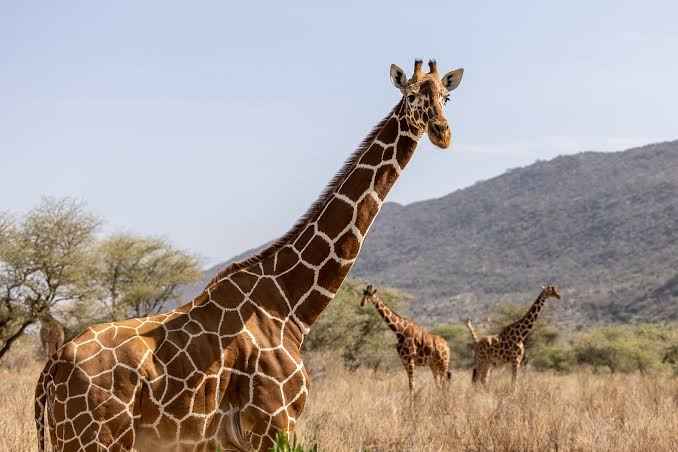
The reticulated giraffe has a striking coat of large, polygon-shaped patches outlined by clean white lines, like a net laid over its body. It is found mainly in northern Kenya and is one of the most photogenic animals in Samburu National Reserve, especially when browsing on acacias against a blue sky.
Somali Ostrich
The Somali ostrich differs from the common ostrich in the colour of its skin. Males have blue-grey necks and legs, which turn brighter during the breeding season. They are often seen striding across the open plains in small groups.
Gerenuk
The gerenuk is a slender antelope with an extraordinarily long neck. It is famous for standing upright on its hind legs to reach leaves high in bushes, a behaviour that makes for wonderful photographs. Gerenuk can survive without drinking water, getting moisture from the plants they eat.
Beisa Oryx
The beisa oryx is an elegant antelope with long, straight horns and bold black-and-white markings on its face. It is perfectly adapted to the dry conditions of the north and is often seen in herds on the open plains of Samburu National Reserve.
More Wildlife in Samburu National Reserve
Beyond the Special Five, Samburu National Reserve offers excellent general game viewing.
Elephants
Elephants are one of the great attractions of Samburu National Reserve. Family herds come to the Ewaso Ng'iro River to drink, bathe and play, especially during the dry season. The reserve is the base for a long-running research programme by Save the Elephants, which studies elephant behaviour and movement across northern Kenya. Many of the elephants you see are known individually to the researchers.
Big Cats
Lions are regularly seen in Samburu National Reserve, and the riverine woodland is excellent leopard territory. Leopards often rest in the branches of acacia trees during the heat of the day. Cheetahs hunt on the open plains, and lucky visitors sometimes see wild dogs passing through the area.
Other Mammals
Look out for Cape buffalo, waterbuck, impala, dik-dik, Grant's gazelle, warthog and baboons. At night, striped hyenas, genets and other nocturnal creatures become active.
Birdlife
Samburu National Reserve is a superb destination for birdwatchers, with hundreds of recorded species. Specialities of the dry north include the brilliantly coloured vulturine guineafowl, the Somali bee-eater and the golden-breasted starling. Raptors such as tawny eagles, bateleurs and pale chanting goshawks are common, and the river attracts kingfishers, herons and storks.
The Landscape and the River
The Ewaso Ng'iro River is the lifeblood of Samburu National Reserve. Its name means "river of brown water" in the Maa language, and it carries water down from the slopes of Mount Kenya and the Aberdares into the dry north. In the dry season it may shrink to a series of pools and channels, and almost every animal in the area depends on it.
Lines of tall doum palms and acacia woodland follow the river, providing shade and food. Away from the water, the land opens into dry scrub, lava ridges and red-earth plains. Morning and evening light turns the landscape golden, and the contrast between the green river, red soil and blue sky makes Samburu one of the most beautiful parks in Kenya for photography.
A Famous Lioness
Samburu became known around the world in the early 2000s for a lioness that repeatedly adopted oryx calves instead of hunting them. Her unusual behaviour was followed by guides, researchers and the media, and it remains one of the most remarkable wildlife stories from the reserve.
The Samburu People
The reserve takes its name from the Samburu people, semi-nomadic pastoralists who have lived in this region for centuries. They are related to the Maasai and speak a Maa language. Cattle, goats and camels are central to their culture and livelihoods.
The Samburu are known for their colourful beadwork, traditional dress and songs. Morans, the young warriors, often wear elaborate beaded necklaces and ochre in their hair. Visiting a Samburu village with a local guide is a meaningful way to learn about their traditions, daily life and relationship with the wildlife around them.
Many community conservancies around Samburu National Reserve are owned and managed by local people. These conservancies protect wildlife corridors, create jobs and share tourism income, showing how conservation and community can work together.
Things to Do in Samburu National Reserve
A stay in Samburu National Reserve can include much more than game drives.
- Morning and afternoon game drives to search for the Special Five, elephants and big cats.
- Full-day game drives with a picnic lunch by the river, exploring Samburu, Buffalo Springs and Shaba.
- Guided walks in the surrounding conservancies with Samburu guides, who share their knowledge of tracks, plants and traditional uses.
- Cultural visits to Samburu communities to learn about local customs and crafts.
- Night drives in some private conservancies to look for nocturnal animals.
- Sundowners on a ridge or by the river as the sun sets over Ololokwe.
- Birdwatching along the river and in the acacia woodland.
Best Time to Visit Samburu National Reserve
Samburu National Reserve is hot and dry for much of the year, which makes it a good destination in most months.
- Late June to October: the long dry season. Wildlife concentrates along the Ewaso Ng'iro River, making game viewing excellent.
- January to February: another dry period with very good wildlife sightings and warm temperatures.
- March to May: the long rains bring green landscapes and newborn animals. Some tracks may be muddy, and visitor numbers are low.
- November: the short rains freshen the land and bring migrant birds.
Daytime temperatures can be high, so most game drives take place in the early morning and late afternoon, with time to rest at your lodge during the midday heat. For a full overview of Kenya's seasons, see our guide to the best time to visit Kenya.
Getting to Samburu National Reserve and Where to Stay
By Road
Samburu National Reserve is around five to six hours by road from Nairobi. The drive passes through the farmland of central Kenya, skirts Mount Kenya and descends through Isiolo into the arid north. The main entrance for visitors arriving from the south is Archer's Post Gate.
By Air
Scheduled light-aircraft flights connect Nairobi's Wilson Airport with airstrips in and around the reserve, saving time and offering spectacular views of Mount Kenya on a clear day. Flying is a good option if you are combining Samburu with the Masai Mara.
Where to Stay
Accommodation ranges from simple campsites to riverside lodges and exclusive tented camps. Our detailed guides will help you choose:
- Luxury camps and lodges in Samburu
- Mid-range accommodation in Samburu
- Budget camps and lodges in Samburu
Buffalo Springs and Shaba: Samburu's Neighbours
Most safaris in the area explore three connected reserves rather than one. Buffalo Springs National Reserve lies on the southern bank of the river and is named after a series of clear springs that bubble up from underground. Its open plains are good for oryx, Grevy's zebra and cheetah, and the springs attract a steady stream of animals.
Shaba National Reserve, to the east, is wilder and more rugged, with lava ridges, rocky hills and natural springs. It sees far fewer vehicles, and its dramatic scenery makes it a favourite with photographers. Shaba was also the setting for part of the later work of conservationist Joy Adamson, whose story is closely tied to Kenya's wildlife history.
Because the animals move freely between the three reserves, a good guide will follow the action wherever the best sightings are, crossing between them during full-day drives.
A Day on Safari in Samburu
Days in the north follow the rhythm of the heat. You rise before dawn with tea or coffee, then head out as the first light touches the hills. Early mornings are the best time for big cats, which are often still active after the night, and for birds calling from the acacias.
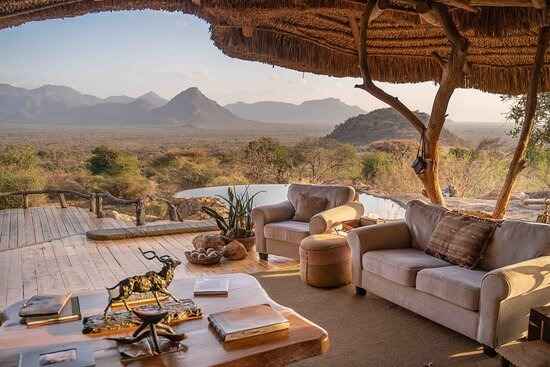
By mid-morning the temperature climbs, and you return to camp for a late breakfast and a rest by the pool or on a shaded veranda overlooking the river. Elephants often wander past the lodges at this time of day on their way to drink.
In the late afternoon you set out again as the heat eases. Herds gather at the river, giraffes browse in the golden light and the sky turns pink and orange. Many evenings end with a sundowner before dinner under the stars.
Photography Tips for Northern Kenya
The strong light and vivid colours of the north reward a little planning. Shoot in the first and last two hours of the day, when the light is soft and warm. Use the red earth and blue sky as natural contrast, and look for silhouettes of giraffes and doum palms at sunset.
Dust is a constant companion, so carry a blower and a microfibre cloth, and change lenses inside the vehicle with the windows closed. A zoom lens in the 100 to 400 millimetre range is ideal for most wildlife, while a wider lens captures the landscapes and the dramatic skies.
Conservation in Northern Kenya
Northern Kenya is home to some of the most innovative conservation work in Africa. Community conservancies cover large areas of land around the reserves, protecting wildlife corridors that allow elephants, zebras and predators to move between parks.
Local rangers, many recruited from surrounding villages, patrol these areas, while tourism income supports schools, clinics and water projects. Projects to protect Grevy's zebra and reticulated giraffe also involve local communities in monitoring and protecting these rare species. When you visit, choosing lodges that work with community conservancies helps make this model sustainable.
What to Pack for the Heat
Northern Kenya is hotter and drier than the southern parks, so pack light, breathable clothing in neutral colours, a wide-brimmed hat, good sunglasses and high-factor sunscreen. A reusable water bottle is essential. Mornings can still be cool, so bring a light fleece for early game drives. Our complete packing list covers everything else.
Combine Samburu With Other Kenya Highlights
Samburu National Reserve fits naturally into a wider Kenya safari. Popular combinations include:
- Ol Pejeta Conservancy on the way north, home to rhinos and chimpanzees. Read our Ol Pejeta Conservancy guide.
- Mount Kenya for a hike to Point Lenana. Our Mount Kenya hike guide explains the routes.
- Lake Nakuru and the Masai Mara for rhinos, flamingos and big cats.
- The coast for a relaxing finish. See our Kenya safari and beach holiday guide.
Samburu for Families
The north is a wonderful region for families with older children. Animals are easy to see along the river, game drives can be kept short, and many lodges have swimming pools, family rooms and shaded gardens for the hottest part of the day. Children usually love the gerenuk standing on its hind legs, the elephants splashing in the river and the chance to meet Samburu families and learn about their beadwork, songs and herding life.
Because the area is hot and remote, plan plenty of rest, keep everyone well hydrated and choose a lodge with good shade. Flying in from Nairobi shortens the journey considerably for younger travellers, leaving more energy for the wildlife.
Common Questions About Samburu National Reserve
What is Samburu National Reserve famous for? It is best known for the Samburu Special Five, large elephant herds along the Ewaso Ng'iro River, excellent leopard sightings and its wild, uncrowded atmosphere.
How many days should I spend in Samburu? Two or three nights is ideal. This gives you time to explore Samburu, Buffalo Springs and Shaba and to search for all five special species.
Is Samburu good for a first safari? Yes, especially combined with the Masai Mara. It offers a completely different landscape and wildlife, which makes a classic Kenya safari more varied.
Is it very hot? Days can be hot, particularly from January to March. Lodges usually have pools and shaded areas, and game drives are scheduled for the cooler parts of the day.
For more on Kenya's parks and reserves, the national tourism website Magical Kenya is a useful resource.
Plan Your Samburu Safari
Samburu National Reserve offers rare animals, dramatic scenery and rich culture in one compact destination. Our team can combine it with the Masai Mara, Lake Nakuru, Ol Pejeta or the coast to create your ideal Kenya safari.
- See our 6 Day Samburu, Nakuru and Masai Mara Safari
- Browse all our Kenya safari packages
- Read our Kenya safari packing list before you travel
Ready to explore northern Kenya? Contact us for a free, tailor-made Samburu safari itinerary.