

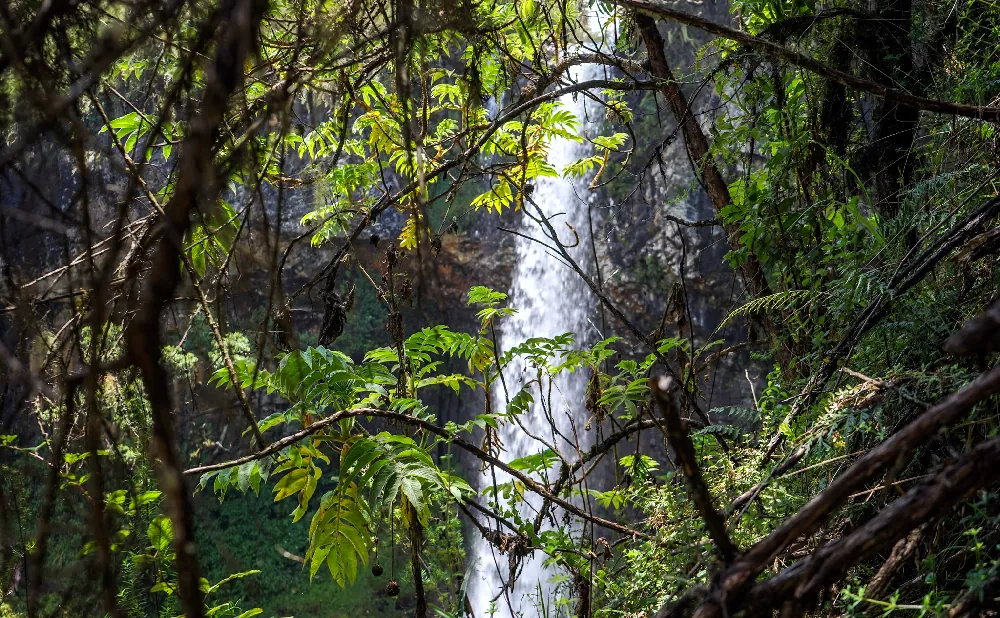
Aberdare National Park is one of Kenya's most atmospheric wild places: a misty world of dense mountain forest, bamboo thickets, open moorland and thundering waterfalls, high in the central highlands. It is a very different experience from the open savannah of the Masai Mara, and that is exactly why so many travellers love it.
In this guide, we explain what makes Aberdare National Park special, share six breathtaking things to see and do, from Karuru Falls to the story of Treetops, and cover the wildlife, the best time to visit, how to get there and how to combine the park with other highlights of central Kenya.
In This Guide
- About Aberdare National Park
- The Park's Landscapes
- 6 Breathtaking Things to See and Do
- Wildlife in the Aberdares
- Conservation and the Rhino Ark Fence
- Best Time to Visit
- Getting There and Getting Around
- Combine the Aberdares With Other Parks
- Frequently Asked Questions
About Aberdare National Park
Aberdare National Park was established in 1950 to protect the high ground and forested slopes of the Aberdare Range, a long volcanic mountain chain that forms part of the eastern wall of the Great Rift Valley. The range is known locally as Nyandarua, meaning "drying hide", a name said to describe the folded shape of its ridges. The park covers roughly 760 square kilometres and lies between the towns of Nyeri and Naivasha.
Altitudes range from around 2,000 metres in the eastern forests to just over 4,000 metres on the summit of Ol Donyo Lesatima, the highest peak of the range. The second major peak, Kinangop, rises close to 3,900 metres. Because of this height, Aberdare National Park is cool, green and often misty, with high rainfall that feeds several of the rivers supplying water to Nairobi and central Kenya.
The Aberdares are also deeply woven into Kenya's history. During the struggle for independence in the 1950s, the forests sheltered Mau Mau fighters led by Dedan Kimathi, and some caves and hideouts from that period can still be visited with a guide today.
The Park's Landscapes
One of the joys of Aberdare National Park is how quickly the scenery changes as you climb. In a single day you can pass through several distinct zones, each with its own plants, wildlife and mood.
The Salient
The Salient is the lower, eastern arm of the park, closest to Nyeri. It is covered in thick montane forest with open glades and waterholes, and it is the best area for seeing elephants, buffaloes and rhinos. The famous tree lodges were built here, overlooking waterholes and salt licks that draw animals out of the forest after dark.
The Bamboo Zone
Higher up, the forest gives way to dense stands of bamboo, sometimes so thick that the road feels like a green tunnel. The bamboo zone is a favourite haunt of the shy bongo antelope and the giant forest hog, although both are hard to see.
The Moorlands
Above the bamboo lie the high moorlands, a wide, rolling plateau of tussock grass, heather, giant lobelias and groundsels, crossed by cold streams full of trout. On a clear day, the views stretch to Mount Kenya in the east and down into the Rift Valley in the west. This open, almost Scottish landscape is where most of the waterfalls are found, and it is unlike anything else on a typical Kenya safari.
6 Breathtaking Things to See and Do in Aberdare National Park
Aberdare National Park rewards travellers who take their time. Here are six highlights that should be on your list.
1. Karuru Falls and the Other Waterfalls
The waterfalls are the most spectacular natural feature of Aberdare National Park. Karuru Falls, the highest, plunges around 270 metres in three dramatic drops into a forested gorge, making it one of the tallest waterfalls in Kenya. A short walk from the parking area brings you to a viewpoint above the falls, with the sound of rushing water all around.
Nearby, Gura Falls tumbles into the same valley and can be viewed from across the gorge, often wrapped in spray and mist. Chania Falls and Magura Falls are other beautiful spots on the moorland, and several have picnic sites where you can enjoy lunch surrounded by mountain scenery. The waterfalls are at their most powerful after the rains.
2. The Story of Treetops and The Ark
Aberdare National Park is famous for its tree lodges, built on stilts above waterholes so that guests could watch animals arrive at night. The best known is Treetops, where, in February 1952, Princess Elizabeth was staying when her father, King George VI, died. As the saying goes, she climbed up the tree a princess and came down a queen.
The Ark, shaped like Noah's ship, became another iconic tree lodge in the Salient. The status of these historic lodges has changed over the years, so check with us for the current options, but their stories remain a fascinating part of the park's heritage. Watching a floodlit waterhole as elephants, buffaloes and perhaps a rhino emerge from the darkness is an experience many visitors remember for life.
3. The Moorlands, Peaks and Hiking
Unlike most Kenyan parks, Aberdare National Park allows walking in certain areas, especially on the moorlands, accompanied by an armed ranger. Hiking routes lead to the summits of Ol Donyo Lesatima and Kinangop, and to rocky outcrops with sweeping views. The air is thin and cool at this height, so walk slowly, carry warm layers and be ready for sudden mist and rain.
If you enjoy mountain walking, the Aberdares make an excellent acclimatisation trip before climbing Mount Kenya. Read our guide to hiking Mount Kenya to Point Lenana or see our 3 Day Mt Kenya Hike via the Sirimon Route.
4. Forest Game Drives
Game drives in Aberdare National Park feel intimate and mysterious. Animals appear suddenly from the trees, and every bend in the road could reveal an elephant, a family of buffaloes or a bushbuck. Wildlife is harder to spot than on open plains, but the rewards are special, including rare species found in few other parks. Early mornings and late afternoons are best, and a four-wheel-drive vehicle is essential.
5. Trout Fishing
Trout were introduced to the cold mountain streams of the Aberdares during the colonial era, and the rivers of the moorlands are still well known for fly fishing. Anglers fish for rainbow and brown trout in rivers such as the Chania and the Gura, surrounded by moorland and silence. A fishing permit from the Kenya Wildlife Service is required, and you will need to bring your own equipment.
6. Birdwatching and Nature Walks
More than 250 bird species have been recorded in Aberdare National Park, making it a rewarding stop for birders. Look out for Jackson's francolin, the endemic Aberdare cisticola, sunbirds feeding on moorland flowers, Hartlaub's turaco and crowned eagles hunting over the forest. Guided nature walks also reveal orchids, giant heathers, mosses and the forest's many butterflies. For more birding ideas, see our guide to birdwatching in Kenya.
Wildlife in Aberdare National Park
Aberdare National Park is home to a remarkable variety of animals, many of them adapted to forest life.
- Elephants are common in the Salient and often visit waterholes at night.
- Black rhinos live in the forest, protected by the park's fence and rangers.
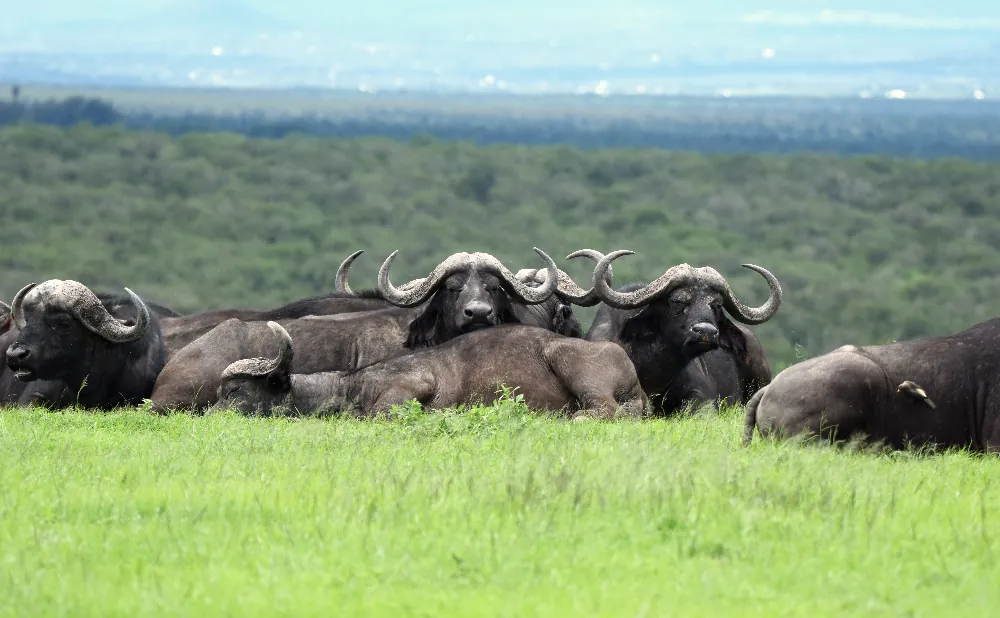
- Cape buffaloes are frequently seen in glades and along the roads.
- Leopards are present, and melanistic or black leopards have been reported in the Aberdares.
- Lions occur in small numbers, mainly in the Salient.
- Bongo, a rare and beautiful forest antelope, survives here in small numbers.
- Giant forest hogs, the world's largest wild pig, are sometimes seen at dusk.
- Black servals, a dark colour form of the serval cat, are a speciality of the moorlands.
- Primates include black-and-white colobus, Sykes' monkeys and olive baboons.
- Antelopes such as bushbuck, waterbuck, reedbuck, duikers and suni.
Because the forest is dense, patience is important. Sitting quietly at a viewpoint or waterhole often brings better sightings than driving fast. If seeing all of the Big Five is a priority, read our guide to the Big Five in Kenya, which explains where each species is easiest to find.
Conservation and the Rhino Ark Fence
The Aberdare forests are one of Kenya's five main water towers, catching rain that feeds rivers such as the Tana and supports millions of people downstream. Protecting them is vital for wildlife and communities alike.
To reduce conflict between people and wildlife, the conservation charity Rhino Ark worked with the Kenya Wildlife Service, the Kenya Forest Service and local communities to build an electric fence around the entire Aberdare conservation area. Completed in 2009 after more than two decades of work, the fence is around 400 kilometres long. It keeps elephants and other animals away from farms, protects rhinos and forest from poaching and illegal logging, and has become a model for fencing other mountain forests in Kenya.
A visit to Aberdare National Park supports this conservation work through park fees, and many lodges in the area also contribute to community and forest projects.
Best Time to Visit Aberdare National Park
Aberdare National Park is one of the wettest places in Kenya, so the timing of your visit matters.
- June to September: the main dry season, with clearer roads and good wildlife viewing. Mornings and nights are cold.
- December to February: another drier period, often with clear skies and excellent views from the moorlands.
- March to May: the long rains, when some roads can become impassable and parts of the park may close temporarily.
- October to November: the short rains bring showers, but the forest is beautiful and green.
Whatever the month, bring warm clothing. Temperatures on the moorlands can drop close to freezing at night, and mist can roll in quickly. For the bigger picture across the country, see our guide to the best time to visit Kenya month by month.
Getting There and Getting Around
Aberdare National Park lies roughly 150 to 180 kilometres north of Nairobi, depending on which gate you use, a drive of around three hours. Nyeri is the main town on the eastern side, close to the Salient, while gates on the western side are reached from the Naivasha and Nyahururu direction.
The roads inside the park are steep and can be muddy, so a four-wheel-drive vehicle with an experienced driver-guide is strongly recommended. Many visitors spend one or two nights in a lodge in or near the park, either in the forest or on the edge of the Salient. Light aircraft can also land at airstrips near Nyeri and Nanyuki for those short on time.
Before travelling, check entry requirements and get your eTA. Our Kenya visa guide explains the process step by step.
Tips for Visiting Aberdare National Park
- Pack warm layers, including a fleece, a waterproof jacket, a hat and gloves for the moorlands.
- Start early to make the most of clear morning weather before clouds build up.
- Walk only with a ranger, as elephants and buffaloes can be dangerous in thick cover.
- Bring binoculars for birds and for scanning forest edges and waterholes.
- Allow plenty of time, because distances between sights are longer than they look on the map.
- Protect your camera from rain and mist with a dry bag or cover.
For a full list of what to bring, see our Kenya safari packing list.
Combine the Aberdares With Other Parks
Aberdare National Park sits at the heart of central Kenya, making it easy to combine with other highlights on a varied itinerary.
- Ol Pejeta Conservancy: about two hours away near Nanyuki, home to the last two northern white rhinos and a chimpanzee sanctuary. Read our Ol Pejeta Conservancy guide.
- Samburu National Reserve: head north into dry, dramatic country to see the Samburu Special Five. See our Samburu guide.
- Meru National Park: wild, remote and full of history. Read our guide to Meru National Park.
- Lake Nakuru and Lake Naivasha: continue west into the Rift Valley for rhinos, flamingos and hippos.
- Masai Mara: finish with big cats and the open plains of Kenya's most famous reserve.
Our 5 Day Ol Pejeta, Lake Nakuru and Masai Mara Safari passes through central Kenya and can be tailored to include a night in the Aberdares.
Aberdare National Park Compared With Other Kenyan Parks
Many travellers ask how Aberdare National Park compares with better-known destinations. The main difference is the landscape. In the Masai Mara and Amboseli, you drive across open grassland and see large herds at a distance. In the Aberdares, you are surrounded by forest, mountains and water, and sightings are closer, rarer and more surprising.
The Aberdares are therefore best seen as a complement to a classic savannah safari rather than a replacement for one. A night or two here adds variety, cooler weather and a sense of adventure, and it breaks up long road journeys between Nairobi and the north. Photographers love the moody light, waterfalls and mist, while hikers and anglers find activities that are rarely possible in lowland parks.
It is also one of the best places in Kenya to escape crowds. Even in the high season, you may drive for long stretches without seeing another vehicle, especially on the moorlands.
A Suggested Day in the Aberdares
A typical full day might begin with an early breakfast and a drive up from the Salient through the forest and bamboo, watching for elephants, buffaloes and colobus monkeys along the way. By mid-morning you reach the moorlands, where the air is fresh and the views open up.
Next comes a walk to the viewpoint above Karuru Falls, followed by a stop at Gura Falls across the valley. After a picnic lunch beside a moorland stream, you might try an hour of trout fishing or a short guided walk among giant lobelias and heather.
In the afternoon, as clouds gather, the drive back down passes through the forest again, often the best time to spot animals moving to water. The day ends at a lodge beside a waterhole, with a warm fire, dinner and the chance to watch wildlife after dark.
Frequently Asked Questions
What is Aberdare National Park known for? It is known for its mountain forests, high moorlands, spectacular waterfalls such as Karuru Falls, the historic tree lodges and rare wildlife such as the bongo and black serval.
Can you see the Big Five in Aberdare National Park? All five are present, but the dense forest makes them harder to see than on open plains. Elephants and buffaloes are the most frequently seen.
How many days do I need? One night is enough to see the Salient and a waterhole after dark. Two nights allow a full day on the moorlands with the waterfalls and a hike.
Is Aberdare National Park cold? Yes. Days can be mild, but early mornings and nights are cold, especially on the moorlands, so bring warm clothing.
Can I walk in the park? Walking is allowed in certain areas, mainly on the moorlands, but only with an armed ranger from the Kenya Wildlife Service.
Is it suitable for children? Families can enjoy the waterfalls and game drives, but long drives, cold weather and age limits at some lodges should be considered when planning.
Plan Your Visit to Aberdare National Park
Aberdare National Park offers a side of Kenya that many visitors never see: misty forests, roaring waterfalls, cold moorland streams and animals that step out of the trees when you least expect them. Whether you come for the history of Treetops, the rare wildlife or simply the peace of the mountains, it adds something unforgettable to any safari.
- Explore our Kenya safari packages
- Combine the Aberdares with a 6 Day Samburu, Nakuru and Masai Mara Safari
- Discover more of the country in our complete Kenya safari planning guide
Ready to explore the Aberdares? Contact us and we will design a tailor-made central Kenya safari around your interests.