

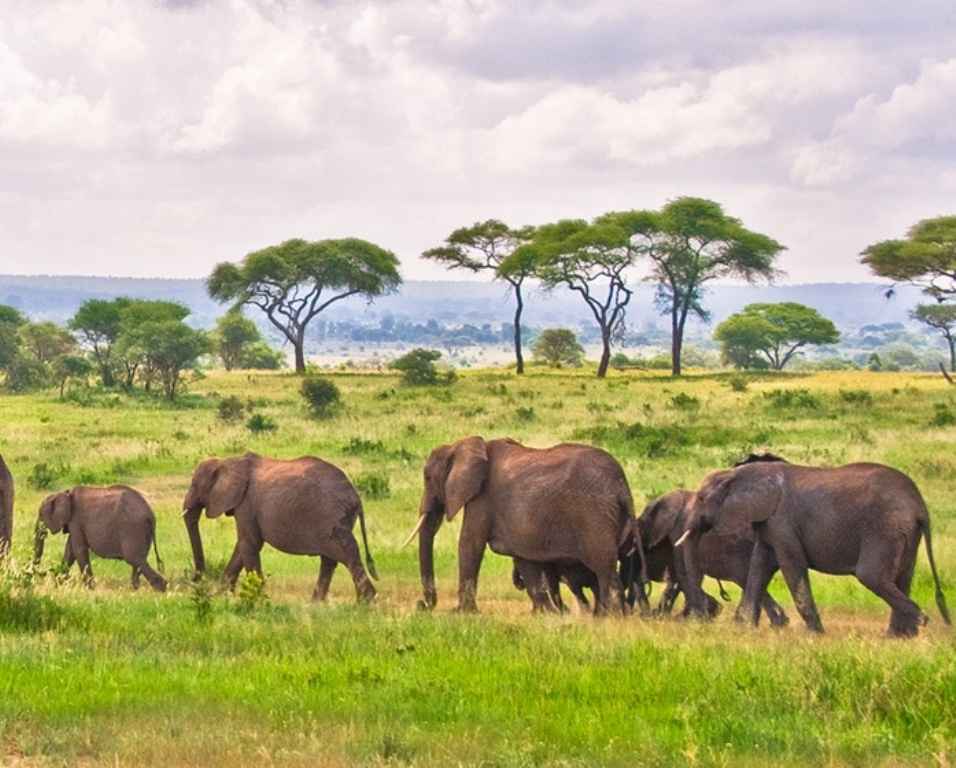
Tarangire National Park is one of the most underrated safari destinations in Tanzania. Famous for its huge dry-season elephant herds and ancient baobab trees, it offers superb game viewing, beautiful scenery and a calmer atmosphere than the Serengeti or Ngorongoro Crater. Many travellers who visit Tarangire National Park on the way to the more famous parks leave saying it was the highlight of their trip.
This guide explains what makes Tarangire National Park special: its elephants, baobabs and birdlife, the best areas to explore, when to visit, how to get there and how to combine it with the rest of Tanzania's northern safari circuit.
In This Guide
- About Tarangire National Park
- The Elephants of Tarangire
- Baobabs and Landscapes
- Wildlife in Tarangire National Park
- Birdwatching
- Areas to Explore
- Things to Do
- Best Time to Visit
- Plan Your Tanzania Safari
About Tarangire National Park
Tarangire National Park lies in the Manyara Region of northern Tanzania, a short drive south-west of Arusha. It covers a large area of rolling savannah, woodland, seasonal swamps and river valleys, and it forms part of a wider ecosystem that stretches across the surrounding plains and wildlife management areas.
The park is named after the Tarangire River, which runs through it from south to north. In the dry season this river is the only permanent source of water for a vast area, and it draws thousands of animals into the park from the surrounding countryside. This seasonal movement is what makes Tarangire National Park one of the best places in Africa to see large concentrations of wildlife.
The park is managed by Tanzania National Parks, and it is a key stop on the famous northern safari circuit, together with Lake Manyara, Ngorongoro Crater and the Serengeti.
The Elephants of Tarangire National Park
Elephants are the stars of Tarangire National Park. During the dry season, from around June to October, herds gather along the Tarangire River and in the surrounding swamps, and it is common to see dozens or even hundreds of elephants in a single afternoon.
Watching family groups crossing the river, digging for water in the dry sandbeds or dust-bathing in the red earth is unforgettable. Young calves stay close to their mothers, while the older matriarchs lead the herd to water and food. Bull elephants are often seen alone or in small bachelor groups.
The African savanna elephant is listed as endangered on the IUCN Red List, so the healthy herds of Tarangire National Park are a precious sight. Tourism helps fund the protection of these animals and their habitat.
Baobabs and Landscapes
The baobab is the iconic tree of Tarangire National Park. These giant trees, with their thick, silver-grey trunks and twisted branches, can live for many centuries. Their trunks store water, helping them survive the long dry season, and elephants sometimes strip the bark to reach the moisture inside.
Baobabs are often called "upside-down trees" because, when leafless, their branches look like roots reaching into the sky. Photographing elephants beneath a baobab in the golden evening light is one of the classic images of a Tanzanian safari.
Beyond the baobabs, the park's landscapes include acacia woodland, open grasslands, rocky hills and large seasonal swamps. Giant termite mounds rise from the plains, some of them abandoned and used by dwarf mongooses and other small animals as homes.

Wildlife in Tarangire National Park
Tarangire National Park offers a wide variety of wildlife beyond its elephants.
Predators
Lions are regularly seen, and the park's lions are sometimes found resting in trees. Leopards live in the woodland and along the river, while cheetahs hunt on the open plains. Spotted hyenas, jackals and occasionally African wild dogs complete the predator line-up.
Grazers and Browsers
In the dry season, large numbers of zebra, wildebeest, buffalo, giraffe, impala and eland gather near the river. Waterbuck and warthogs are common, and the park is one of the few places on the northern circuit where you may see fringe-eared oryx, gerenuk and lesser kudu, which prefer drier habitats.
Smaller Creatures
Look out for dwarf mongooses on the termite mounds, vervet monkeys and baboons in the trees, and rock hyraxes on the hills. Pythons are sometimes seen draped in the branches of trees near the swamps.
Birdwatching in Tarangire National Park
Tarangire National Park is a paradise for birdwatchers, with more than 500 species recorded. The mix of woodland, grassland and swamps supports a huge variety of birds.
Specialities include the yellow-collared lovebird and the ashy starling, both found only in Tanzania. Large birds such as ostriches, kori bustards, ground hornbills and secretary birds stride across the plains, while raptors such as bateleurs, martial eagles and lappet-faced vultures soar overhead. The swamps attract storks, herons and other water birds.
The wet season, from November to April, is the best time for birding, when migrant species from Europe and Asia join the resident birds and many species breed.
Areas to Explore in Tarangire National Park
Tarangire National Park is large, and different areas offer different experiences.
- The Tarangire River in the north is the focus of most game drives in the dry season, with elephants, buffalo and big cats along its banks.
- Silale Swamp is a large wetland where elephants, buffalo and lions gather. It stays green long after the surrounding land has dried out.
- Lemiyon in the north is known for its baobabs and open grasslands, often with large herds of grazers.
- Matete offers open plains and woodland near the river, with good chances of predators.
- The southern areas are wilder and see far fewer vehicles, rewarding those who spend more time in the park.
Things to Do in Tarangire National Park
- Game drives are the main activity, with morning, afternoon and full-day options.
- Walking safaris with armed rangers or guides are offered in some areas, giving a closer look at tracks, plants and insects.
- Night drives are possible in some areas outside the park boundaries, revealing nocturnal animals such as genets and bushbabies.
- Cultural visits to Maasai communities around the park offer insight into traditional life.
- Bush meals and sundowners under baobab trees are a memorable way to end the day.
- Photography is outstanding, especially with elephants and baobabs in the late afternoon light.
Best Time to Visit Tarangire National Park
Tarangire National Park can be visited all year, but the experience changes with the seasons.
- June to October (dry season): the best time for wildlife. Animals concentrate around the river and swamps, and elephant numbers are at their highest.
- November to December: the short rains begin and animals start to disperse, but game viewing is still good.
- January to March: a green, lush period with newborn animals and excellent birdwatching.
- April and May: the long rains. Some roads become muddy, but the park is quiet and beautiful.
In the wet season, many animals move out of the park onto the surrounding plains, returning as the land dries out. Our guide to the best time to visit Tanzania explains how Tarangire fits into the wider seasonal picture.
Getting to Tarangire National Park
Tarangire National Park is about two to three hours by road from Arusha, along a good tarmac road for most of the way. Its location makes it an easy first or last stop on a northern circuit safari.
Most international visitors fly into Kilimanjaro International Airport, between Arusha and Moshi. Scheduled light-aircraft flights also serve airstrips in and near the park, which is convenient if you are combining it with the Serengeti.
Where to Stay
Accommodation in and around Tarangire National Park ranges from simple campsites and mid-range lodges to beautiful tented camps with views over the river valley. Staying inside the park lets you start game drives at first light, while lodges on the edge of the park often offer walking safaris and night drives in the surrounding conservancies.
A Day in Tarangire National Park
A typical day starts before sunrise with coffee and a light breakfast, followed by an early game drive along the river as the elephants come down to drink. Mornings are cool and the light is soft, perfect for photography and for finding predators that have been active during the night.
After a hearty brunch and a midday rest, the afternoon drive heads to a swamp or a quieter part of the park. As the heat fades, herds move back to the water, giraffes browse among the baobabs and the evening sky turns orange behind the trees. The day often ends with a sundowner before returning to camp for dinner around the fire.
A Short History of the Park
The area was declared a national park in 1970, protecting the river valley that wildlife had relied on for generations during the dry months. Before that, the land was used by Maasai and other pastoralist communities, who moved their cattle with the seasons in much the same way as the wildlife.
Over the decades, conservation efforts have focused on protecting the elephant population and the wider landscape around the park. Today, rangers, researchers and local communities work together to reduce conflict between people and wildlife, especially where elephants leave the park to feed on farmland.
A Wider Ecosystem and Wildlife Corridors
The park is only part of a much larger ecosystem. In the wet season, many animals leave the river valley and spread out across the Simanjiro plains to the east and the land between the park and Lake Manyara to the north-west, where fresh grass and seasonal water are plentiful.
Wildlife corridors such as the Kwakuchinja corridor allow elephants, zebras and wildebeest to move between these areas. Community-run wildlife management areas, including Burunge and Randilen, help keep these routes open, while giving local people a share of tourism income. Protecting these corridors is essential, because the dry-season spectacle depends on animals being able to return to the river each year.
Photography Tips
The combination of elephants, baobabs and open skies makes this one of the most photogenic parks in East Africa. Plan to be out at sunrise and in the final hours before sunset, when the light is warm and long shadows bring out the texture of the baobab trunks.
A zoom lens between 100 and 400 millimetres covers most wildlife, while a wide-angle lens is perfect for elephants framed by huge trees. Dust is common in the dry season, so carry a blower brush and cover your camera when the vehicle is moving. Ask your guide to position the vehicle with the sun behind you for the best light.
Staying Safe on Safari
Safaris here are very safe when you follow your guide's advice. Stay inside the vehicle except at designated picnic sites, keep your voice low near animals and never feed wildlife. Elephants are generally calm, but mothers with young calves can be protective, so give them plenty of space.
Speak to a travel clinic about vaccinations and malaria prevention before you travel, and use insect repellent in the evenings. Drink plenty of water during the hot middle part of the day, and wear a hat and sunscreen on open-roof game drives.
What to Pack
Pack light, breathable clothing in neutral colours such as khaki, beige and olive. Avoid dark blue and black, which attract tsetse flies. Bring a warm layer for early mornings, a wide-brimmed hat, sunglasses, sunscreen, insect repellent, binoculars and a camera with spare batteries. Our safari packing list has a complete checklist that works just as well for Tanzania.
Combine Tarangire With the Northern Circuit
Tarangire National Park is the perfect introduction to a northern Tanzania safari. Popular combinations include:
- Lake Manyara National Park, known for its groundwater forest, flamingos and baboons.
- Ngorongoro Crater, the world's largest intact volcanic caldera, home to black rhinos. Read about the best time to visit Ngorongoro Crater and where to stay in Ngorongoro.
- The Serengeti, for the Great Migration and big cats. See our Serengeti National Park guide.
- Kilimanjaro, for an unforgettable climb before or after your safari. Read our guide to climbing Kilimanjaro.
- Zanzibar, for a relaxing beach finish on our 5 Day Zanzibar Island Tour.
Thinking about combining Tanzania and Kenya? Our comparison of Kenya vs Tanzania safaris will help you decide.
Visiting With Children
The park works very well for families. The drive from Arusha is short, elephants are easy to find in the dry season, and game drives can be planned around children's energy levels, with a long rest at the lodge in the middle of the day. Many lodges offer family tents, swimming pools and junior ranger activities, and children often love spotting dwarf mongooses on the termite mounds and counting the elephants crossing the river.
Choose lodges that welcome younger guests, keep drives to a few hours at a time and pack plenty of snacks and water. A private vehicle gives you the flexibility to stop whenever the children need a break.
Responsible Travel and Local Communities
Responsible tourism helps protect both wildlife and the people who share the land with it. Choose lodges that employ staff from nearby villages, buy crafts directly from community cooperatives and treat cultural visits with respect, asking before you take photographs of people.
Simple habits also make a difference: use refillable water bottles, avoid single-use plastics, stay on designated tracks and keep a respectful distance from animals. Park and conservation fees support anti-poaching patrols, research and community projects, so every visit contributes to protecting this remarkable ecosystem.
Common Questions About Tarangire National Park
What is Tarangire National Park famous for? It is famous for its large dry-season elephant herds, ancient baobab trees and excellent birdlife.
How many days should I spend in Tarangire? One full day gives you a good introduction, but two nights let you explore quieter areas and enjoy more relaxed game drives.
Can you see the Big Five in Tarangire? Lions, leopards, elephants and buffalo are present. Rhinos are not found in the park, but you can see them in Ngorongoro Crater.
Is Tarangire worth visiting? Absolutely. It is quieter than the Serengeti and Ngorongoro, offers outstanding elephant viewing and is easy to reach from Arusha.
Can I visit on a day trip from Arusha? Yes. The park is close enough for a long day trip, leaving early in the morning and returning in the evening. However, staying at least one night lets you enjoy the best light at sunrise and sunset, when animals are most active.
Are there tsetse flies? Tsetse flies can be present in wooded areas, especially in the wet season. Wear light-coloured clothing and use insect repellent.
Plan Your Tanzania Safari
Tarangire National Park combines huge elephant herds, iconic baobabs and peaceful game drives in one of Tanzania's most beautiful landscapes. Our team can include it in a tailor-made northern circuit safari that suits your dates and interests.
- See our 4 Day Tarangire, Serengeti and Ngorongoro Crater Safari
- Explore the 4 Day Serengeti and Ngorongoro Crater Safari
- Browse all our Tanzania safari packages
Ready to see the elephants of Tarangire? Contact us for a free, tailor-made Tanzania itinerary.