

Mara River crossings are the single most dramatic scene the Masai Mara has to offer, and for many travelers they are the one moment a safari is built around. Thousands of wildebeest gather on a muddy bank, hesitate, and then surge into the water together, while crocodiles wait below and the herd scrambles for the far side.
This guide is a focused look at Mara River crossings themselves: what actually happens at the water's edge, where guides tend to watch, why no two crossings are ever quite the same, and how to give yourself the best realistic chance of seeing one without treating it as a guaranteed event on any single day.
In This Guide
- Inside a Crossing: What You Actually See
- Where the Action Usually Happens
- What Makes Mara River Crossings So Unpredictable
- The Crocodiles Waiting Below
- The Best Months to Catch a Crossing
- How Guides Position for the View
- Photography Tips for Crossing Day
- Crossing Etiquette: Give Them Space
- Setting Realistic Expectations
- Crossings Beyond the Wildebeest
- A Typical Day Waiting for a Crossing
- Choosing Where to Stay for Crossing Access
- Frequently Asked Questions
Inside a Crossing: What You Actually See
Long before any animal enters the water, Mara River crossings usually begin with waiting. Wildebeest gather in growing numbers along the bank, grunting and milling about, sometimes for an hour or more, as if building up the courage to commit. Zebra often join the edges of the herd, and the tension on the bank is obvious even from a distance.
Then, almost without warning, one animal jumps. That first move can trigger a chain reaction: dozens, then hundreds, then sometimes thousands of wildebeest plunge into the river at once, kicking up spray and dust in a scene that photographs and feels almost nothing like a calm nature documentary. Mara River crossings are loud, chaotic and genuinely thrilling to watch in person.
Not every animal makes it across cleanly. Some are swept downstream by the current, some are injured in the crush of bodies, and a few become prey to the crocodiles stationed below the surface. It is a raw, unscripted piece of nature, and that rawness is exactly why Mara River crossings draw so many travelers back to the same stretch of riverbank year after year.
Where the Action Usually Happens
Guides who work the Mara full time come to know a handful of stretches of the Mara River where crossings happen again and again, shaped by the terrain, the width of the river and the gentleness of the banks on either side. Some of the best-known points sit near Lookout Hill, where elevated ground gives both the herd and watching vehicles a clear view of the water below.
Other favored crossing points lie near Paradise Plain and along stretches closer to the Mara Serena side of the reserve, where the river narrows and the banks are low enough for wildebeest to enter and exit without a long, exhausting climb. None of these locations are fixed rules; the herd chooses its own crossing point each time, but guides use these known stretches as their starting point when a crossing seems imminent.
Many of these crossing points sit close to the private conservancies bordering the main reserve, and travelers based in one of the Masai Mara conservancies are often well placed to reach the river quickly once word of a gathering herd spreads among guides on the radio.
What Makes Mara River Crossings So Unpredictable
If there is one thing every experienced Mara guide agrees on, it is that Mara River crossings cannot be scheduled. A herd can stand on the bank for hours, retreat, regroup, and try again the next day, or simply wander off to graze and attempt a crossing somewhere else entirely.
False starts are common. A handful of wildebeest will step toward the water, lose their nerve, and the whole group drifts back from the edge. Guides watch for these build-ups because a false start often precedes a real one, but there is no reliable formula for predicting exactly when the herd will finally commit.
This unpredictability is part of what makes Mara River crossings so compelling to witness. Nothing about the moment is staged or timed for an audience; the animals move when the pressure of thirst, grass on the far bank or simple herd instinct tips the balance, and watching that decision unfold is very different from seeing a predictable, scheduled wildlife event.
The Crocodiles Waiting Below
Nile crocodiles are a permanent, understated presence in Mara River crossings. Some individuals grow enormous after years of feeding on migrating herds, and they position themselves in deep pools along known crossing stretches, barely visible until the moment they strike.
Crocodiles do not attack every crossing, and many wildebeest cross the same stretch of water without incident. But the possibility of a crocodile ambush adds a genuine edge of danger to Mara River crossings, and it is part of why the herd often hesitates so visibly before committing to the water.
For travelers watching from the bank, a crocodile strike can happen in seconds, often before anyone has time to react with a camera. Guides who know the river tend to watch the water itself as closely as the herd, since a crocodile's subtle movement is often the first real sign that a dramatic moment is about to unfold.
Some of the crocodiles associated with the busiest Mara River crossings are well known individually to guides who have tracked them for years, their size and scars making them recognizable from one season to the next. Watching how the herd seems to sense their presence, hesitating longer near a pool known to hold a large crocodile, is one of the quieter but fascinating details of the whole spectacle.
The Best Months to Catch a Crossing
Mara River crossings are tied to the broader rhythm of the Great Migration, and they are most likely during the months when the herd is moving between the Serengeti and the Mara, roughly from July through October. Our Great Migration cycle guide breaks this rhythm down month by month if you want the full seasonal picture.
Crossings can happen in both directions during this window. Early in the season the herd typically pushes north into the Mara, and crossings move the other way again later on as the animals head back south toward the Serengeti. Either direction can produce a dramatic scene at the riverbank.
For a deeper look at exactly how timing, rainfall and grass growth influence where the herd moves in a given year, our guide to migration timing and viewing spots covers the wider picture beyond the river itself. Within that window, Mara River crossings become a realistic daily possibility rather than a rare event, though still never a guaranteed one.
How Guides Position for the View
Experienced guides approach a potential crossing carefully, choosing a vantage point that offers a clear line of sight to the water without parking directly in the herd's likely exit path. Getting this positioning right matters enormously for both the quality of the view and the welfare of the animals.
Radio communication between guides plays a huge role here. When one vehicle spots a herd building up near the water, word travels quickly across the reserve, and other guides who are close enough will quietly move into position, often well before any animal actually enters the river.
Good guides also read the wind, the light and the mood of the herd, since a nervous group of wildebeest can be spooked into retreating by a vehicle that gets too close too soon. Watching a seasoned guide anticipate a crossing is almost as interesting as the crossing itself.
Photography Tips for Crossing Day
A fast shutter speed is essential for photographing Mara River crossings, since the action at the water's edge happens quickly and often in low early-morning or late-afternoon light. A shutter speed of at least one thousandth of a second will help freeze splashing water and leaping animals.
Patience matters just as much as camera settings. Many photographers do best by choosing one promising spot, settling in, and waiting, rather than chasing every rumor of a gathering herd further down the river. Mara River crossings reward stillness on the part of the watcher as much as drama on the part of the herd.
A zoom lens with reasonable reach is useful, since respectful vehicle positioning often means staying further back from the water than you might expect. Bring spare batteries and memory cards, because once a crossing begins it can run for many unpredictable minutes without pause.
Crossing Etiquette: Give Them Space
Responsible viewing of Mara River crossings depends on vehicles giving the herd room to move freely. Crowding the bank with too many vehicles, or blocking an obvious exit route on the far side, can panic the animals and change the outcome of the crossing itself.
Good camps and operators brief their guides on this etiquette, and most guides will hold back deliberately even when a clearer photograph might be possible from a closer position. The welfare of the herd during Mara River crossings always takes priority over convenience for watchers.
If you notice a vehicle behaving inconsiderately near a crossing point, a quiet word to your own guide is usually enough; most operators take this seriously, both for conservation reasons and because panicked animals rarely produce the clean, watchable crossing everyone hopes for.
Reserve authorities and conservancy managers also monitor vehicle behavior around popular crossing points, and some areas limit the number of vehicles allowed near the water at once during peak migration weeks. This kind of management helps keep Mara River crossings sustainable for both the wildlife and the travelers hoping to witness them for years to come.
Setting Realistic Expectations
It is worth being honest about this: Mara River crossings are not guaranteed on any particular safari day, even during the peak months. Some travelers spend several days in the Mara and witness multiple crossings, while others see none at all despite excellent guiding and good timing.
A realistic safari itinerary treats a crossing as a wonderful bonus rather than the sole goal, since the surrounding days of game drives, predator sightings and general Mara wildlife are rewarding in their own right. Building in enough time in the right season gives you a genuinely good chance, without promising something nature does not always deliver on schedule.
Crossings Beyond the Wildebeest
Wildebeest make up the vast majority of animals involved in Mara River crossings, simply because of their sheer numbers during the migration, but they are rarely alone at the water's edge. Zebra frequently cross alongside or just ahead of the main herd, and their stripes make them easy to pick out in photographs taken during a crossing.
Zebra tend to be slightly bolder about entering the water first in some crossings, possibly because they are less tightly bound to the herd instinct that keeps wildebeest clustered and hesitant. Watching the different body language between the two species while they wait on the bank is one of the small details that makes repeated viewing of Mara River crossings so interesting.
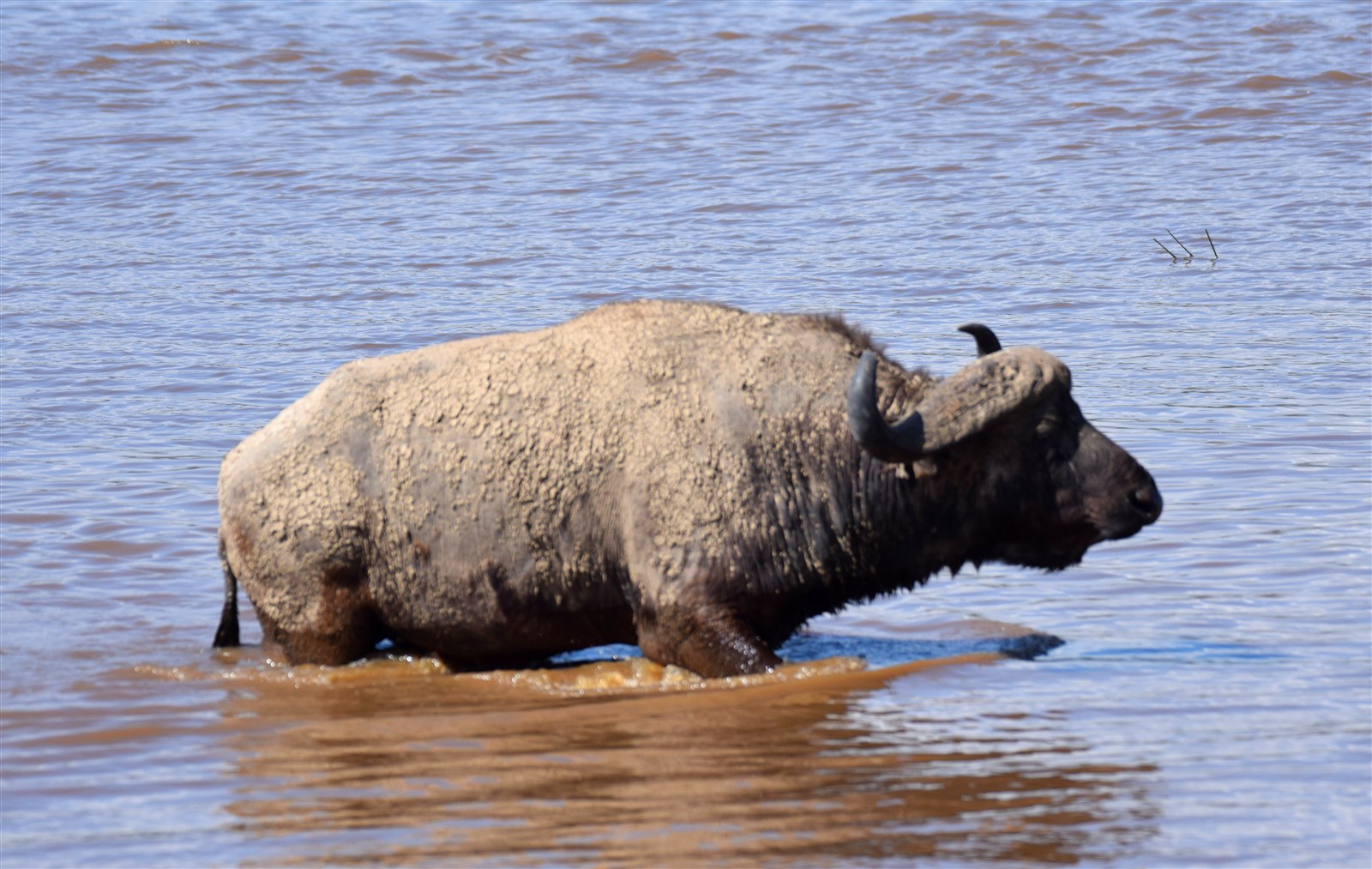
Eland, topi and the occasional buffalo can also appear near crossing points, though they are far less commonly swept up in the chaos of a full wildebeest crossing. Resident hippos and the ever-present crocodiles round out the cast of animals you are likely to see in and around the river itself, whether or not a crossing is actually underway on a given day.
A Typical Day Waiting for a Crossing
A day built around the possibility of Mara River crossings often starts with an early game drive toward a stretch of river where herds have been building up over the previous days. Guides check the radio chatter from other vehicles and use their own read of where the pressure in the herd seems to be growing.
Much of the day can involve waiting quietly near a promising bank, watching wildebeest mill about without committing, before moving on to other sightings nearby if nothing develops. This is a normal part of the rhythm of Mara River crossings, and good guides use the waiting time to point out birds, smaller mammals and the general behavior of the herd.
When a crossing finally does begin, everything changes quickly. Vehicles already in position get the best view, engines are switched off to avoid spooking the animals, and the next several minutes can feel like the entire reason for the trip. Afterward, the herd regroups on the far bank and life on the Mara continues, often remarkably calm again within the hour.
Choosing Where to Stay for Crossing Access
Camps and lodges located close to known crossing points have a real advantage when it comes to witnessing Mara River crossings, simply because they can reach a developing situation faster than properties on the far side of the reserve. Many camps near the river build their reputation partly on this proximity.
That said, a camp further from the river is not shut out entirely. The migration herd itself moves through huge areas of the Mara during peak season, and good guiding, strong radio networks between camps, and a flexible daily schedule can make up for a less central location when it comes to reaching Mara River crossings in time.
If seeing a crossing is your main priority, it is worth telling your tour operator directly so they can recommend camps with a strong track record near the river during your travel dates, and build flexibility into your daily game drive plan around the possibility of a crossing developing.
Frequently Asked Questions
When is the best time to see Mara River crossings? Roughly July through October, when the migration moves between the Serengeti and the Mara, offers the best chance, though exact timing shifts a little each year. It is worth checking current UK government travel advice for Kenya before you travel, regardless of season.
Are Mara River crossings dangerous to watch? Not for visitors in a vehicle at a sensible distance. The danger is real for the animals themselves, particularly from crocodiles and the crush of the herd.
How long does a crossing last? A single crossing can take anywhere from a few minutes to well over half an hour, depending on herd size and how often the animals hesitate partway through.
Can I see a crossing outside the peak months? It is possible but much less likely, since the herd's position depends on rainfall and grazing patterns that vary year to year.
Do guides know exactly where a crossing will happen? They know the likely stretches of river based on experience, but the herd ultimately decides, so no guide can promise an exact spot or time.
Is it worth staying several nights just for a crossing? Yes, if your schedule allows it. More time in the right season meaningfully improves your odds of witnessing Mara River crossings firsthand.
What time of day do crossings usually happen? They can happen at almost any hour, though many guides report a slight tendency toward mid-morning and late afternoon, when the herd has had time to build up pressure to move.
Will every vehicle get a good view? Not always. Good positioning depends on arriving early and on the guide's read of the herd, which is one more reason experienced operators matter when Mara River crossings are a priority.
Plan Your Safari
If witnessing Mara River crossings is high on your list, our team can time your Masai Mara itinerary around the migration's likely position and build in enough days to give you a genuine chance. Contact us to start planning your trip to the Mara.