

Understanding the Great Migration: Timing, Routes, and the Best Viewing Spots
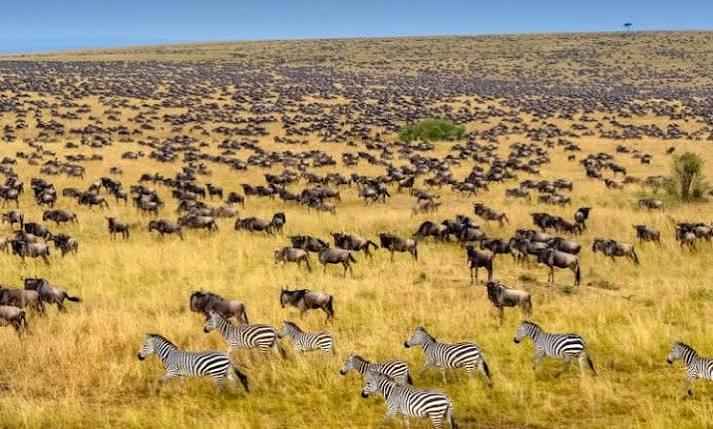
Every year, more than a million wildebeest, along with hundreds of thousands of zebras and gazelles, set off on a journey across the plains of Tanzania and Kenya. They are chasing fresh grass and water, and they pay for it with exhausted legs, crocodile-filled rivers, and the constant attention of lions, hyenas and cheetahs. This is the Great Migration, often called the greatest wildlife spectacle on Earth.
At Yulle Adventures, the question we hear most from travelers is simple: “When should I go?” The honest answer is that it depends on what you want to see. The migration is not a single event on a single date. It is a never-ending circle, and every stage of it offers something different. This guide explains how it works, when each phase happens, and where to stand to see it at its best.
What Exactly Is the Great Migration?
The Great Migration is the continuous, clockwise movement of roughly 1.5 million wildebeest, about 200,000 zebras and several hundred thousand Thomson’s gazelles and eland through the Serengeti–Mara ecosystem. This vast landscape stretches across northern Tanzania’s Serengeti National Park and into Kenya’s Maasai Mara National Reserve, covering around 800 kilometres or more in a full loop.
It is easy to imagine the migration as a one-way dash from Tanzania to Kenya and back, but there is no starting gun and no finish line. The herds are always moving somewhere, in a loop that follows the rain. Whether you visit in February or September, a part of the migration is happening somewhere, and a good guide will know exactly where to find it.
The wildebeest are the stars, but they rarely travel alone. Zebras often lead the way because they can graze on the taller, tougher grass that wildebeest dislike. The wildebeest follow and eat the shorter grass the zebras leave behind, and the gazelles trail along to eat what remains. It is a remarkably efficient partnership.
Why Do They Move?
The answer is food and water. The Serengeti–Mara ecosystem is not uniform: the short-grass plains of the south are rich in minerals and nutrients after the rains, but they dry out quickly. The woodlands and long-grass areas of the north hold water and grazing through the dry season. The herds simply follow the rain, and so the rain decides the route.
Because rainfall changes from year to year, the migration never keeps an exact timetable. A late rainy season can delay the herds by weeks, and an early one can speed them up. Any operator who promises you a crossing on a specific date is guessing, and you should treat such promises with caution. What we can offer is a reliable seasonal pattern, and the flexibility to adjust when the animals do something different.
The Migration Calendar: Season by Season
Here is the broad pattern of the year, followed by what each stage feels like on the ground.
| Month | Where the herds are | What to expect |
| January – March | Southern Serengeti and Ndutu (Tanzania) | Calving season; huge herds on open plains; predators everywhere |
| April – May | Central Serengeti, moving north-west | Long rains; herds on the move; fewer visitors and lower rates |
| June | Western Corridor and Grumeti River | Herds gather and cross the Grumeti; mating season (rut) begins |
| July – October | Northern Serengeti and Maasai Mara (Kenya) | Mara River crossings; peak season for dramatic action |
| November – December | Northern Serengeti heading south | Short rains; green landscapes; herds drift back toward the plains |
January to March: The Calving Season
In the southern Serengeti and the Ndutu area, the herds gather on the short-grass plains to give birth. In just a few weeks, hundreds of thousands of calves are born, with peak days seeing thousands of births. Within minutes of arriving, a calf can stand, and within a day it can run alongside its mother.
This abundance of newborns attracts predators in large numbers. Lions, cheetahs, leopards and spotted hyenas are all busy, and the drama is constant. If wildlife photography, predator action and wide-open scenery are your priorities, this is a superb time to travel. It is also a time of high contrast: new life and sudden death, often within sight of each other.
April to May: On the Move
As the plains dry out and the long rains arrive, the herds begin to stream north and west. Long columns of animals, sometimes stretching for kilometres, wind their way across the central Serengeti. This is the quiet season for tourism. Lodges offer lower rates, the landscape is lush and green, and you often have sightings almost to yourself. Rains can make some roads challenging, but for travelers who value solitude and good value, it is a hidden treasure.
June: Gathering at the Grumeti
By June, the herds reach the Western Corridor and the Grumeti River. The crossings here are smaller than those on the Mara River, but they are dramatic in their own right, with large crocodiles waiting in the water. June also marks the start of the rut, when males compete for territory and mates, filling the air with grunting and dust.
July to October: The Mara River Crossings
This is the season most people picture when they think of the migration. From about July, the leading herds reach the northern Serengeti and begin crossing the Mara River into Kenya’s Maasai Mara, and they typically remain there through October. Thousands of animals gather on the riverbank, waiting for a signal that nobody can see, before plunging down the steep banks into the water. Crocodiles lie in wait, and the current and the crush of bodies are dangers in themselves.
It is intense, noisy, and unforgettable. It is also the busiest and most expensive time to visit, so book early. Lodges and camps in the best locations fill up many months in advance.
November and December: The Return South
As the short rains begin in late October and November, the herds start drifting back south into the Serengeti, with some crossing the Mara River again on the way. The landscape turns green, the air clears of dust, and the crowds thin out. Because the animals are heading toward the southern plains in preparation for calving, this period is a wonderful, quieter alternative for travelers who want large herds without the peak-season prices.
The Route: A Circular Journey
Picture a giant clock face laid over the ecosystem. At around six o’clock, in the southern Serengeti and Ndutu, the herds calve between January and March. They then travel up through the central Serengeti (Seronera) toward nine o’clock, reaching the Western Corridor and the Grumeti River around May and June. By twelve o’clock, in the northern Serengeti and across the border in the Maasai Mara, the herds spend the dry months from July to October. Around three o’clock, they turn back southward through the eastern parts of the northern Serengeti and the Lobo area, ready to arrive on the southern plains again by December and January.
It is worth knowing that not every animal follows the circle at the same pace. Some groups remain in the Mara region for much longer, and some herds cross the Mara River back and forth several times. This is what makes seasoned guides so valuable: they read the signs, follow fresh information from other drivers and rangers, and position you where the action is likely to be.
The Best Viewing Spots
The Great Migration can be seen in both Tanzania and Kenya. Here are the places we would point you toward.
- Ndutu and the southern Serengeti (January to March): The best location for calving and predator action. The open plains give long views, and the herds are dense and spread out. A fantastic area for photographers.
- Seronera and the central Serengeti (year-round, with migration activity in spring): Known for excellent big cat sightings throughout the year. When the herds pass through, you get the bonus of migration scenes alongside leopards and lions.
- Western Corridor and the Grumeti River (May to July): Good for earlier river crossings with fewer vehicles. Gallery forests and riverbanks add a different feel to this part of the journey.
- Kogatende and the northern Serengeti (July to October): This region is the Tanzanian gateway to the Mara River crossings, and it is much quieter than the Kenyan side. It is an excellent choice if you want drama with fewer vehicles.
- The Maasai Mara National Reserve and Mara Triangle (July to October): The classic Kenyan setting for the river crossings. The Mara Triangle in the west is generally quieter and has a number of well-known crossing points along the escarpment-backed river.
- The Mara conservancies (July to October and beyond): Private conservancies bordering the reserve, such as Mara North, Naboisho and Olare Motorogi, offer fewer vehicles, walking safaris and night drives. They also support the Maasai landowners who lease their land for conservation, so your visit directly benefits local communities.
What a River Crossing Is Really Like
Many travelers expect a crossing to be a quick, guaranteed event. In reality, it is better described as a waiting game. Herds can gather at the bank for hours, or even days, before something triggers the movement. Sometimes they turn back at the last moment. When they do cross, it can be over in minutes or it can last for hours.
Patience is the most important piece of equipment. Pack a picnic, bring a good book, and be ready to sit quietly with your guide. Many of our guests tell us that the waiting, with the tension building and the sounds of thousands of animals nearby, is as memorable as the crossing itself.
It is also worth remembering that this is nature, not a performance. Crossings can be violent, and not every animal makes it to the other side. Responsible operators keep a respectful distance and never position vehicles in a way that blocks the herds’ path or influences their decisions.
Practical Tips for Planning Your Migration Safari
- Decide what matters most. If it is river crossings, aim for August and September. If it is calves and predators, aim for February. If it is peace, value and green scenery, consider April, May, November or early December.
- Book early for peak months. July to October is the busiest period, and good camps near the river sell out far ahead of time.
- Allow enough days. We recommend at least four to five days in a single area. Migration movements are unpredictable, and extra time greatly improves your chances of a great sighting.
- Choose a good guide. A skilled, well-informed guide makes the difference between simply seeing animals and truly understanding what you are watching.
- Pack smart. Neutral-coloured clothing, a hat, sunscreen, binoculars, a camera with a long lens, and layers for cool early mornings are all worth bringing.
- Travel responsibly. Choose operators who support conservation and local communities, follow park rules, and keep a respectful distance from the animals.
A Journey Worth Making
The Great Migration is not something you can fully understand from photographs or documentaries. You have to feel the ground tremble, hear the grunting of a million animals, and watch the dust rise in the evening light. It is a reminder that some of the world’s greatest wonders are still wild, unscripted and entirely on nature’s terms.
Whether you dream of dramatic crossings, calving season on the open plains, or a quiet green-season safari, there is a right time and a right place for you.
At Yulle Adventures, we would love to help you find it. Get in touch to start planning your Great Migration adventure.