


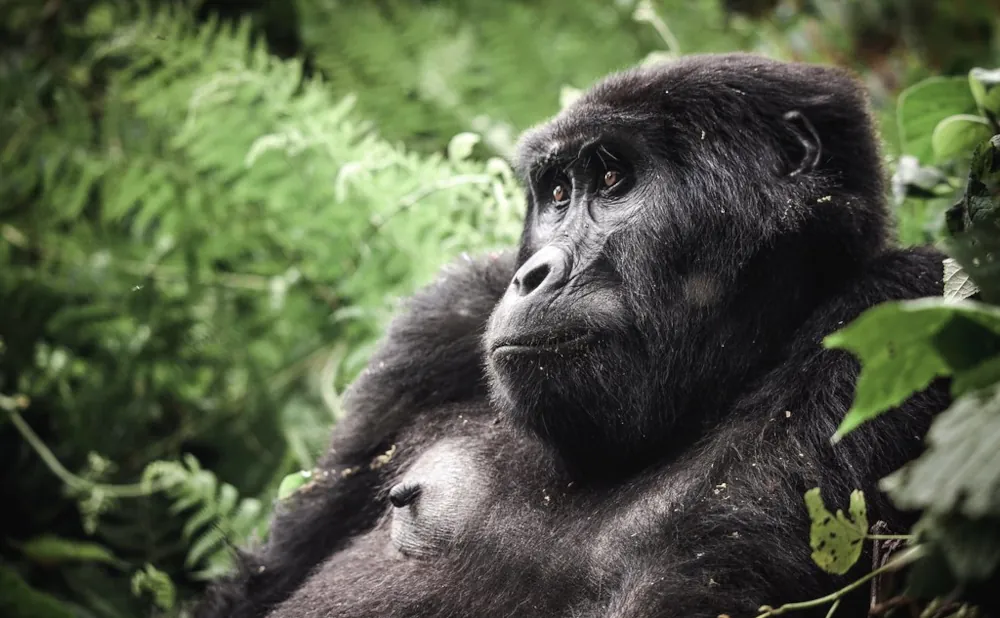
Gorilla trekking in Uganda is one of the most moving wildlife experiences on Earth. After hiking through steep, misty rainforest, you step into a clearing and find yourself a few metres from a family of mountain gorillas: a silverback resting against a tree, mothers grooming their young and playful infants tumbling through the vines. For one unforgettable hour, you share their world.
Uganda is home to around half of the world's remaining mountain gorillas, which makes it one of the best places to see them. This guide explains where gorilla trekking in Uganda takes place, how permits work, what a trekking day looks like, how fit you need to be, what to pack and when to go.
In This Guide
- Why Choose Gorilla Trekking in Uganda?
- Where Gorilla Trekking in Uganda Takes Place
- Gorilla Permits and Booking
- What a Trekking Day Looks Like
- Gorilla Trekking Rules
- Fitness and Preparation
- What to Pack
- Best Time for Gorilla Trekking in Uganda
- Plan Your Uganda Safari
Why Choose Gorilla Trekking in Uganda?
Mountain gorillas live in only two places in the world: the Virunga Volcanoes, shared by Uganda, Rwanda and the Democratic Republic of Congo, and Bwindi Impenetrable National Park in south-west Uganda. That means Uganda offers gorilla encounters in both of their remaining habitats.
There are several reasons travellers choose gorilla trekking in Uganda:
- More gorilla families to visit. Bwindi has many habituated groups spread across four trekking sectors, which gives more choice of dates and locations.
- Two very different parks. Bwindi offers dense, ancient rainforest, while Mgahinga sits on the slopes of extinct volcanoes with sweeping views.
- Easy to combine with a classic safari. Gorilla trekking in Uganda fits naturally with game drives in Queen Elizabeth National Park, boat cruises on the Nile and chimpanzee tracking.
- A conservation success story. Mountain gorilla numbers have grown thanks to protection and community tourism, and your visit directly supports that work.
In 2018 the mountain gorilla was moved from critically endangered to endangered on the IUCN Red List, a rare piece of good news in conservation. Responsible tourism is a key part of that recovery.
Where Gorilla Trekking in Uganda Takes Place
All gorilla trekking in Uganda happens in two national parks in the far south-west of the country, close to the borders with Rwanda and the Democratic Republic of Congo.
Bwindi Impenetrable National Park
Bwindi is the heart of gorilla trekking in Uganda. This ancient rainforest covers steep ridges and deep valleys, and its name hints at how thick the vegetation can be. The park is a UNESCO World Heritage Site, recognised for its exceptional biodiversity, including hundreds of bird, butterfly and tree species.
Bwindi is divided into four trekking sectors, each with its own habituated gorilla families:
- Buhoma in the north was the first sector opened to tourism. It has good lodges and relatively gentle access.
- Ruhija in the east sits high on a ridge, with cooler weather and excellent birding.
- Rushaga in the south has the largest number of habituated families and is the base for the gorilla habituation experience.
- Nkuringo in the south-west is known for steep but spectacular trails with views towards the Virunga volcanoes.
Your permit is issued for a specific sector, so it is important to stay at a lodge close to that sector. Driving between sectors can take several hours on winding mountain roads.
Mgahinga Gorilla National Park
Mgahinga is Uganda's smallest national park and part of the Virunga Conservation Area. It protects the Ugandan slopes of three extinct volcanoes: Muhavura, Gahinga and Sabyinyo. Mgahinga usually has one habituated gorilla family available for trekking, and the open bamboo forest and volcanic scenery make it a beautiful alternative to Bwindi.
Mgahinga is also the best place in Uganda to track golden monkeys, a striking and endangered primate that lives in the bamboo zone. Many visitors also join the Batwa cultural trail, which shares the history and traditions of the forest people who once lived here.
Gorilla Permits and Booking
A permit is required for gorilla trekking in Uganda, and permits are issued by the Uganda Wildlife Authority. Each habituated gorilla family can be visited by a small group of up to eight people per day, so the number of permits is limited.
Here is what you need to know about securing your place:
- Book early. Permits for the busy dry-season months can sell out many months in advance, so it is wise to secure yours as soon as your dates are confirmed.
- Choose your sector first. Your permit is linked to a sector, and your accommodation should be chosen to match.
- Minimum age. Trekkers must be at least 15 years old.
- Bring your passport. Your permit details are checked against your passport at the briefing.
- Let your operator handle it. A reputable tour operator can reserve permits, arrange transport and match your lodge to the right sector, which removes much of the stress.
The Gorilla Habituation Experience
In the Rushaga sector of Bwindi, a small number of visitors each day can join researchers and trackers working with a gorilla family that is still being habituated to people. Instead of one hour, you spend up to four hours with the gorillas, watching how trackers record their behaviour. It is a longer, more immersive form of gorilla trekking in Uganda and is ideal for photographers and keen naturalists.
What a Gorilla Trekking Day Looks Like
Every gorilla trekking in Uganda adventure follows a similar pattern, although the length of the hike varies from day to day.
Early Morning Briefing
The day starts early at the park headquarters of your sector. Rangers give a briefing on safety, gorilla etiquette and the family you will visit. Trekkers are then divided into small groups, often matched by fitness, and each group is assigned a gorilla family.
Into the Forest
Trackers set out even earlier to find where the gorillas nested the night before. They stay in radio contact with your guide, so your group can head straight towards the family. Trails can be steep, muddy and slippery, and in places the guides cut a path through dense vegetation.
The hike can last anything from under an hour to five hours or more each way, depending on where the gorillas have moved. This uncertainty is part of the adventure.
The Magical Hour
When you reach the family, you leave bags and walking sticks with the porters and approach quietly with your guide. You then spend one hour with the gorillas. You might watch the silverback feeding, a mother nursing her infant or young gorillas wrestling and climbing. Many visitors describe it as the most emotional hour of their travels.
Return and Certificate
After your hour, you hike back to the trailhead. Many sectors present trekkers with a certificate to celebrate the experience. The rest of the day is free to relax, visit a local community project or simply reflect on the encounter.
Gorilla Trekking Rules
Mountain gorillas share much of our DNA and can catch human illnesses, including colds and flu. The rules for gorilla trekking in Uganda are designed to protect them:
- Do not trek if you feel unwell, especially with a cough, cold or fever.
- Keep a distance of at least 7 metres from the gorillas wherever possible.
- Wear a face mask if your guide asks you to.
- Keep your voice low and avoid sudden movements.
- Do not eat, drink or smoke near the gorillas.
- Do not use flash photography.
- If a gorilla approaches, stay calm, crouch down slowly and follow your guide's instructions.
- Stay with your group and never wander off alone.
Following these rules keeps both the gorillas and you safe, and helps ensure that gorilla trekking in Uganda can continue for future generations.
Fitness and Preparation for Gorilla Trekking in Uganda
You do not need to be an athlete to enjoy gorilla trekking in Uganda, but a reasonable level of fitness makes the day far more enjoyable. Bwindi's trails climb and descend steep slopes at altitudes of roughly 1,200 to 2,600 metres, and the ground is often wet.
A few simple steps will help:
- Walk regularly before your trip, ideally on hills, and include a few longer hikes in the weeks before you travel.
- Hire a porter. Porters carry your bag, help you on steep sections and are a valuable source of local income. Hiring one is highly recommended.
- Take a walking stick. Sticks are usually provided at the start of the trek and make a big difference on muddy slopes.
- Tell the rangers about any limitations. They try to assign families that suit each group's fitness.
Travellers with limited mobility can ask about sedan-chair assistance in some sectors, carried by teams of local porters. Speak to your operator in advance so this can be arranged.
What to Pack for Gorilla Trekking in Uganda
The forest is humid, the weather changes quickly and trails are often muddy, so the right clothing really matters for gorilla trekking in Uganda.
- Sturdy, waterproof hiking boots with good grip
- Long trousers that you can tuck into your socks to keep out ants
- A long-sleeved shirt to protect against nettles and scratches
- A lightweight waterproof jacket
- Gardening or cycling gloves for grabbing branches and vines
- A small daypack with a rain cover
- At least two litres of drinking water and a packed lunch or snacks
- Insect repellent and sunscreen
- A camera with a spare battery, but no flash
- A warm layer for cool mornings at altitude
Choose muted colours such as green, khaki or brown, which blend into the forest. Our complete safari packing list also covers the rest of your East Africa trip.
Best Time for Gorilla Trekking in Uganda
Gorilla trekking in Uganda is possible all year round, because the gorillas do not migrate. However, the weather has a big effect on trail conditions.
- June to August and December to February are the drier months. Trails are less slippery, hiking is easier and these are the most popular times to visit.
- March to May and October to November are wetter. Trails can be muddy, but the forest is lush, there are fewer visitors and permits are often easier to secure.
Rain can fall at any time in a rainforest, so pack waterproofs whatever the season. Early mornings are usually cool and misty, which creates a beautiful atmosphere for photographs.
Getting to Bwindi and Mgahinga
Most visitors fly into Entebbe International Airport. From there you can travel to the gorilla parks by road, which takes a full day through Uganda's green countryside, or take a scheduled domestic flight to airstrips near Bwindi and Kisoro, which saves time.
The southern sectors of Bwindi and Mgahinga are also within reach of Kigali in Rwanda, which is a convenient option for travellers combining Uganda and Rwanda.
Gorilla Family Life: What You Might See
Every gorilla family is different, and every visit unfolds in its own way. Understanding a little about gorilla society makes your hour with them even richer.
A typical family is led by a dominant adult male called a silverback, named after the band of grey hair across his back. He decides where the group travels, settles disputes and protects the family from rivals. Some groups have more than one silverback, with younger males waiting for their chance to lead.
Adult females usually make up the core of the group, along with juveniles and infants of different ages. Infants ride on their mothers' backs for their first years and are often the stars of the visit, rolling, climbing and beating their small chests in imitation of the adults.
Much of the day is spent feeding on leaves, stems, shoots and fruit, followed by a long midday rest. During this quiet time you may watch grooming, play and gentle interactions that reveal how closely related these great apes are to us. Gorilla trekking in Uganda often coincides with this calm period, which is why many visitors describe the encounter as peaceful rather than frightening.
Responsible Gorilla Trekking in Uganda and Local Communities
Responsible tourism is at the heart of gorilla conservation. A share of park revenue supports communities living around Bwindi and Mgahinga, funding schools, health centres and clean water projects. This helps local people benefit directly from protecting the forest.
You can add to that positive impact in simple ways. Hire a porter, buy crafts from community cooperatives, visit a local school or tea project, and choose lodges that employ staff from surrounding villages. Many former hunters now work as trackers and guides, using their knowledge of the forest to protect the animals they once pursued.
By choosing gorilla trekking in Uganda with a responsible operator and following the park rules, you become part of one of Africa's most inspiring conservation stories.
Combine Gorilla Trekking in Uganda With a Safari
Uganda is known as the Pearl of Africa, and gorilla trekking in Uganda combines beautifully with the country's other highlights:
- Queen Elizabeth National Park is famous for its tree-climbing lions in the Ishasha sector and boat trips on the Kazinga Channel. Read our guide to Queen Elizabeth National Park.
- Murchison Falls National Park is where the Nile forces its way through a narrow gorge. Discover it in our Murchison Falls guide.
- Kibale Forest is one of the best places in Africa to track chimpanzees, making it a natural partner for a gorilla trek.
- Lake Bunyonyi near Kabale is a peaceful place to relax after trekking, with terraced hills and calm water.
You can also add a classic Kenya safari to your trip. Our guide to the best time to visit Kenya will help you plan the timing of both.
Common Questions About Gorilla Trekking in Uganda
Is gorilla trekking in Uganda safe? Yes. Treks are led by experienced Uganda Wildlife Authority rangers, and armed rangers accompany groups for protection from forest elephants and other animals. The habituated gorillas are used to calm human visitors.
How close will I get to the gorillas? The rule is to stay about 7 metres away, but gorillas sometimes move closer on their own. Your guide will tell you how to respond.
How many people are in a trekking group? Each gorilla family can be visited by a maximum of eight people per day, which keeps the experience intimate and limits stress on the gorillas.
Can children go gorilla trekking? The minimum age is 15. Younger children can enjoy other activities, such as community visits and nature walks, while adults trek.
Do I need to be very fit? A moderate level of fitness is enough for most treks. Hiring a porter and taking your time will make the day much easier.
To learn more about the work protecting gorillas across the region, the Dian Fossey Gorilla Fund shares research and conservation updates.
Plan Your Uganda Safari
Gorilla trekking in Uganda is a once-in-a-lifetime experience, and a little planning makes all the difference. Our team can secure permits, choose lodges close to your trekking sector and combine your gorilla trek with game drives, boat cruises and chimpanzee tracking.
- Explore our Uganda safari packages
- See the 3 Day Murchison Falls National Park Safari
- Read about tree-climbing lions in Queen Elizabeth National Park
Ready to meet the mountain gorillas? Contact us for a free, tailor-made Uganda itinerary.