

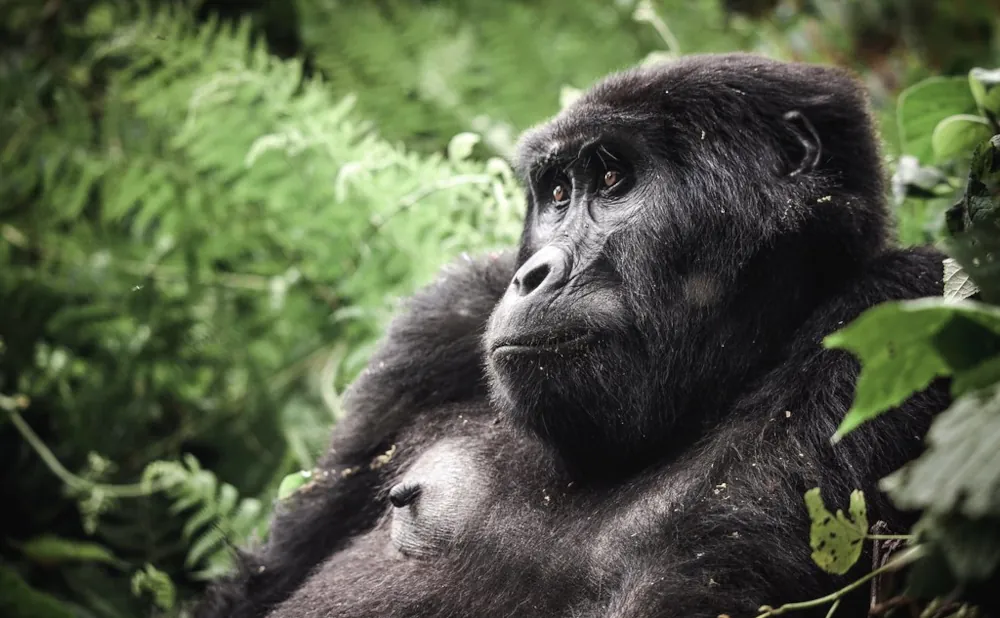
Chimpanzee trekking in Kibale is one of the most thrilling wildlife experiences in Africa. Deep in a tropical rainforest in western Uganda, you follow expert trackers along muddy trails, listening for the hooting calls that echo through the trees. Suddenly the forest erupts with noise, and you find yourself watching our closest living relatives feeding, grooming, squabbling and swinging through the canopy just metres away.
Kibale National Park is often called the primate capital of the world, and it is the best place in East Africa for chimpanzee encounters. This guide explains everything you need to know about chimpanzee trekking in Kibale: the forest and its primates, what a trek is like, permits and rules, the habituation experience, fitness, packing, the best time to go and how to combine Kibale with gorillas and savannah safaris.
In This Guide
- About Kibale National Park
- Meet the Chimpanzees
- What Chimpanzee Trekking in Kibale Is Like
- The Chimpanzee Habituation Experience
- Permits and Rules
- 8 Essential Tips
- Other Primates and Wildlife
- Best Time to Go
- Plan Your Trip
About Kibale National Park
Kibale National Park lies in western Uganda, close to the town of Fort Portal and the foothills of the Rwenzori Mountains. It protects a large area of moist tropical forest, interspersed with grassland and swamps. The forest is home to an extraordinary concentration of primates, with around thirteen species recorded, and one of the largest populations of wild chimpanzees in East Africa.
The landscape around Kibale is beautiful in its own right. Rolling tea plantations, crater lakes and small villages surround the park, and on clear days the snow-capped Rwenzoris rise on the horizon. The park is managed by the Uganda Wildlife Authority, and most chimpanzee trekking in Kibale starts from the Kanyanchu visitor centre.
Kibale has also been an important site for primate research for decades. Long-term studies here have helped scientists understand chimpanzee behaviour, ecology and conservation.
Meet the Chimpanzees
Chimpanzees share a very large proportion of their DNA with humans, and watching them makes the connection obvious. They use tools, solve problems, form close friendships and rivalries, and communicate with a rich range of calls, gestures and facial expressions.
Chimpanzees live in communities that can number dozens of individuals, but they rarely all move together. Instead, they split into smaller groups that change throughout the day as they search for fruit, a pattern scientists call a fission-fusion society. Each community has a dominant alpha male, and status is constantly negotiated through alliances, grooming and displays.
Their diet is mostly ripe fruit, especially figs, along with leaves, flowers, seeds and insects. Occasionally they hunt monkeys, such as red colobus, in cooperative groups, a dramatic behaviour sometimes witnessed by trekkers.
Wild chimpanzees are endangered, threatened by habitat loss, hunting and disease. The Jane Goodall Institute and other organisations work across Africa to protect them, and responsible tourism in places like Kibale helps fund their conservation.
What Chimpanzee Trekking in Kibale Is Like
A typical day of chimpanzee trekking in Kibale follows a simple pattern, although every trek is different.
Morning Briefing
Treks usually depart in the morning and early afternoon from Kanyanchu. Rangers give a briefing about chimpanzee behaviour, safety and the rules, then divide visitors into small groups, each led by an experienced ranger guide.
Searching the Forest
The walk into the forest follows trails through tall trees, vines and undergrowth. Your guide listens for the chimps' pant-hoots, screams and drumming on tree buttresses, and stays in contact with trackers who know where the community spent the night. The terrain in Kibale is relatively flat compared to the gorilla parks, making chimpanzee trekking in Kibale suitable for most reasonably fit visitors.
The Encounter
Once the chimps are found, you spend about one hour with them. Chimpanzees are more active and mobile than gorillas, so the encounter can be energetic. They may be high in a fig tree feeding, resting on the ground, grooming each other or suddenly charging through the undergrowth in a noisy display. Be ready to move quietly with your guide as the group travels.
Returning to the Trailhead
After your hour, you walk back to the visitor centre. A standard trek takes around two to four hours in total, depending on how far the chimps have travelled.
The Chimpanzee Habituation Experience
For a deeper experience, Kibale offers the chimpanzee habituation experience. Instead of a single hour, you join researchers and trackers for most of the day as they follow a chimpanzee community that is still becoming used to people.
You may start early, when the chimps leave their nests, and stay until late afternoon, watching them feed, travel, rest, groom and build new nests. It is more physically demanding than a standard trek, but it offers a rare insight into chimpanzee life and the work of habituation. Places are limited, so this option should be booked well ahead.
Permits and Rules for Chimpanzee Trekking in Kibale
A permit is required for chimpanzee trekking in Kibale, issued by the Uganda Wildlife Authority. Permits are limited to protect the chimps and keep groups small, so book in advance, especially in the dry seasons. Your tour operator can arrange permits as part of your itinerary.
The rules are designed to protect both the chimpanzees and visitors:
- Visitors must meet the minimum age set by the park, usually 12 years.
- Do not trek if you are unwell, as chimps can catch human illnesses.
- Keep a distance of at least 8 metres from the chimpanzees.
- Wear a mask if asked by your guide.
- Keep voices low and avoid sudden movements.
- Do not eat, drink or smoke near the chimps.
- Do not use flash photography.
- Stay with your group and follow your guide at all times.
8 Essential Tips for Chimpanzee Trekking in Kibale
- Book your permit early, especially for the dry seasons and the habituation experience.
- Choose a morning trek if you can. Chimps are often more active and vocal early in the day.
- Wear long sleeves and long trousers to protect against nettles, thorns and insects.
- Tuck trousers into socks to keep out ants, which are common on the forest floor.
- Wear waterproof boots with good grip, as trails can be muddy.
- Bring a rain jacket, because rain is possible at any time in the forest.
- Look up and around. Chimps often feed high in the canopy, so binoculars and patience help.
- Use a fast camera setting. The forest is dark and chimps move quickly, so increase your ISO and avoid flash.
Other Primates and Wildlife in Kibale
Chimpanzee trekking in Kibale is only one part of the story. The forest is home to around thirteen primate species, including:
- Red colobus monkeys, often seen in noisy groups high in the canopy.
- Black-and-white colobus monkeys, with flowing white capes and long tails.
- L'Hoest's monkeys, with distinctive white beards.
- Grey-cheeked mangabeys, shy forest monkeys with shaggy coats.
- Red-tailed monkeys and blue monkeys, common along forest edges.
- Olive baboons, often seen near the forest edges and roads.
- Nocturnal primates such as bushbabies and pottos, which can be found on night walks.
Kibale also supports forest elephants, bushbucks, duikers and hundreds of bird species, including the great blue turaco and the green-breasted pitta. Butterflies are abundant and colourful, especially after rain.
Bigodi Wetland Sanctuary
Just outside the park, the community-run Bigodi Wetland Sanctuary offers a guided walk along boardwalks and trails through papyrus swamp and forest. It is an excellent place to see primates and birds, and income from the walk supports local schools and community projects. Many visitors combine it with chimpanzee trekking in Kibale on the same day.
What to Pack
Pack for a humid rainforest where conditions can change quickly. Bring waterproof hiking boots with good grip, long trousers, a long-sleeved shirt, a lightweight rain jacket and gardening gloves for holding onto vegetation. A small daypack should hold water, snacks, insect repellent, sunscreen, binoculars and your camera with a spare battery. Neutral colours such as green, khaki and brown blend into the forest and are less distracting to the animals.
Fitness and Accessibility
Most visitors with moderate fitness enjoy the standard trek comfortably, as Kibale's terrain is gentler than the steep slopes of the gorilla parks. Trails can still be uneven, muddy and slippery, and you may need to move quickly to keep up with active chimps. Walking sticks are usually available at the start. If you have mobility concerns, speak to your operator in advance so the rangers can plan the most suitable option for your group.
Best Time for Chimpanzee Trekking in Kibale
Chimpanzee trekking in Kibale is possible all year. The drier months, from June to August and December to February, offer firmer trails and easier walking, while the wetter months bring lush vegetation, fewer visitors and plenty of fruit in the forest. Our guide to the best time to visit Uganda explains the seasons in more detail.
Getting to Kibale
Kibale is a long but scenic drive from Entebbe or Kampala, passing through farmland, villages and tea estates. Domestic flights to nearby airstrips can shorten the journey. Fort Portal, with its crater lakes and cool climate, makes a comfortable base, and there are lodges and camps close to the park for every travel style.
Chimpanzee Behaviour to Watch For
Knowing a little about chimpanzee behaviour makes every minute of your encounter more meaningful. Listen for the pant-hoot, a rising series of hoots ending in a loud climax, which chimps use to keep in contact across the forest. Drumming on the large buttress roots of trees carries for long distances and often signals that a group is on the move.
Grooming is one of the most important social activities. Chimps spend long periods picking through each other's hair, strengthening friendships and alliances. Mothers groom their infants constantly, and young chimps learn by watching adults closely.
Displays are dramatic. A male may stand upright, his hair bristling, then charge through the undergrowth dragging branches and slapping the ground to show his strength. These displays are usually directed at other chimps, but your guide will tell you how to stand calmly and give the animals space.
You may also see chimps using sticks or leaves as simple tools, building nests of branches in the trees for a midday rest, or feeding together in a fruiting fig tree, calling excitedly as they share the bounty.
A Long History of Research
Kibale has been a centre of primate research for decades. Scientists have studied its chimpanzee communities and monkey populations over long periods, building a detailed understanding of their behaviour, diet, health and social lives. Research stations within the park continue this work, and the knowledge gained helps guide conservation across Africa. The habituation of chimpanzee groups for tourism also builds on this expertise.
Photography Tips for Chimpanzee Trekking in Kibale
Photography can be challenging in the dim light of the rainforest. For chimpanzee trekking in Kibale, use a lens with a wide aperture, raise your ISO and choose a fast shutter speed to freeze movement. Turn off your flash completely, as it is not allowed and can disturb the animals. Shoot in short bursts when a chimp is active, and look for moments of interaction, such as grooming or a mother with her infant. Remember to put the camera down sometimes and simply watch.
Where to Stay
Accommodation around Kibale ranges from simple guesthouses and community-run bandas to comfortable lodges and tented camps set on the edges of crater lakes or overlooking the forest. Staying close to Kanyanchu makes early starts easy, while lodges around Fort Portal offer cooler temperatures and beautiful views of the Rwenzori Mountains. Many lodges can arrange nature walks, village visits and crater lake excursions.
Responsible Primate Tourism
Responsible behaviour protects the chimps and keeps the experience special for everyone. Follow the distance rules, keep noise to a minimum and never trek if you feel unwell. Choose lodges and operators that support local communities, and buy crafts from community groups around the park. Revenue from chimpanzee trekking in Kibale supports park management, ranger patrols and community projects, giving local people a strong reason to protect the forest.
Crater Lakes and Tea Country
The area around Kibale is one of the most scenic parts of Uganda. Dozens of crater lakes, formed by ancient volcanic activity, sit among green hills and tea plantations. Guided walks lead around the lakes and through villages, where you can learn about tea growing and rural life. Some lakes are safe for swimming, and the views from the crater rims are spectacular, especially in the soft light of late afternoon.
Combine Chimpanzee Trekking in Kibale With Gorillas and Safaris
Kibale fits perfectly into a wider Uganda itinerary:
- Queen Elizabeth National Park, a few hours south, offers tree-climbing lions, game drives and boat trips on the Kazinga Channel. Read our Queen Elizabeth National Park guide.
- Bwindi Impenetrable National Park is home to mountain gorillas. Our guide to gorilla trekking in Uganda explains how to plan your trek.
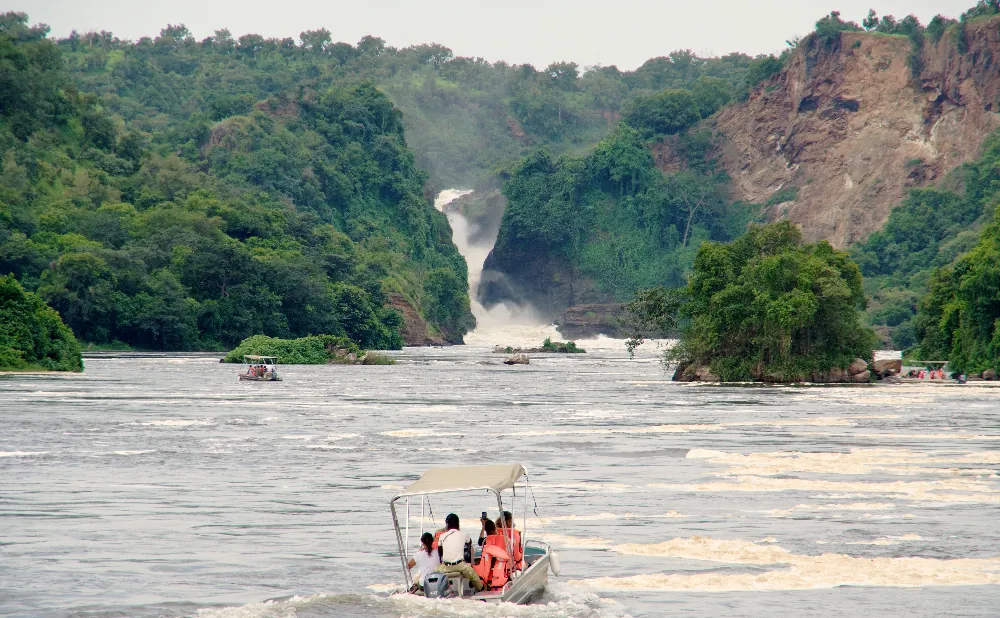
- Murchison Falls National Park combines savannah wildlife, the dramatic falls and chimps in the nearby Budongo Forest. See our Murchison Falls guide.
- The crater lakes around Fort Portal are perfect for walks, swims and relaxing views.
A classic route combines chimpanzee trekking in Kibale, game drives in Queen Elizabeth and gorilla trekking in Bwindi over about a week.
Common Questions About Chimpanzee Trekking in Kibale
How likely am I to see chimpanzees? Sightings on a standard trek are very likely, because trackers follow habituated communities closely. However, wildlife is wild, so sightings can never be fully guaranteed.
How difficult is chimpanzee trekking in Kibale? The terrain is relatively flat, but trails can be muddy and the chimps may move quickly. A moderate level of fitness is enough for most visitors.
How long do I spend with the chimps? One hour on a standard trek, or most of the day on the habituation experience.
Is Kibale better than other chimp destinations? Kibale offers some of the most reliable chimpanzee encounters in East Africa and an outstanding range of other primates.
Are there other places to see chimpanzees in Uganda? Yes. Budongo Forest near Murchison Falls and Kyambura Gorge in Queen Elizabeth National Park also offer chimpanzee tracking. Kibale, however, usually offers the most reliable encounters and the greatest variety of other primates, which is why most travellers choose it first.
Can I combine chimps and gorillas on one trip? Yes. Most Uganda itineraries include both, along with a savannah safari.
Plan Your Chimpanzee Trek
Chimpanzee trekking in Kibale brings you face to face with one of the most intelligent and fascinating animals on Earth. Our team can arrange permits, lodges and transport, and combine Kibale with gorillas, Queen Elizabeth National Park and Murchison Falls.
- Explore our Uganda safari packages
- See the 3 Day Murchison Falls National Park Safari
- Prepare with our safari packing list
Are you ready to meet the remarkable chimpanzees of Kibale? Contact us for a free, tailor-made Uganda itinerary.