

Safari Vehicle Types: Land Cruiser vs Van
If you have started researching an East African trip, you have probably noticed that not every safari photo looks the same. Some show travelers standing through a raised roof hatch with cameras pointed at a pride of lions. Others show a boxy minivan parked beside a watering hole, windows slid open just enough for a lens. Understanding the different safari vehicle types used across Kenya and Tanzania will help you know exactly what to expect before you ever set foot in the bush, and it will shape how comfortable, how mobile, and how photo-ready your game drives actually are.
This guide breaks down every major option you will encounter on a Kenya or Tanzania itinerary, from the classic pop-top Land Cruiser to closed vans and fully open conservancy vehicles. We will also explain how seating capacity, road conditions, and regional norms in the Masai Mara, Serengeti, and Ngorongoro Crater influence which safari vehicle types you are likely to ride in, and how Yulle Adventures chooses vehicles for each trip we plan.
In This Guide
- Understanding Safari Vehicle Types in East Africa
- The Pop-Top Land Cruiser
- Closed Safari Vans and Minivans
- Fully Open-Sided Vehicles in Private Conservancies
- Passenger Capacity and Seating
- Ride Comfort on Rough Roads
- Kenya vs Tanzania: Regional Differences
- How Yulle Adventures Selects Vehicles
- Frequently Asked Questions
Understanding Safari Vehicle Types in East Africa
When people talk about safari vehicle types, they are usually describing three broad categories: the pop-top four-wheel-drive Land Cruiser, closed vans or minivans, and fully open-sided vehicles used mainly in private conservancies. Each category exists because game drives happen on very different terrain, from graded tracks in national parks to rutted bush trails that only a proper four-wheel-drive can handle. The vehicle you ride in affects your visibility, your photography angles, your comfort over bumps, and even which areas you can safely reach.
It helps to think of safari vehicle types less as a hierarchy of better or worse and more as tools suited to different jobs. A closed van might be perfectly fine for a short day trip on tarmac-adjacent routes, while a conservancy clearly calling for off-track driving needs a rugged, open 4x4. Knowing these distinctions in advance means you can ask your tour operator the right questions and set realistic expectations for what your game drives will actually feel like.
Across both Kenya and Tanzania, the fleet mix has evolved over decades of safari tourism, shaped by road conditions, park regulations, and traveler demand for better game viewing. Today most reputable operators, Yulle Adventures included, lean heavily toward the pop-top Land Cruiser as a reliable all-rounder, while reserving open-sided vehicles for specific conservancy experiences where they are permitted and genuinely add value.
Vehicle choice also interacts with practical details travelers rarely think about until they are on the ground, such as luggage storage, charging access, and how easy it is to climb in and out after a long day of driving. Soft-sided duffel bags fit more easily into the limited storage compartments found in most game-drive vehicles than hard-shell suitcases, and most guides will ask you to repack before departure for exactly this reason. Mobility needs matter too, since a high step into a raised 4x4 can be more demanding than stepping into a lower-profile van, so it is worth mentioning any concerns to your operator while planning.
The Pop-Top Land Cruiser: The Most Common Safari Vehicle
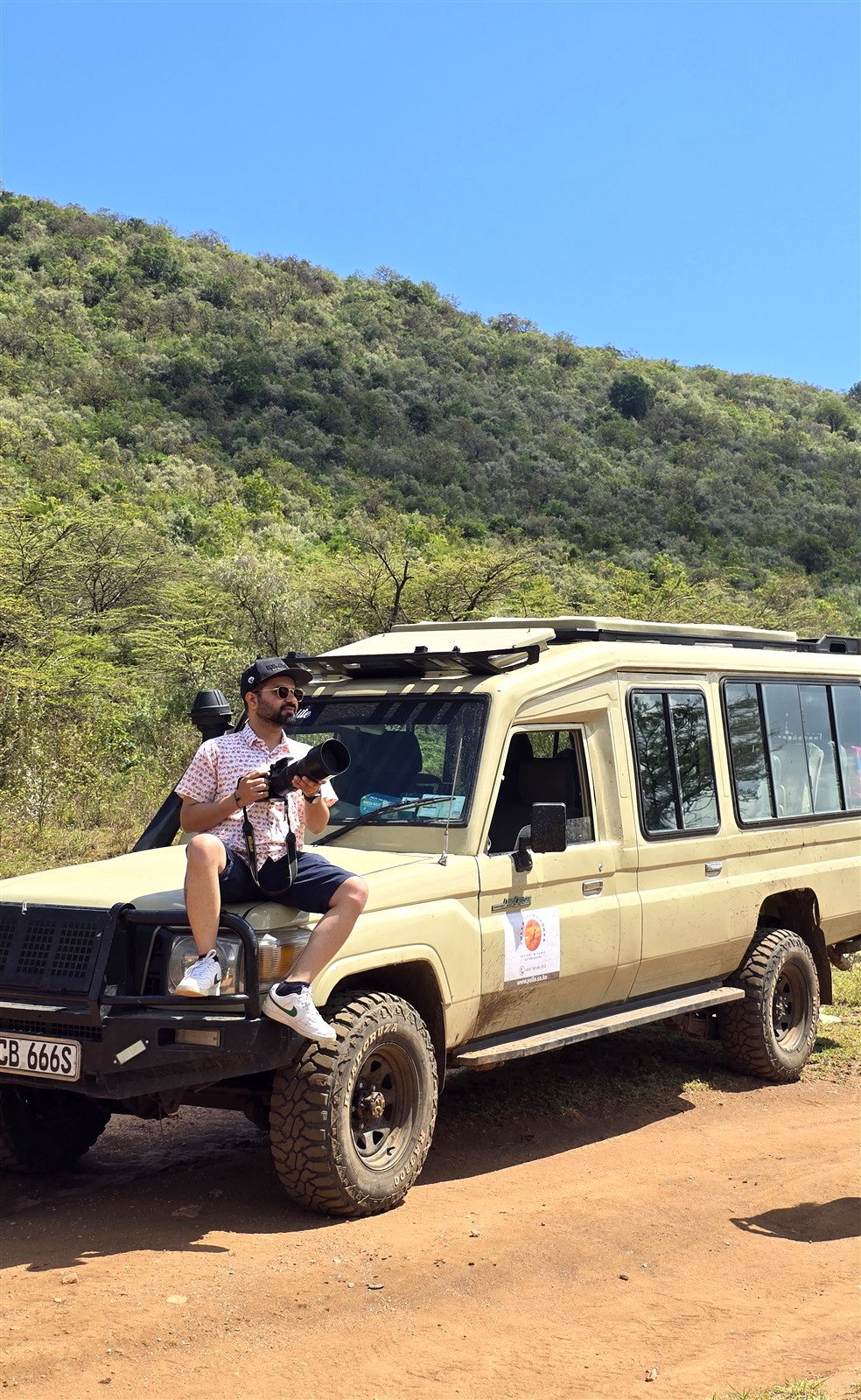
The Toyota Land Cruiser with a pop-top or pop-up roof is, without question, the most widely used of all safari vehicle types in both Kenya and Tanzania. It is a rugged four-wheel-drive vehicle built to handle mud, dust, river crossings, and the washboard tracks common throughout the region's parks and reserves. Guides favor it because it rarely breaks down, can be repaired relatively easily in remote areas, and offers genuine off-road capability that a standard van simply cannot match.
The defining feature is the elevated roof hatch, which lifts upward to create standing headroom for every passenger. When wildlife appears, your guide pops the roof and everyone can stand, lean against the roofline, and shoot photographs or video without a window frame cutting into the shot. This single design element is arguably the biggest reason the Land Cruiser dominates safari fleets, since it transforms a bumpy ride into an active, engaged wildlife-viewing experience rather than a passive one.
Beyond the roof hatch, most pop-top Land Cruisers used for safaris include large sliding windows, a raised chassis for better ground clearance, charging ports, and sometimes a small cooler box for drinks and snacks. Guides sit at the front with a direct line of sight to the terrain, while rows of seating behind them give each passenger reasonable access to a window or the open roof. If you search for photos of a classic Kenya or Tanzania safari vehicle types comparison, the pop-top Land Cruiser is almost always the vehicle pictured.
Closed Safari Vans and Minivans: Budget-Friendly Options
Closed safari vans and minivans are the second common category among safari vehicle types, particularly for shorter trips, day excursions, or budget-focused itineraries. These vehicles typically feature a raised roof with smaller pop-up sections or sliding glass panels rather than one continuous open hatch, and they are often built on a more road-oriented chassis than the heavy-duty Land Cruiser. You will see them frequently on routes connecting Nairobi to nearby parks, or on group tours that prioritize cost efficiency over off-road flexibility.
The main advantage of a van is practicality. They tend to be more fuel efficient, often have slightly more cushioned seating for long road transfers, and can be a sensible choice when the itinerary involves significant tarmac driving between stops rather than extended off-road game drives. For travelers watching their budget without sacrificing a guided wildlife experience, a well-maintained minivan can still deliver a satisfying safari, especially in parks with well-graded roads like parts of Amboseli or Lake Nakuru.
The tradeoffs are real, though. Vans generally sit lower to the ground, which limits visibility over tall grass and reduces capability on deeply rutted or muddy tracks during the rainy season. Window space is also more constrained than a full pop-top hatch, meaning photographers in middle or rear seats may struggle for an unobstructed angle. In true off-road conservancies or during heavy rains, a van can simply get stuck where a Land Cruiser would push through without issue, which is why most serious safari operators reserve vans for specific, lower-risk itineraries.
Fully Open-Sided Vehicles in Private Conservancies
The third category among safari vehicle types is the fully open-sided 4x4, which has no doors, no windows, and sometimes no roof at all beyond a canvas shade canopy. These vehicles are used almost exclusively within private conservancies and select luxury camps, rather than in public national parks, because regulations in many government-run reserves require enclosed vehicles for passenger safety around dangerous game. Where they are permitted, open-sided vehicles offer the best visibility and photography of any safari vehicle types available.
Many open-sided vehicles use tiered or stadium-style seating, where each row sits slightly higher than the one in front, so every passenger has an unobstructed sightline regardless of position. There is no glass, no window frame, and often no door to open or close, which means a guide can angle the vehicle for the perfect photographic composition without anyone needing to lean around a pillar. For serious wildlife photographers, this setup is widely considered the gold standard.
The experience does come with tradeoffs beyond exclusivity to conservancies. Open vehicles offer less protection from dust, sun, rain, and cooler early-morning temperatures, so camps typically provide blankets and ponchos. They also place passengers physically closer to wildlife with less of a barrier, which conservancy guides manage carefully through strict driving protocols and extensive experience reading animal behavior. If photography is your top priority, booking a conservancy stay that uses open-sided vehicles is worth planning around, and our complete Kenya safari planning guide covers how to structure an itinerary around conservancy stays.
Passenger Capacity and Seating Across Safari Vehicle Types
Capacity varies meaningfully across safari vehicle types and directly affects how good your window or roof-hatch access will be. A standard pop-top Land Cruiser configured for tourism typically seats between six and seven passengers in three rows behind the driver, though some operators, including Yulle Adventures, deliberately cap bookings at four to six guests per vehicle so every seat has reasonable roof and window access during sightings.
Closed minivans often carry a similar or slightly higher capacity, sometimes up to eight or nine passengers, which can feel crowded when wildlife appears and everyone tries to photograph through a limited number of windows at once. This is one of the most overlooked differences among safari vehicle types: a vehicle advertised as seating eight will almost always deliver a noticeably more cramped and competitive viewing experience than one capped at four or five, regardless of the vehicle's underlying design.
Open-sided conservancy vehicles tend to run smaller groups still, frequently four to six guests, which pairs naturally with their tiered seating layout and the generally more intimate, higher-end camps that operate them. When you compare quotes between operators, always ask directly how many passengers will share your specific vehicle, since the written capacity on a brochure and the number actually booked for your dates can differ substantially.
Ride Comfort on Rough Roads
Ride comfort is one of the most noticeable practical differences between safari vehicle types once you are actually out on park tracks. The Land Cruiser's raised suspension and heavier-duty shock absorbers are built specifically to handle corrugated dirt roads, deep mud after rain, and the uneven, pothole-laced tracks found in remote sections of parks like the Serengeti or Tsavo. Passengers will still feel bumps, but the vehicle absorbs much of the harshness rather than transmitting every jolt directly into the cabin.
Closed vans, built on chassis more oriented toward paved-road comfort, tend to feel harsher on rough terrain precisely because their suspension is not tuned for sustained off-road punishment. On short, well-maintained routes this is barely noticeable, but on longer game drives through conservancy backcountry or during the rainy season, passengers in a van often report a bumpier, more fatiguing ride than those in a dedicated 4x4.
Open-sided vehicles sit in between on pure ride quality, since most are still built on the same rugged 4x4 platforms as pop-top Land Cruisers, just without the enclosed bodywork. The absence of windows means more wind, dust, and noise reach passengers directly, which some travelers find invigorating and others find tiring on longer drives. Dressing in layers and bringing a scarf or buff for dust is a simple way to stay comfortable regardless of which vehicle type you end up in.
Seasoned drivers also adjust their pace and route choices based on the vehicle underneath them, slowing down earlier for ruts and corrugations in a van, while pushing a Land Cruiser through sections a lighter vehicle would need to detour around entirely. This driving style has a real effect on your day, since a guide who knows the vehicle well will time water crossings, muddy dips, and steep riverbanks to minimize jolting and keep the ride as smooth as the terrain allows. Experienced local guides tend to make a bigger comfort difference than the vehicle specification alone.
Kenya Masai Mara vs Tanzania Serengeti and Ngorongoro
There are some genuine regional patterns worth knowing when comparing safari vehicle types between the two countries. In Kenya's Masai Mara, the pop-top Land Cruiser is overwhelmingly dominant, both in the national reserve itself and in the surrounding private conservancies, because it handles the Mara's notoriously sticky black-cotton soil during rains far better than a van ever could. Fully open-sided vehicles do appear in several Mara conservancies, particularly around premium camps, but enclosed pop-top Cruisers remain the default across most lodges and operators, including on the routes covered in our guide to getting to the Masai Mara by air or road.
In Tanzania, the picture is broadly similar in the Serengeti and Ngorongoro Crater, where pop-top Land Cruisers also lead, but closed minivans are somewhat more visible on group and budget camping safaris, partly because Tanzania's safari market includes a larger share of overland group tours originating from Arusha. The Ngorongoro Crater floor, with its own access rules and concentrated wildlife viewing area, sees heavy Land Cruiser traffic, and vehicles there are generally required to stay on marked tracks regardless of type.
One subtle difference some repeat travelers notice is that Tanzania's parks, including the Serengeti and Ngorongoro, generally enforce stricter off-track driving restrictions than some Kenyan conservancies, which slightly reduces the practical advantage of an open-sided vehicle there. In Kenya's private conservancies bordering the Mara, controlled off-track driving is more commonly permitted, which is part of why open-sided vehicles have found more of a niche on that side of the border among the available safari vehicle types.
How Yulle Adventures Selects Safari Vehicle Types for Every Trip
At Yulle Adventures, vehicle selection starts with the itinerary itself rather than a one-size-fits-all fleet policy. For classic national park circuits through the Masai Mara, Amboseli, or Lake Nakuru, we default to pop-top Land Cruisers because they balance comfort, reliability, and photography access better than any other option across varied park terrain. We also deliberately limit passenger numbers per vehicle so every guest gets genuine roof-hatch and window access during sightings, rather than packing seats to maximize margins.
When a trip includes a conservancy stay where open-sided vehicles are available and well-suited to the terrain and season, we coordinate directly with the camp to confirm vehicle type, seating capacity, and whether weather conditions favor an open vehicle for that particular week. For shorter day trips, airport transfers, or portions of an itinerary focused on tarmac routes, a closed van can be a sensible, cost-effective choice, and we are transparent about exactly which safari vehicle types you will use at each stage of your trip before you book.
We also factor in group composition, mobility needs, and photography priorities. A family with young children may prioritize the stability and shade of an enclosed Land Cruiser, while a dedicated photography group may specifically request conservancy stays built around open-sided vehicles. If you are still deciding how to structure your own trip, our guide on how to choose a Kenya safari walks through these decisions step by step, and our overview of a Masai Mara safari experience shows how vehicle choice fits into the bigger picture of planning a trip. For conservation context on how vehicle access rules are set, the Kenya Wildlife Service publishes park-specific guidance that shapes many of these regional differences.
Frequently Asked Questions About Safari Vehicle Types
Which safari vehicle types offer the best photography? Fully open-sided vehicles, where available in private conservancies, generally offer the best photography because there are no windows or frames to work around. Pop-top Land Cruisers are a close second thanks to their elevated roof hatch, which lets every passenger stand for an unobstructed view during sightings.
Are closed safari vans safe and comfortable for a full safari? Closed vans can be perfectly comfortable for shorter trips or routes with well-maintained roads, but they generally offer a bumpier ride and reduced visibility on rough, off-road sections compared with a dedicated 4x4 Land Cruiser, so they suit certain itineraries better than others.
Do Kenya and Tanzania use the same safari vehicle types? Largely yes. Both countries rely heavily on pop-top Land Cruisers as the default safari vehicle, with closed vans appearing more often on budget and group tours, and open-sided vehicles reserved mainly for private conservancies, subject to each country's specific park regulations.
How many people typically share one safari vehicle? It depends on the operator and vehicle type, but pop-top Land Cruisers commonly carry between four and seven guests, closed vans can carry up to eight or nine, and open-sided conservancy vehicles usually stay smaller, often four to six, to preserve comfortable seating and sightlines.
Can I request a specific vehicle type for my safari? Yes, most operators, including Yulle Adventures, can accommodate preferences when planning your itinerary, especially if photography or mobility needs are a priority. It is best to raise this early in the planning process so the right camps, conservancies, and vehicles can be matched to your trip.