

Ngorongoro Crater Wildlife Explained
Few places on the planet pack so much life into so small a space. Step onto the floor of this collapsed volcano in northern Tanzania and within minutes you are likely to see lions lounging in the open, buffalo herds grazing beside wallowing hippos, and a black rhino moving quietly through the grass. Ngorongoro Crater wildlife is famous precisely because of this concentration: a self-contained world roughly twenty kilometers across, ringed by walls that rise more than six hundred meters, holding one of the richest assemblages of large mammals anywhere in Africa. Travelers who have done multiple safaris often say nowhere else delivers so much, so reliably, in so little time.
This guide explains exactly why that happens. We will look at the crater as a closed ecosystem, walk through the Big Five and the rare black rhino that draws so many visitors, explore the resident lion prides, the wildebeest and zebra herds that never need to migrate, the flamingos that color Lake Magadi pink, and the hyena clans that dominate the crater floor after dark. By the end, you will understand not just what you might see, but why the odds of seeing it are so much better here than almost anywhere else on the continent.
In This Guide
- A Natural Enclosed Ecosystem
- The Big Five and the Rare Black Rhino
- Resident Lion Prides of the Crater Floor
- Wildebeest and Zebra Herds That Never Leave
- Flamingos on Lake Magadi
- Hyena Clans and Other Predators
- Why Ngorongoro Crater Wildlife Sightings Feel So Reliable
- The Ecology Behind the Density
- Planning Your Visit
- Frequently Asked Questions
A Natural Enclosed Ecosystem
Ngorongoro Crater is not actually a crater in the volcanic sense most people imagine. It is a caldera, formed when a massive volcano, once thought to have been taller than Kilimanjaro, erupted and then collapsed in on itself around two and a half million years ago. What was left behind is a vast bowl with a flat floor and walls that climb steeply on every side, creating a natural barrier that most large animals rarely cross.
That barrier changes everything about how wildlife behaves inside it. Elsewhere in East Africa, animals follow rainfall and fresh grass across hundreds of kilometers, as the wildebeest do during the Great Migration between the Serengeti and the Masai Mara. Inside the crater, there is nowhere far to go. Permanent water, grass, and forest exist within a short walk of one another year-round, so most resident species simply stay put. The result is a population of animals that is always there, not just passing through during a particular season.
This is the single biggest reason Ngorongoro Crater wildlife feels so dependable compared to game viewing elsewhere. A guide in the Serengeti might spend a morning searching empty plains for animals that moved on weeks earlier. A guide in the crater knows roughly where the resident herds, prides, and rhinos tend to be, because those animals have far less room to roam and far less reason to leave.
Researchers who study Ngorongoro Crater wildlife often describe the caldera as a living laboratory for understanding how a closed ecosystem behaves over time. Because almost nothing enters or leaves, population counts stay relatively stable from year to year, and conservation teams can track individual rhinos, lion prides, and even some elephant bulls with real confidence. That same stability is exactly what makes a short visit so rewarding: the animals you see on a single game drive represent a population that has quite literally lived in that bowl for generations, not a herd that happened to pass through on its way somewhere else.
The Big Five and the Rare Black Rhino
Ngorongoro Crater wildlife includes one of the very few places in Africa where visitors can realistically hope to see all of the Big Five in a single outing. Elephants, mostly large bulls with notably long tusks, move through the forested crater rim and down onto the floor. Cape buffalo gather in herds that can number in the hundreds. Leopards are present though less frequently seen, favoring the Lerai Forest near the crater floor and the wooded slopes above it.
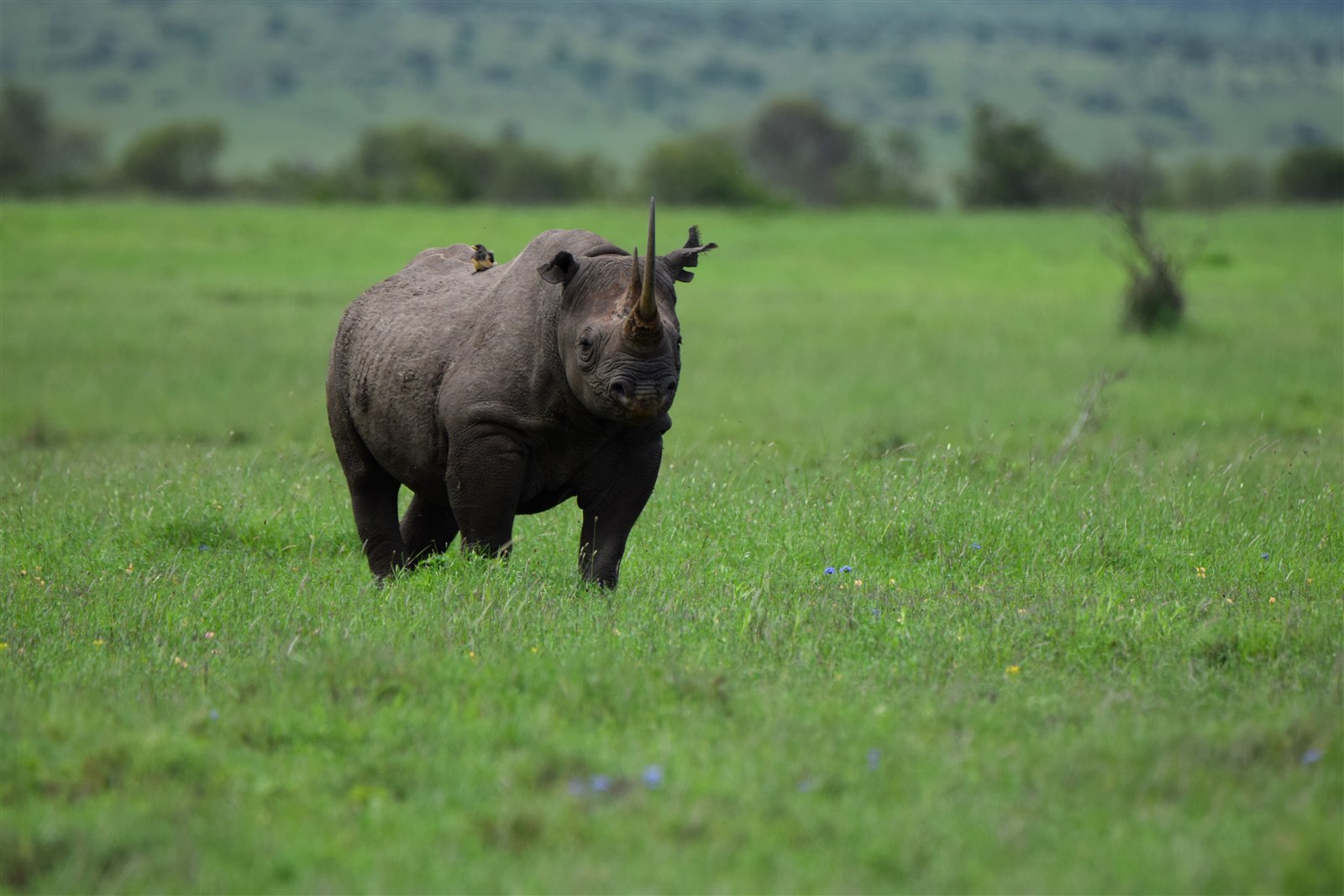
The true showstopper, however, is the black rhino. Ngorongoro holds one of the last viable populations of this critically endangered species in Tanzania, a direct result of the protection the crater's enclosed terrain and dedicated ranger patrols provide. Poaching devastated black rhino numbers across Africa during the twentieth century, but the crater's small size, open visibility, and concentrated security presence have made it one of the few places where a fragile population could be carefully rebuilt and monitored.
Seeing a black rhino here is never guaranteed on any single drive, since the population remains small and individuals can be shy. But the odds are far better than almost anywhere else, and many guides consider a rhino sighting the single most prized moment of a crater visit. Combined with the other four members of the Big Five, it is easy to see why this one small basin draws so much attention from photographers and first-time safari travelers alike.
For many travelers, this is what separates Ngorongoro Crater wildlife from a typical game drive: the genuine possibility of checking off all five iconic species before lunch. Few other reserves in Tanzania or Kenya can promise that combination within such a compact, easily navigable area, which is part of why the crater remains one of the most requested stops on multi-country safari itineraries across the region.
Resident Lion Prides of the Crater Floor
Ngorongoro Crater wildlife is often cited as having one of the highest densities of lions anywhere in Africa, and the open, grassy floor makes them unusually easy to spot. Several prides hold overlapping territories across the crater, and because there is so little tree cover compared to thicker bush environments, lions here are frequently seen resting in the open, walking along the access roads, or hunting on the flat plains in full view.
These prides are also notably large by regional standards, sometimes gathering in groups well beyond what is typical in more dispersed ecosystems. The abundance of resident prey, described in the next section, means lions rarely need to travel far to find a meal, which in turn keeps pride territories relatively compact and sightings relatively predictable. Visitors comparing big cat experiences across East Africa often find that lion encounters in the crater feel more frequent and more relaxed, with cats resting undisturbed rather than hidden deep in cover.
For travelers specifically chasing big cat photography, it is worth comparing notes with other famous predator strongholds. Our guide to the big cats of the Masai Mara covers a very different, far larger ecosystem, and reading both helps set realistic expectations for what each location offers.
What makes lion viewing part of the broader Ngorongoro Crater wildlife story so compelling is the contrast with other parks. In the Mara or the Serengeti, prides can disperse across enormous territories as prey herds move, sometimes making them hard to locate for days. Inside the crater, the boundaries of the caldera effectively cap how far any pride can wander, so once rangers and guides know a pride's general range, finding them again on a later game drive becomes far more a matter of routine than of chance.
Wildebeest and Zebra Herds That Never Leave
Unlike their migratory cousins on the Serengeti plains, the wildebeest and zebra living inside Ngorongoro Crater are largely resident. Thousands of wildebeest and zebra graze the crater floor throughout the year, supported by permanent grassland and water sources that never fully dry up even in the harshest dry season. This is a markedly different pattern from the famous Great Migration herds, which follow seasonal rains across vast unfenced distances.
Because these herds stay in one place, they form a dependable, constant backdrop to nearly every game drive in the crater. Zebra in particular gather in large, loose herds across the open grassland, often mixing with wildebeest and gazelle in the same feeding areas. This steady resident population is also a key food source for the crater's lion prides and hyena clans, reinforcing the tightly interconnected predator-prey relationships that make the Ngorongoro Crater wildlife ecosystem feel so complete within such a confined space.
This is another reason experienced guides rank the crater so highly when describing Ngorongoro Crater wildlife to first-time visitors. Rather than scanning the horizon hoping a migratory herd happens to pass nearby, you can expect to drive straight into grazing wildebeest and zebra within the first few minutes on the crater floor. Gazelle, both Grant's and Thomson's, round out the herbivore picture, grazing alongside the larger herds and adding yet another layer of near-constant movement and activity across the open grassland.
Flamingos on Lake Magadi
At the base of the crater sits Lake Magadi, a shallow soda lake whose alkaline waters support the kind of algae that flamingos feed on. When conditions are right, thousands of lesser and greater flamingos gather along its shallow edges, turning sections of the lake a soft shade of pink and creating one of the most photographed scenes in the entire conservation area.
Flamingo numbers fluctuate with water levels and algae blooms, so the lake can appear nearly empty on one visit and spectacular on another just weeks later. Even without flamingos, Lake Magadi attracts other water birds, along with the occasional hippo pod wallowing near its margins, making it a worthwhile stop on almost any crater floor circuit regardless of the season.
Birdlife is an often overlooked part of the wider Ngorongoro Crater wildlife picture, and Lake Magadi is the easiest place to appreciate it. Beyond flamingos, the shoreline regularly hosts pelicans, storks, and a wide variety of wading birds that take advantage of the shallow, mineral-rich water. For birdwatchers traveling with a longer safari itinerary, a stop here pairs naturally with the grassland and forest birding found elsewhere on the crater rim, rounding out what is already one of the most biodiverse single sites in the conservation area.
Hyena Clans and Other Predators
Spotted hyenas thrive as part of Ngorongoro Crater wildlife in numbers that surprise many first-time visitors. Organized into large, structured clans with their own territories and social hierarchies, hyenas here are bold and highly visible, often seen trotting across open ground in daylight rather than only at dusk. Their numbers are sustained by the same abundant resident prey base that supports the crater's lions.
Hyenas and lions compete directly for carcasses in the crater, and visitors occasionally witness tense standoffs between the two at a kill site. Golden and black-backed jackals also patrol the grassland, along with servals and the occasional cheetah, though cheetahs are less common here than lions and hyenas given the crater's smaller open spaces and intense competition among predators. Altogether, the predator community on the crater floor is one of the densest and most active found anywhere in Tanzania.
This intense predator competition is one of the more dramatic sides of Ngorongoro Crater wildlife, and it plays out constantly within sight of the access roads. Because resident prey herds never fully disperse, lions and hyenas are forced into near-permanent proximity, which keeps territorial disputes and scavenging confrontations far more frequent than in ecosystems where predators can simply spread out and avoid one another. For visitors, that tension translates into genuinely dramatic sightings that many describe as the highlight of their entire trip.
Why Ngorongoro Crater Wildlife Sightings Feel So Reliable
Put all of these elements together and the pattern becomes clear. A confined area with permanent water and grass keeps most species resident rather than migratory. Steep walls limit movement in and out, concentrating animals within a relatively small, manageable circuit of roads. High predator numbers sit alongside correspondingly high prey numbers, creating constant activity rather than the long empty stretches typical of larger, more dispersed parks.
This combination explains why guides so often describe a single morning in the crater as more productive than a full day elsewhere. Ngorongoro Crater wildlife viewing benefits from scale as much as abundance, since the compact floor means you are never far from the next sighting. Vehicles can cover a meaningful portion of the available habitat in just a few hours, something simply not possible across the open plains of the Serengeti or the Mara.
None of this means every drive guarantees every species. Rhino sightings, in particular, still depend on luck and timing. But across the full suite of Ngorongoro Crater wildlife, from elephants and buffalo to lions, hyenas, and flamingos, the sheer density of animals within such a small footprint remains almost unmatched anywhere on the continent.
The Ecology Behind the Density
Three ecological factors underpin the density of Ngorongoro Crater wildlife. First, permanent water sources, including the Ngoitokitok Springs and Lake Magadi, mean animals never need to travel far to drink, even in the dry season. Second, the crater floor supports rich, short grassland ideal for grazing herbivores, fed by nutrient-dense volcanic soils left behind by the original eruption. Third, altitude and rainfall patterns on the crater rim create a cooler, wetter microclimate than the surrounding plains, sustaining forest and grassland that would otherwise struggle in this part of Tanzania.
Together these conditions make the crater floor one of the most productive grazing environments in East Africa relative to its size. That productivity is what ultimately supports such an unusually high density of both herbivores and the predators that depend on them, and it is recognized internationally as part of the UNESCO World Heritage listing for the Ngorongoro Conservation Area, which highlights the site's exceptional natural values alongside its archaeological significance.
It is worth remembering that none of this happened by accident. Conservation authorities actively manage grazing pressure, water access, and ranger patrols across the caldera specifically to protect the balance that makes Ngorongoro Crater wildlife so dense and so visible. Without that ongoing management, the same enclosed terrain that concentrates animals so conveniently for visitors could just as easily lead to overgrazing or resource competition, which is why the conservation area is treated as a carefully monitored system rather than simply a scenic backdrop for safaris.
Planning Your Visit
Timing still matters when planning around Ngorongoro Crater wildlife, even in a place where most animals are resident year-round. Weather, calving patterns, and visibility all shift with the seasons, so it is worth reading our detailed breakdown of the best time to visit Ngorongoro Crater before locking in your travel dates. Many travelers also want to know where to base themselves, since lodges and camps along the rim offer dramatically different views and access points into the crater; our guide to where to stay in Ngorongoro walks through the main options.
For travelers building a longer trip around the crater, pairing it with the Serengeti and the Masai Mara is a popular and rewarding approach, since each ecosystem offers a genuinely different kind of game viewing. Our six-day Masai Mara, Serengeti, and Ngorongoro safari itinerary is designed specifically to combine the crater's density with the open-plains drama of the migration further north, giving a fuller picture of East African wildlife in a single trip.
Most lodges and camps schedule a single full morning or a combined morning and afternoon session on the crater floor, which is usually enough time to appreciate the density of Ngorongoro Crater wildlife without feeling rushed. Arriving early, before other vehicles descend from the rim, tends to produce the calmest and most rewarding sightings, particularly for predators that are more active in the cooler hours around dawn. A knowledgeable local guide also makes a significant difference, since they know which access roads tend to intersect with resident herds and prides on any given day.
Frequently Asked Questions
Is the Ngorongoro Crater better for wildlife than the Serengeti? They offer different experiences. Ngorongoro Crater wildlife delivers consistent, concentrated sightings of resident animals in a compact area, while the Serengeti offers vast open plains and the drama of the migratory herds. Many travelers visit both to experience the contrast.
Can you see the Big Five in the Ngorongoro Crater? Yes, the crater is one of the few places in Africa where all five species, including the rare black rhino, can realistically be seen in a single visit, though leopard and rhino sightings are never guaranteed on any individual drive.
Why are there so many lions in Ngorongoro Crater? Abundant resident prey, including wildebeest, zebra, and buffalo that stay in the crater year-round, supports several large, well-established prides, making lion sightings unusually frequent and reliable within this corner of Ngorongoro Crater wildlife.
Do the wildebeest in Ngorongoro Crater migrate? No, unlike the Serengeti herds that undertake the Great Migration, the wildebeest and zebra populations inside the crater are largely resident, staying within the caldera year-round thanks to permanent water and grassland.
When is the best time to see flamingos on Lake Magadi? Flamingo numbers depend on water levels and algae blooms, which vary throughout the year, so sightings can range from spectacular to sparse depending on recent rainfall and conditions at the time of your visit.
How long should you spend viewing wildlife in Ngorongoro Crater? A single morning session is usually enough to appreciate the density of Ngorongoro Crater wildlife, though a combined morning and afternoon visit, or an overnight stay on the rim, allows more time for rhino tracking and predator sightings.