

Lake Mburo National Park is the safari most travelers to Uganda never plan for and end up loving anyway. Tucked between Kampala and the gorilla parks of the southwest, Lake Mburo National Park is small, easy to reach, and packed with wildlife you won't find anywhere else in the country.
Most Uganda itineraries are built around two big-ticket items: gorilla trekking in Bwindi and chimpanzee tracking in Kibale. Lake Mburo National Park rarely gets top billing, yet it solves a problem every one of those itineraries has, the long, wildlife-free drive between Kampala and the west. Break that drive here and the park earns its place on the map fast.
In This Guide
- Small Park, Big Convenience
- Zebras and the Wildlife You Won't See Elsewhere
- Boat Safaris on the Lake
- Walking and Horseback Safaris
- Where It Fits on a Uganda Itinerary
- When to Visit
- Where to Stay
- Frequently Asked Questions
Why Lake Mburo National Park Is an Easy Add-On
Lake Mburo National Park covers a modest area compared with Uganda's other savanna parks, and that size is exactly the point. You can drive through a meaningful cross-section of it in a morning, see a genuine variety of wildlife, and be back on the road to your next stop by early afternoon.
It also sits right beside the main highway running from Kampala toward Mbarara and on to Bwindi. Most self-drive and guided itineraries already pass within a few minutes of the gate, so detouring into Lake Mburo National Park costs very little extra driving time for a surprising amount of wildlife payoff.
That combination of size and location is rare. Uganda's bigger parks, like Murchison Falls or Queen Elizabeth, reward multi-day stays. A compact savanna park near the main highway rewards a single well-timed visit, which makes it one of the easiest wins on a tightly scheduled trip.
The terrain itself helps too. Rolling hills covered in acacia woodland give way to open grassland and papyrus-fringed wetlands around the lakeshore, a mix of habitats packed into a small footprint. Driving from one end to the other rarely takes more than an hour, yet the scenery changes enough to feel like several different places.
Five smaller lakes sit within the park boundary alongside the main lake, each with its own pocket of birdlife and vegetation. Few visitors explore all of them on a short stop, but their presence explains why the checklist of species here punches well above the park's modest size.
Getting There
The drive from Kampala or Entebbe takes a comfortable half-day, almost entirely on tarmac, following the same route used by travelers heading toward Bwindi, Queen Elizabeth National Park or the Rwanda border. A short stretch of murram road leads from the highway to the park gate itself.
Because the route is already well traveled, a stop here adds remarkably little extra driving. Most itineraries simply replace a lunch break or fuel stop with a few hours inside the park gates, then continue toward the next destination with the day's wildlife quota already filled.
Self-drive visitors find the park easy to navigate, with a simple network of tracks looping around the grassland and down to the lakeshore. Guided safaris typically combine a game drive on arrival with a boat trip the following morning before departing.
Fuel and basic supplies are available in the small towns along the highway before the turnoff, so there is little need to stock up heavily in Kampala beforehand. Mobile phone signal is generally reliable close to the highway, though it fades once you are deeper inside the park boundary.
Zebras and the Wildlife You Won't See Elsewhere
Zebras are the headline act at Lake Mburo National Park, and for a simple reason: this is the only place in Uganda where you can reliably see them. Most of the country's grazing animals prefer other habitats, but the open acacia savanna here suits zebras perfectly.
Impala share the grassland in good numbers, their white rump patches flashing as they bound away from the vehicle. Eland, the largest of Africa's antelope, also turn up here more often than almost anywhere else in Uganda, moving in loose herds across the drier hillsides.
Other Residents
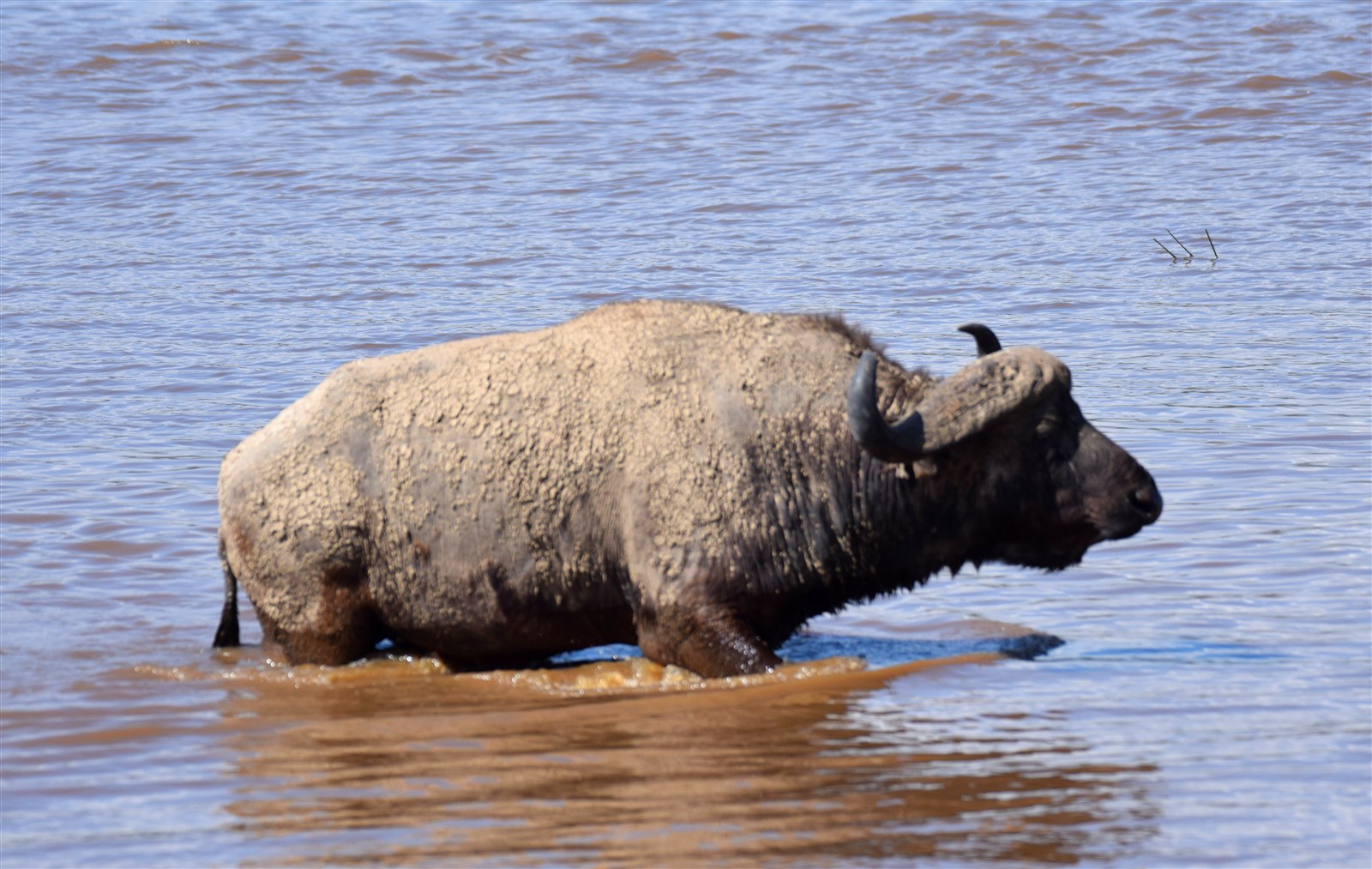
Buffalo wallow in the park's wetter corners and cross the lake's shallow edges, often caked in the mud that gives them their grey, armored look. Warthogs trot across the tracks with tails raised, and leopards move through at night, rarely seen but present in healthy numbers.
What Lake Mburo National Park lacks, deliberately, is lions and elephants. Community land borders much of the park, and removing the most dangerous predators and crop-raiders has kept relations with neighboring farmers workable. It also means walking and horseback safaris here are genuinely low-risk, which opens up activities most other parks can't offer.
Boat Safaris on the Lake
The lake itself is the other reason to visit. A boat safari on Lake Mburo National Park's main lake is slow, calm, and close-up in a way vehicle game drives rarely manage. Hippos surface and submerge around the boat in pods, grunting and snorting as they jostle for position.
Nile crocodiles bask on the banks, often motionless enough to mistake for logs until one slides into the water. Fish eagles perch in the lakeside trees, calling across the water in the haunting cry that has become something of a soundtrack to the African bush.
Birdlife is a major draw on the water. Lake Mburo National Park sits in a transition zone between savanna and papyrus swamp, and that mix produces one of Uganda's best bird checklists, including species some visitors specifically travel here to tick off.
Walking and Horseback Safaris
Because the big predators are absent, Lake Mburo National Park is one of the few places in East Africa where you can safely go on a horseback safari. Riding quietly among zebra and impala, who barely react to a horse the way they would to a vehicle or a person on foot, is an unusual and memorable way to see wildlife.
Guided walking safaris are also on offer, led by an armed ranger as standard practice everywhere in East Africa, even in a relatively low-risk park like this one. On foot, you notice tracks, dung, termite mounds and birdlife that a vehicle simply drives past.
Mountain biking is available too in parts of Lake Mburo National Park, adding a third way to cover ground beyond the standard game drive. Few other parks in the region offer this much variety of activity in such a compact space.
Conservation and Community
The absence of lions and elephants here is not an accident of nature but a deliberate outcome of decades of land pressure. Much of the park's original area was given over to settlement and grazing land in the 1980s, and what remains today is a smaller, carefully managed core shared with surrounding communities.
Local landowners now benefit from revenue-sharing arrangements tied to the park, and several conservancies on its fringes extend the available habitat for zebra, eland and other grazers beyond the official boundary. That cooperative model has helped wildlife numbers recover steadily over recent years.
Rangers also work closely with neighboring farmers on problem-animal management, since buffalo and hippo can still cause real damage to crops and livestock if they wander beyond the park edge. The balance struck here is one reason the park has become a quiet example of community conservation done reasonably well.
Pastoralist communities in this part of Uganda have herded cattle across these hills for generations, and the long-horned Ankole cattle that still graze right up to the park boundary are, in their own way, part of the landscape's character. Watching a herd move past a grazing zebra is a reminder of how closely wildlife and local life overlap here.
Photography Tips
Morning light on the open grassland suits zebra photography particularly well, with low sun picking out the contrast of their stripes against golden grass. A telephoto lens helps for antelope, which tend to keep more distance from vehicles than the park's calmer zebra herds.
The boat safari offers a different kind of photography altogether, shooting low across the water at hippos and baking crocodiles, with fish eagles overhead if you have a long enough lens and quick reflexes. Keep a weatherproof bag on board, since spray and sudden rain showers both happen without much warning.
Where Lake Mburo National Park Fits on a Uganda Itinerary
The natural slot for Lake Mburo National Park is as a stopover, not a standalone destination. Traveling from Entebbe or Kampala toward Bwindi Impenetrable National Park for gorilla trekking, or toward Queen Elizabeth National Park, the road runs close enough to make a half-day or overnight stop easy.
Breaking the journey here turns a long transit day into something genuinely rewarding. Instead of hours of driving with nothing to show for it, you arrive at your gorilla trekking permits appointment having already seen zebra, impala, eland, hippos and crocodiles.
Some travelers with a little more time choose to stay a full night at Lake Mburo National Park, fitting in both a game drive and a boat safari before continuing west the next morning. Either approach works, and both make far better use of the drive than skipping the park entirely.
Best Time to Visit Lake Mburo National Park
Uganda's dry months, broadly June to September and December to February, bring the clearest roads and the easiest game viewing at Lake Mburo National Park, with animals concentrating around remaining water sources and grass kept low enough for good visibility.
The wetter months bring lush, green scenery and fewer vehicles on the tracks, though some roads can turn slick after heavy rain. Birdlife is especially active during and after the rains, when migratory species pass through and resident birds are breeding.
Because Lake Mburo National Park is usually visited as a short stop rather than a dedicated multi-day trip, the season matters less here than at parks where you need several days of good weather. Even a quick dry-season stop delivers reliable sightings.
Where to Stay Near Lake Mburo National Park
Accommodation options range from simple tented camps just outside the park boundary to a handful of comfortable lodges overlooking the lake itself. Given the short stays most travelers make, even a modest camp works well for an overnight break at Lake Mburo National Park.
A few properties are positioned specifically to combine a sundowner view over the water with easy access to the boat jetty the next morning, which is worth seeking out if you want to make the most of a brief stop.
Budget travelers can find simple bandas and campsites inside the park itself, run by the Uganda Wildlife Authority, while those wanting more comfort will find a small but growing cluster of mid-range and upmarket lodges just outside the boundary, several with direct lake views.
Combining With Queen Elizabeth National Park
For travelers continuing further west, the road onward from here leads naturally toward Queen Elizabeth National Park, famous for its tree-climbing lions and the Kazinga Channel boat cruise. Together, the two parks make a logical pairing on a longer Uganda loop.
Some itineraries treat this park purely as a one-night stop before pushing on, while others linger for two nights to fit in every activity on offer, from a dawn game drive to an afternoon boat trip and an evening horseback ride. Either approach works depending on how much time your overall trip allows.
Because the drive between the two parks takes a full day either way, breaking it with an overnight stop here rather than pushing straight through tends to make for a far more comfortable, less exhausting itinerary overall.
Travelers heading south instead, toward the Rwanda border and gorilla trekking in Volcanoes National Park, also pass close by, making this an equally useful stop for itineraries that loop through more than one country rather than staying inside Uganda alone.
What to Pack
A lightweight rain jacket is worth carrying even in the dry season, since showers can arrive without much warning near the lake. Comfortable, closed walking shoes matter if you add a guided walk or horseback ride to your visit, rather than the sandals many travelers default to on vehicle-only safaris.
A reasonably powerful pair of binoculars pays off here more than at some bigger parks, since much of the pleasure of a visit comes from picking out antelope, birds and distant hippo pods across open water and grassland rather than close-range encounters with large predators.
Neutral earth tones work better than bright colors on the walking and horseback activities in particular, both to avoid startling wildlife and to stay comfortable in the dust kicked up along the park's drier tracks during the long dry season.
Practical Tips
Bring binoculars, since much of the pleasure of Lake Mburo National Park comes from birdlife and distant sightings across open grassland. A zoom lens helps for photographers hoping to capture zebra against the acacia-dotted hills.
Neutral-colored clothing suits both the game drives and any walking or horseback activity, and closed shoes are sensible if you add a walking safari to your visit. Sun protection matters here as much as anywhere else in Uganda, given how open much of the terrain is.
If gorilla trekking is part of your trip, read our guide to gorilla trekking in Uganda for what the experience itself involves, and check our overview of the best time to visit Uganda to plan your wider route around the country's seasons.
Frequently Asked Questions
How long should I spend at Lake Mburo National Park? A half-day game drive covers the essentials, but an overnight stay lets you add a boat safari and, often, a walking or horseback outing too.
Can I see zebra anywhere else in Uganda? Not reliably. Lake Mburo National Park is the country's most dependable spot for zebra sightings.
Is it safe to walk or ride a horse here? Yes. The absence of lions and elephants, combined with an armed ranger on walking safaris, makes Lake Mburo National Park one of the safer parks in the region for activities on foot or on horseback.
Will I see the Big Five at Lake Mburo National Park? No. There are no lions, rhinos or elephants here. The park's appeal lies in zebra, antelope, hippos, crocodiles and birdlife rather than the Big Five.
Do I need extra days in my itinerary for this park? Not necessarily. Most visitors simply route their existing journey between Kampala and the west through the park, adding only a few hours rather than extra travel days.
Is a visit worthwhile if I'm short on time? Yes, that's precisely when Lake Mburo National Park makes the most sense, turning otherwise dead travel time into a genuine wildlife experience.
Can I combine a horseback safari with a boat trip on the same day? Yes, many visitors fit in a morning horseback ride and an afternoon boat safari, especially if staying overnight rather than just passing through.
Is the park suitable for a family with children? Generally yes, given the lower-risk wildlife profile here compared with parks that have lions and elephants, though normal safari precautions and ranger guidance still apply at all times.
What is the single biggest reason to stop here? Convenience combined with genuine variety, zebra, boat safaris and the option of walking or horseback activity in one small, easily reached park.
How does this park compare with the Masai Mara or Serengeti for wildlife density? It doesn't try to compete on that scale. The appeal here is convenience, variety of activity and species you can't see elsewhere in Uganda, not sheer volume of animals.
Plan Your Safari
Lake Mburo National Park is proof that a small, convenient park can still earn a real place on a Uganda safari itinerary. For official travel guidance, see the UK government's Uganda travel advice and the Uganda Wildlife Authority. Contact us and we'll build Lake Mburo National Park into a route that makes sense for your whole trip, or browse our Uganda safari packages to see how it fits alongside gorilla trekking and the country's bigger parks.