

Kenya vs Tanzania Safari: Which Wild Side Should You Choose?
The Kenya vs Tanzania safari question is harder than it looks, because the two countries share the same great ecosystem, the same wildlife and, in many ways, the same spirit. Choosing between them is less about which is better and more about which suits your dates, budget, pace and what you most want to see. This guide compares them honestly so you can decide.
Kenya vs Tanzania Safari: The Short Answer
- Choose Kenya if you want shorter distances, strong big-cat viewing in the Masai Mara, a mix of safari and beach, and flexible options at many price levels.
- Choose Tanzania if you want vast open landscapes, the Serengeti and Ngorongoro Crater, calving season and a wilder, less-developed feel.
- Many travellers do both.
Kenya vs Tanzania Safari Side by Side
- Headline parks: Kenya has the Masai Mara, Amboseli, Tsavo, Samburu and Lake Nakuru. Tanzania has the Serengeti, Ngorongoro Crater, Tarangire and Lake Manyara.
- Migration viewing: In Kenya, July to October in the Masai Mara, with river crossings. In Tanzania, year round in the Serengeti, with calving in the south and crossings in the north.
- Landscape: Kenya has the rolling Mara plains and Amboseli with Kilimanjaro views. Tanzania has the vast Serengeti plains and the volcanic Ngorongoro highlands.
- Getting there: For Kenya, fly into Nairobi, then take a short flight or a long drive to the Mara. For Tanzania, fly into Kilimanjaro or Arusha, then reach the parks by road or small aircraft.
- Crowds: Popular sightings in Kenya can get busy in peak season. Tanzania’s visitors are spread over larger areas, but peak sites are busy too.
- Beach add-on: Kenya has Diani, Watamu and the coast. Tanzania has Zanzibar and the coast.
- Entry rules: Kenya requires an eTA and, since 6 October 2026, mandatory health insurance. Tanzania has its own mandatory inbound insurance, introduced on 1 October 2026, and its visa rules differ, so check the official source.
Wildlife
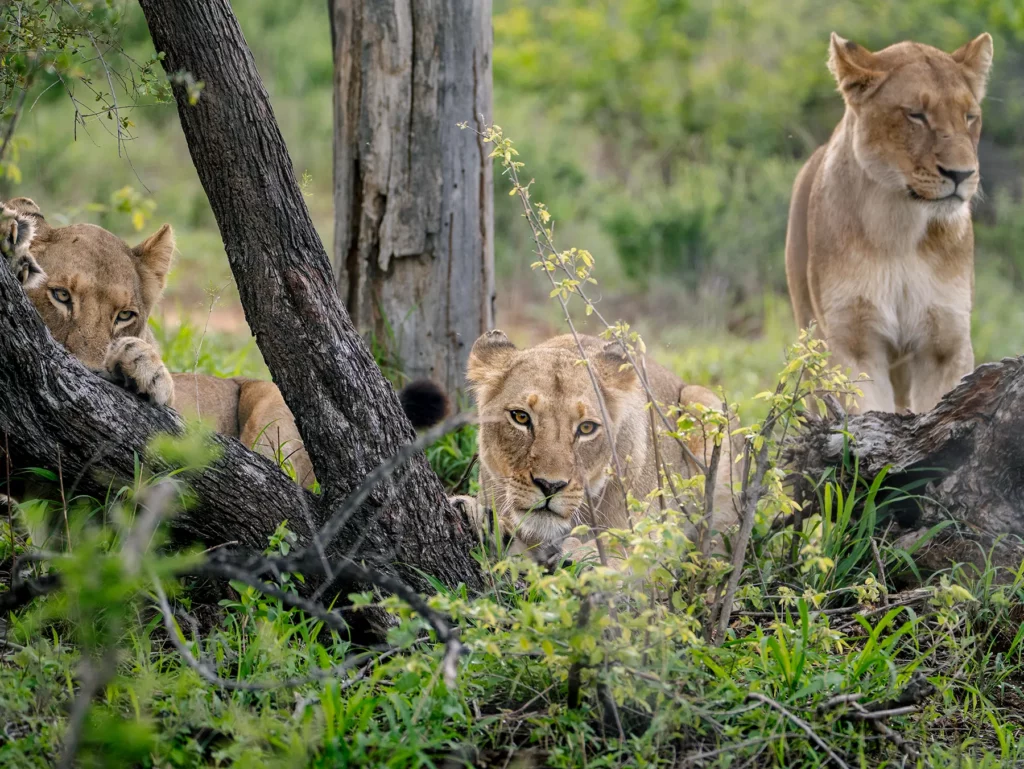
Both countries offer the Big Five, huge herds of plains game and strong predator viewing. The Masai Mara is famous for lions, leopards and cheetahs hunting on open plains, and Amboseli for large elephants against Kilimanjaro. Tanzania’s Serengeti is the larger ecosystem, and the Ngorongoro Crater is one of the best places to see black rhino. The migration crosses between both countries, so the same herds are in each at different times.
The Great Migration: Kenya or Tanzania?
In Kenya, you can watch the herds in the Mara from about July to October, with river crossings often between August and September. In Tanzania, you can follow the herds around the Serengeti nearly all year: calving in the south from January to March, movement through the west mid-year, and crossings in the north later on.
If you want calving, Tanzania is the better choice. If you want a shorter trip centred on river crossings, either can work. For month-by-month detail, read our guides to the best time to visit Masai Mara, the best time to visit the Serengeti and the best time to visit Ndutu.
Kenya vs Tanzania Safari Cost
Both countries span budget camping trips to ultra-luxury conservancies, so there is no fixed winner. In the Masai Mara, non-resident adult park fees in 2026 are US$100 per day from January to June and US$200 from July to December. Tanzania’s park fees and logistics often make a northern circuit more expensive per day than a comparable Kenya trip, though prices vary by park, season and accommodation level.
Compare quotes line by line. See our guide to how much a Kenyan safari costs, and check current park fees on the Kenya Wildlife Service and Tanzania National Parks Authority websites. Both countries now also charge for mandatory travel health insurance, so read our guide to mandatory Kenya travel insurance and budget for both if you visit both.
Logistics and Trip Length
Kenya’s parks are often closer together and close to Nairobi, which suits shorter trips of four to seven days. Tanzania’s northern circuit generally needs a week or more to see Tarangire, Ngorongoro and the Serengeti without rushing. Domestic flights can save time in both countries.
Experiences
- Balloon safaris: Available in both the Masai Mara and the Serengeti.
- Culture: Maasai communities live in both countries, and cultural visits are available.
- Walking and night safaris: Offered in conservancies in Kenya and in selected areas of Tanzania.
- Mountains and beaches: Mount Kilimanjaro is on the Tanzanian side, and views of it from Amboseli are in Kenya. Both countries have beach options. See our guides to Diani Beach and Stone Town and Jozani Forest.
Who Should Choose Which
- First-time visitors with a week or less: Kenya, for a compact trip.
- Photographers who want classic landscapes: Either. The Serengeti and Masai Mara are both superb.
- Calving season: Tanzania, in the southern Serengeti and Ndutu.
- Big-cat focus and shorter transfers: Kenya’s Masai Mara.
- Honeymooners combining beach and bush: Both offer excellent coastal extensions.
- Return visitors: Tanzania’s less-visited regions or Kenya’s northern parks.
Can You Combine Kenya and Tanzania?
Yes. A two-country trip can follow the migration, starting in Tanzania and ending in the Masai Mara, or the reverse. This requires more time and a careful plan for the border crossing or flights.
Kenya vs Tanzania Safari: Your Questions Answered
Which is better for a first safari? Both are excellent. Kenya is easier for shorter trips, and Tanzania suits a longer, wilder one.
Which has more wildlife? Both have similar species and numbers, because they share the same ecosystem.
Which is cheaper? It depends on your choices, though Kenya often offers more value at the lower and middle price levels.
Plan Your Kenya or Tanzania Safari with Yulle Adventures
Tell us your dates, budget and priorities and we will recommend Kenya, Tanzania or a combination. Call us on 254 769 841 010 for a quotation, browse our Kenya safari packages and Tanzania safari packages, or request a quote.