

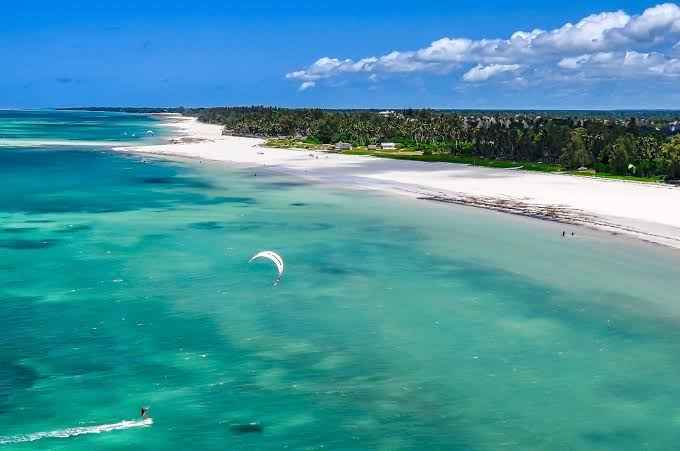
Diani Beach: Kenya's Slice of Tropical Paradise
Along Kenya's south coast, about 30 kilometres from Mombasa, a long ribbon of powder-white sand meets the warm turquoise of the Indian Ocean. This is Diani Beach, one of Africa's best-loved coastal destinations and a place that pairs postcard scenery with the easygoing rhythm of Swahili coastal life.
A Beach Made for Slowing Down
Diani's main draw is its shoreline. The sand is fine, pale, and soft underfoot, backed by swaying coconut palms and tropical vegetation. Offshore, a coral reef runs parallel to the coast and shelters the water from heavy waves. At high tide the sea is calm and swimmable, and at low tide the water retreats to reveal rock pools and a wide stretch of sand, ideal for long walks.
The beach is long enough that even in busy seasons you can find a quiet corner, whether you want to read under a palm tree, sip fresh coconut water, or watch fishermen's boats drift along the horizon.
Adventure on Land and Sea
Diani is far from just a place to lie in the sun. The water here supports a wide range of activities:
- Kitesurfing and windsurfing: Seasonal winds make Diani one of East Africa's top kitesurfing spots, with schools catering to complete beginners and experienced riders alike.
- Snorkelling and diving: The reef is home to colourful fish, and nearby dive sites offer encounters with turtles, rays, and a variety of marine life.
- Dolphin watching: Boat trips to the waters around Shimoni and Wasini Island often include sightings of bottlenose and spinner dolphins.
- Kisite-Mpunguti Marine Park: A short trip south leads to protected waters known for some of the best snorkelling on the Kenyan coast.
- Deep-sea fishing: The channels offshore attract anglers hoping to land sailfish, marlin, and tuna.
Wildlife and Nature Beyond the Sand
Even the beachfront has a surprising amount of wildlife. Colobus monkeys, with their striking black-and-white coats, swing through the trees around many hotels, and vervet monkeys are frequent and cheeky visitors.
Just inland is Kaya Kinondo, a sacred forest protected by the local Digo community. Guided walks here introduce visitors to rare coastal forest plants and to the cultural traditions linked to the kaya, the ancestral groves of the Mijikenda people. It is a valuable reminder that Diani's story goes deeper than its resorts.
For a day trip, the Shimba Hills National Reserve, a short drive from the coast, offers a chance to see elephants, giraffes, and the rare sable antelope.
Food, Culture, and Nightlife
Coastal Kenyan cuisine is a highlight in its own right. Swahili dishes blend African, Arab, and Indian influences, with coconut, tamarind, and spices featuring heavily. Look out for fresh grilled fish, prawns, crab, coconut rice, pilau, and samaki wa kupaka, fish in a rich coconut sauce. Street vendors sell mandazi (sweet fried dough) and fresh tropical fruit such as mango, pineapple, and passion fruit.
One of the area's most memorable dining spots is a restaurant set inside a natural coral cave, where you can eat under a rocky ceiling lit by candlelight. Along the beach road you'll also find laid-back bars, live music, and beachfront restaurants where the evening often ends with a sunset over the water.
Where to Stay
Diani caters to nearly every kind of traveller. Large beachfront resorts offer pools, spas, and all-inclusive packages, while boutique hotels, private villas, and budget guesthouses offer a quieter and more affordable alternative. Backpackers and long-stay visitors often settle in the area around Ukunda, the nearby town that serves as Diani's gateway.
Getting There
Diani is easy to reach. Many visitors fly into Moi International Airport in Mombasa and travel south by road, while others use the small airstrip near Ukunda, which has domestic flights from Nairobi and other destinations. By road, the journey typically involves the Likoni ferry or the Dongo Kundu bypass, which offers an alternative route avoiding the ferry crossing.
When to Visit
Diani enjoys a tropical climate and can be visited year round, but timing shapes the experience:
- December to March: Hot, dry, and sunny, with strong winds that suit kitesurfers, though it is also peak tourist season.
- June to October: Cooler and drier, with pleasant weather and fewer crowds.
- April to May: The long rains bring heavy showers and lower prices, and many visitors skip this period.
Responsible Travel
As tourism grows, protecting Diani's environment matters more than ever. Visitors can help by choosing eco-conscious lodgings, respecting the reef when snorkelling, avoiding single-use plastics, and buying crafts and food from local vendors. Supporting community-led tours, such as those at Kaya Kinondo, ensures that tourism benefits the people who call this coast home.
Final Thoughts
Diani Beach is a place where white sand, warm water, wildlife, and coastal culture come together. Whether you arrive seeking adventure, romance, family fun, or simply a place to do nothing at all, it offers a memorable escape, and most visitors leave already planning a return trip.