

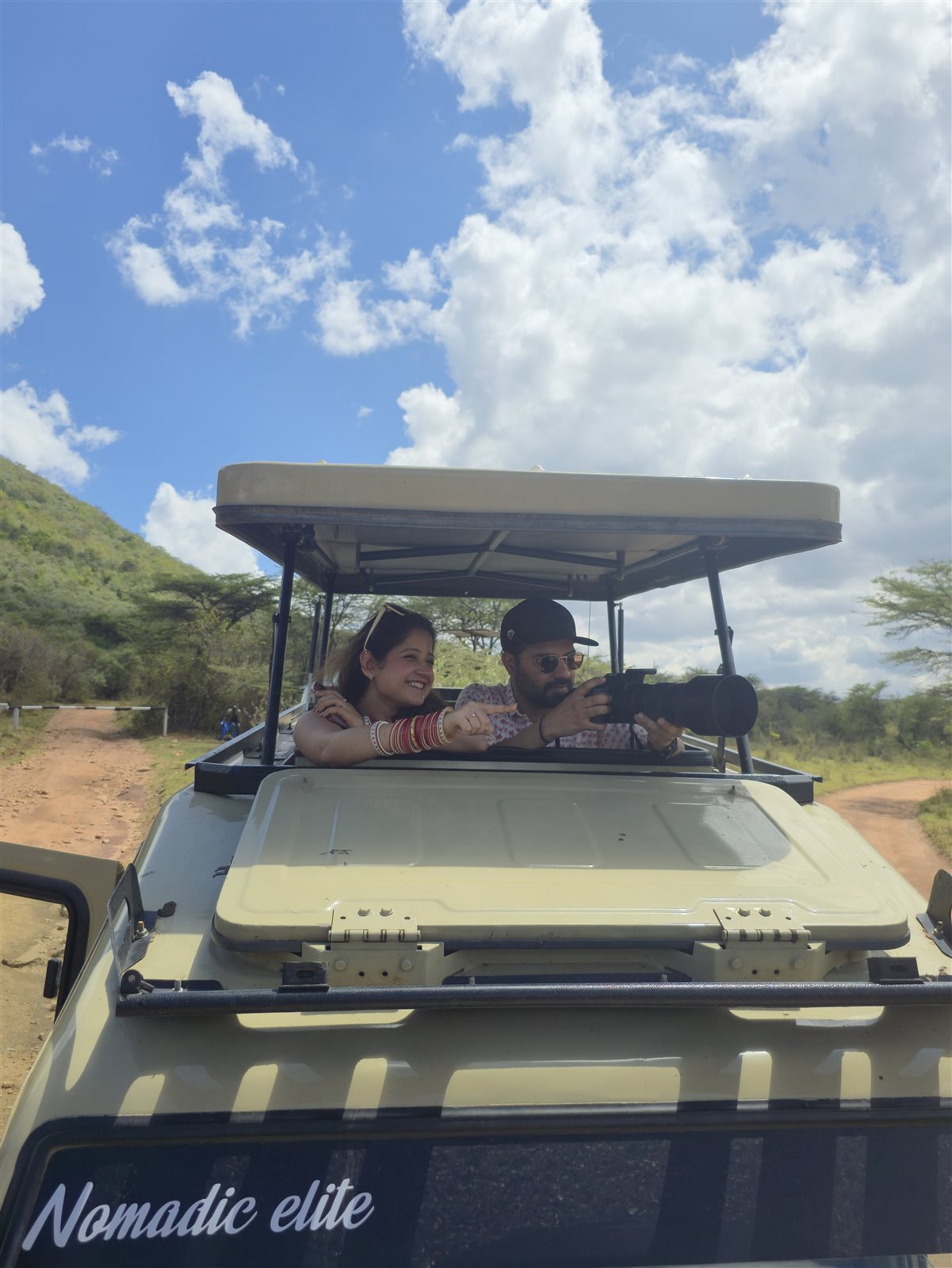
Booking a Kenya safari for Brits usually starts with excitement and a slight sense of not quite knowing where to begin. A Kenya safari for Brits involves a handful of genuinely new steps, an eTA instead of a stamped visa, a long-haul flight that is shorter than many people expect, and a first game drive that rarely matches what you pictured beforehand, usually in a good way.
This guide is a practical countdown for a Kenya safari for Brits, walking through what to do from the moment you book to the moment you are actually sitting in a safari vehicle watching your first wild animal in the flesh.
In This Guide
- Months Before You Go
- Weeks Before You Go
- The Final Days
- The Flight Itself
- Arrival in Nairobi
- The First Game Drive
- Settling Into the Rhythm
- Weather and When to Travel
- Money and Tipping
- Choosing Where to Stay
- Wildlife You Are Likely to See
- Frequently Asked Questions
Months Before You Go
A Kenya safari for Brits usually begins taking real shape four to nine months before departure, especially for trips during UK school holidays or the busy July to October season. This is the point to confirm your itinerary, lock in flights, and start thinking about which parks genuinely suit what you want from the trip.
It is also a sensible time to buy travel insurance, since cover often includes cancellation protection from the date of purchase. Our guide to Kenya travel insurance for UK travellers explains exactly what a policy needs to include for a Kenya safari for Brits.
This early stage is also a good moment to check the UK government's own foreign travel advice for Kenya, which covers safety notices, local laws and any health updates that might affect your plans. It only takes a few minutes and is worth bookmarking to check again closer to departure.
At this stage it also helps to think honestly about pace. Some travellers want to pack in as many parks as possible, while others prefer to stay longer in fewer places and let each one properly sink in. Neither approach is wrong, but deciding early makes every later booking decision easier, from flights to internal transfers.
Weeks Before You Go
Around six to eight weeks out, book a travel clinic or GP appointment to discuss safari vaccines and malaria prevention, since some vaccines need time to take full effect. Our safari vaccines guide for UK travellers covers this step in detail.
This is also the point to complete your Kenya eTA application, once your travel insurance and flight dates are confirmed, since the form asks for specific travel details that need to be in place first. Apply directly through the official Kenya eTA portal rather than a third-party site charging extra for the same service.
The Final Days Before a Kenya Safari for Brits
In the final week, pack using a proper checklist rather than relying on memory. Our Kenya safari packing list covers everything from neutral-coloured clothing to binoculars and a soft duffel bag for light aircraft transfers, all genuinely useful for a Kenya safari for Brits heading out for the first time.
Print a copy of your Kenya eTA approval, your travel insurance certificate and your full itinerary, and keep digital copies on your phone as a backup. Double-check your passport has at least six months of validity remaining, a common and entirely avoidable hold-up.
The Flight Itself
Flights from the UK to Kenya are more straightforward than many first-time travellers expect. British Airways flies to Nairobi, and several other major airlines connect through European, Middle Eastern or African hubs with a single stop. Most routings land you in Nairobi in well under twelve hours of total flying time, often on an overnight flight that lands you fairly rested.
This is one of the genuine advantages of a Kenya safari for Brits compared with travellers coming from much further afield: the flight is long enough to feel like a proper journey, but short enough not to dominate the start of your trip with days of recovery.
Arrival in Nairobi
Landing at Jomo Kenyatta International Airport, immigration for a Kenya safari for Brits is usually quick, since your eTA is already approved and linked electronically to your passport. Keep your printed approval handy just in case, then collect your luggage and look for your operator's representative, usually holding a sign with your name.
Many trips include a night in Nairobi before heading out to the first safari camp, which is a sensible way to recover from the flight and make sure luggage and connections settle before the adventure properly begins.
The First Game Drive
Nothing quite prepares you for the first game drive of a Kenya safari for Brits, no matter how many documentaries you have watched. The light is different, the scale of the landscape is different, and the moment an animal you have only ever seen on a screen turns out to be a few metres from your vehicle tends to catch people off guard, in the best way.
Early starts are normal, often before sunrise, since wildlife is most active in the cool hours of the morning. Bring a warm layer even if the day will later turn hot, since open safari vehicles get genuinely cold before the sun is fully up.
Our piece on your first game drive in Kenya captures this moment in more detail, and reading it before you go is a nice way to know roughly what to expect from this part of a Kenya safari for Brits.
Settling Into the Rhythm
By the second or third day, most travellers on a Kenya safari for Brits settle into a comfortable rhythm: early drive, breakfast, rest through the hot middle of the day, afternoon drive, dinner under the stars. The pace that felt unfamiliar on day one usually feels completely natural by the end of the trip.
This is also when many people start noticing the smaller details beyond the headline animals, bird species, tracks, the behaviour of a herd, which often become just as memorable as the big sightings by the time a Kenya safari for Brits draws to a close.
Combining Kenya With Tanzania
Some Brits extend their trip across the border into Tanzania, adding the Serengeti or Ngorongoro Crater to a Kenya safari for Brits itinerary. This usually means an additional Tanzania eVisa and a short flight or road transfer, both straightforward to arrange alongside your main Kenya plans.
Our guide to Kenya versus Tanzania is worth reading if you are undecided between a single-country trip and a combined Kenya safari for Brits covering both.
What Surprises First-Time Visitors Most
Among Brits doing a Kenya safari for their first time, a few things come up again and again as pleasant surprises: how quickly the days start feeling full without feeling rushed, how warm and genuinely welcoming local guides and staff are, and how the variety between parks, savannah, forest, lake, rift valley, changes the character of a Kenya safari for Brits from one leg of the trip to the next.
Very few people finish a first Kenya safari for Brits wishing they had planned less time, which is worth bearing in mind if you are deciding between a shorter trip and adding an extra day or two.
Weather and When to Travel
Kenya's climate is milder and far more consistent than the UK's, which tends to surprise first-time visitors. The long dry season runs roughly from June to October, bringing clear skies and excellent wildlife viewing as animals gather around rivers and waterholes. A shorter dry spell in January and February is also popular, often with fewer crowds than the peak summer months.
The two rainy seasons, generally April to May and November, bring short afternoon downpours rather than endless grey drizzle, and the landscape turns a lush, vivid green that photographs beautifully. Lodge availability often eases during these quieter months, and birdlife is at its best as migratory species arrive. None of this needs to dictate your dates, but it is worth weighing against school terms and annual leave when choosing when to go.
Temperatures across most of Kenya's safari country are remarkably stable year-round, rarely reaching the extremes some travellers expect from an equatorial destination. Evenings and early mornings can be surprisingly cool, especially at higher elevations such as the Masai Mara, which is why warm layers matter whatever month you travel.
Money and Tipping
Most lodges and camps accept card payments for extras, but it is worth carrying some local currency and a little cash in small denominations for tipping guides, trackers and camp staff. Many operators can advise on a reasonable daily tipping structure as part of your pre-departure information pack, so you are not guessing once you arrive.
It is also worth telling your UK bank that you are travelling, so your card is not blocked for unusual activity halfway through the trip. A simple notification before you leave avoids an awkward call to customer service from a lodge with patchy signal, and it is one of those small administrative tasks that is easy to forget amid the excitement of final packing.
Packing Habits Worth Changing
A few habits from a typical UK holiday do not translate well to a safari. Bright colours and busy patterns are best left at home, since neutral khakis, greens and browns blend into the bush and do not startle wildlife. Dark blue and black are also worth avoiding in certain areas, as they can attract tsetse flies.
Shoes are another area where habits need adjusting. Comfortable, closed walking shoes work far better than sandals once you are out of the vehicle, whether that is at a lodge, a bush breakfast stop or a guided walk. Practical footwear beats fashionable footwear every time once you are on the ground.
Finally, resist the urge to overpack electronics. A camera, a spare battery and a phone cover most needs, and many camps run on solar power or generators, so charging opportunities can be limited to certain hours of the day. A head torch is worth its weight many times over, freeing up both hands for tent zips or finding your way to dinner after dark.
A Few Small Comforts Worth Packing
Beyond the essentials, a handful of small items make a noticeable difference to comfort on a Kenya safari for Brits. A lightweight power bank keeps devices charged between generator hours, and a dry bag or large freezer bags protect cameras and documents from dust on bumpy roads.
A good pair of binoculars, ideally one per person rather than shared, transforms distant sightings into something properly memorable. None of these items are essential in the way a passport or insurance certificate is essential, but travellers who bring them rarely regret the extra weight in their luggage.
Choosing Where to Stay
Accommodation on a Kenya safari for Brits ranges from simple tented camps to lodges with pools, spas and elaborate dinners under the stars. The right choice depends less on how much comfort you want and more on how you picture your days: a small tented camp places you closer to the sounds of the bush at night, while a larger lodge often has more facilities for relaxing between drives.
Many travellers mix styles across a single trip, spending a few nights in an intimate camp in one park and a more social lodge in another. This variety is one of the easiest ways to shape a Kenya safari for Brits around personal taste rather than following a single fixed template.
Private vehicles are worth considering if flexibility matters to you, since a shared vehicle means compromising on how long you linger at a sighting or when you head back for meals. A private guide and vehicle for the whole trip also tends to build a closer relationship with your driver, who often becomes as memorable as the wildlife by the end of the week.
Wildlife You Are Likely to See
Kenya's parks are known for the so-called Big Five, lion, leopard, elephant, buffalo and rhino, but a typical itinerary turns up far more than that short list suggests. Expect giraffes browsing acacia trees, zebra and wildebeest grazing in mixed herds, and a dazzling range of birds that even non-birdwatchers tend to start noticing by the second or third day.
Timing affects what you see. Visitors travelling during the Great Migration months may catch dramatic river crossings in the Masai Mara, while a quieter season rewards patience with more relaxed, lingering sightings rather than the crowded vehicle clusters that can form around a major event. Either way, a good guide reads the land and the animal behaviour far better than any guidebook can prepare you for.
Night drives and guided bush walks, where available, open up a different side of the ecosystem entirely, from nocturnal predators to the small tracks and signs most people drive straight past during the day. Ask your operator whether these are included, since they are not offered everywhere but add real depth to a Kenya safari for Brits.
Travelling Solo, as a Couple, or in a Group
A Kenya safari for Brits works well whatever your travel style. Solo travellers often join a small shared group, which keeps costs sensible and introduces a ready-made set of companions for the week. Couples frequently opt for a private vehicle, prioritising the flexibility to set their own pace over the first drive and every one after it.
Larger groups and multi-generational families tend to benefit most from private arrangements too, simply because coordinating nap times, mobility needs or differing energy levels is far easier without other guests to consider. Whichever option suits you, a good operator will ask about group dynamics before finalising an itinerary, not after.
What to Wear on a Kenya Safari for Brits
Neutral colours, khaki, beige, olive and soft greens, work best for game drives, since they blend into the bush and show dust less than bright colours or white. Layers matter more than any single garment: a warm fleece or jacket for the cold start to the morning, a long-sleeved shirt for sun and insect protection through the day, and something light for the warm afternoons.
Comfortable closed shoes, a wide-brimmed hat and good sunglasses round out a practical packing list for a Kenya safari for Brits, and swimwear is worth including too, since many lodges have a pool that feels very welcome after a dusty morning drive.
Changing Camps Mid-Trip
Many Kenya safari for Brits itineraries move between two or three different camps or parks over the course of the trip, usually by road or a short light aircraft flight. These travel days are a little different in pace, often with a late-morning departure, a scenic drive or flight, and arrival at the next camp in time for an afternoon game drive in a brand new setting.
Photography Tips for a Kenya Safari for Brits
You do not need professional camera gear to bring home great photos from a Kenya safari for Brits, though a camera with some zoom capability helps considerably, since animals are often further away than they appear to the naked eye. A beanbag or small tripod to steady shots on the vehicle window frame makes a noticeable difference to photo quality.
The early morning and late afternoon light, the same hours wildlife is most active, also happens to be the best light for photography, so the early starts that can feel like a sacrifice at the time usually pay off twice over on a Kenya safari for Brits.
Staying Connected (or Not) on a Kenya Safari for Brits
Many lodges and camps now offer WiFi, at least in communal areas, though signal in more remote parks can be patchy or non-existent, which many travellers on a Kenya safari for Brits end up genuinely appreciating as a chance to properly switch off. Let friends and family at home know in advance that you may be harder to reach than usual, so nobody worries unnecessarily about a quiet few days.
If you do need to stay reachable for work or family reasons, check with your specific camps ahead of time about connectivity, since this varies considerably between a remote tented camp and a lodge closer to a town.
Frequently Asked Questions
How long before departure should we start planning? Four to nine months ahead, especially for travel during UK school holidays.
Do we need a visa or an eTA? UK citizens need a Kenya eTA, applied for online before travel.
How long is the flight from the UK? Most routings land in Nairobi in well under twelve hours of flying time, often overnight.
What should we pack for the first game drive? Warm layers for early starts, neutral clothing, sunscreen and binoculars.
Can we combine Kenya with Tanzania? Yes, many itineraries extend across the border with an additional eVisa.
Is a Kenya safari for Brits suitable for first-time travellers to Africa? Yes, it is one of the most accessible and well-established safari destinations for first-time visitors.
Will my phone and devices work out there? Many camps have Wi-Fi in communal areas, though signal in the bush itself is patchy, which most travellers end up appreciating rather than resenting.
Should we choose a shared or private vehicle? A private vehicle offers more flexibility to linger at sightings, while a shared vehicle can be a more sociable, lower-cost option.
A Realistic Checklist Before You Fly
In the last 48 hours before departure, run through a short mental checklist: passport with six months' validity, printed and digital copies of your Kenya eTA approval, travel insurance certificate, any vaccination records, and your full itinerary with contact numbers for your operator on the ground.
Confirm your airport transfer, charge every device, and pack your carry-on with medication, a change of clothes and anything irreplaceable, in case checked luggage is delayed. Getting these small details right removes nearly all of the stress from the final hours before a Kenya safari for Brits actually begins.
Plan Your Safari
A well-planned Kenya safari for Brits starts with a clear itinerary and the right preparation. Contact us for a tailor-made trip, or browse our Kenya safari packages to start your countdown.