

The Park Where Lions Nap in Trees and Hippos Fill the Channel: Welcome to Queen Elizabeth National Park
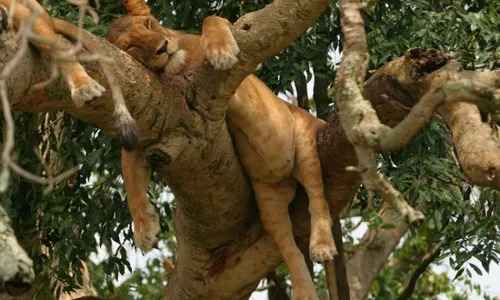
A lioness lies draped along a fig branch, one paw dangling, surveying the savannah like a queen on her balcony. This is Queen Elizabeth National Park, where western Uganda shows off its wild side.
A Park With a Layered Past
The park was founded in 1952 as Kazinga National Park, when the Lake George and Lake Edward Game Reserves were combined. Two years later it was renamed to commemorate a visit by Queen Elizabeth II. Its story is not only about wildlife. After a 1921 epidemic of rinderpest and sleeping sickness devastated the pastoralist Basongora people, the colonial government evicted many survivors from their lands to create game reserves. That history still shapes the relationship between the park and its neighbours.
A Landscape of Many Moods
Few parks pack in so much variety. Open savannah rolls into swampy shores, crater lakes glint like scattered coins, and dense forest closes around the Kyambura Gorge. The Kazinga Channel, a natural waterway linking two lakes, serves as the park's watery main street.
A Crowded Wildlife Stage
The park is home to roughly 95 mammal species and reportedly more than 600 bird species. Visitors often encounter elephants, buffalo, Uganda kob, topi, waterbuck, warthogs, hippo and Nile crocodiles, while leopards, spotted hyenas and giant forest hogs reward the patient. Chimpanzees live in the Kyambura Gorge, nicknamed the "Valley of Apes."
Conservation: A Delicate Balance
Uganda Wildlife Authority manages the park, and visitor fees help fund its protection. The challenges are real. Poachers killed six elephants in 2015, and in 2018 eleven lions died after poisoned carcasses were left out, an event conservationists described as a "national disaster." Reports link such poisonings to herders who lost livestock to predators without compensation.
Getting There
From Kampala, the drive is roughly 400 kilometres and usually takes 6 to 7 hours. Daily domestic flights from Entebbe land at Mweya, Kihihi and Kasese airstrips for those short on time. Travelers from Kenya usually fly from Nairobi to Entebbe first.
Entry Fees
Under the 2024 to 2026 tariff, entry costs USD 40 for foreign non-residents, USD 30 for foreign residents and UGX 20,000 for East African citizens, valid for 24 hours. Children aged 5 to 15 USD 20, and under-fives enter free. Game drives, vehicle fees and chimpanzee tracking cost extra.
Where to Stay
Options range from budget hostels and campsites, to mid-range tented camps, to luxury lodges overlooking the channel or plains.Lodges outside the park boundary also work, since the ticket allows re-entry within its 24 hours.
Did You Know?
• The park sits close to the equator, and a roadside monument lets visitors straddle two hemispheres.
• Lake Katwe, a crater salt lake nearby, has been mined by hand for generations.
• Ishasha's lions are among the few in Africa regularly seen resting in trees.
Best Time to Visit
The drier months, roughly December to February and June to August, usually make game viewing easier. The wetter months, around March to May and September to November, tend to bring lush scenery and fine birding, though some tracks may turn muddy.
Conclusion
Queen Elizabeth National Park does not shout. It unfolds slowly, one hippo yawn and one sunset at a time, and it rewards travelers who arrive with patience and respect.