

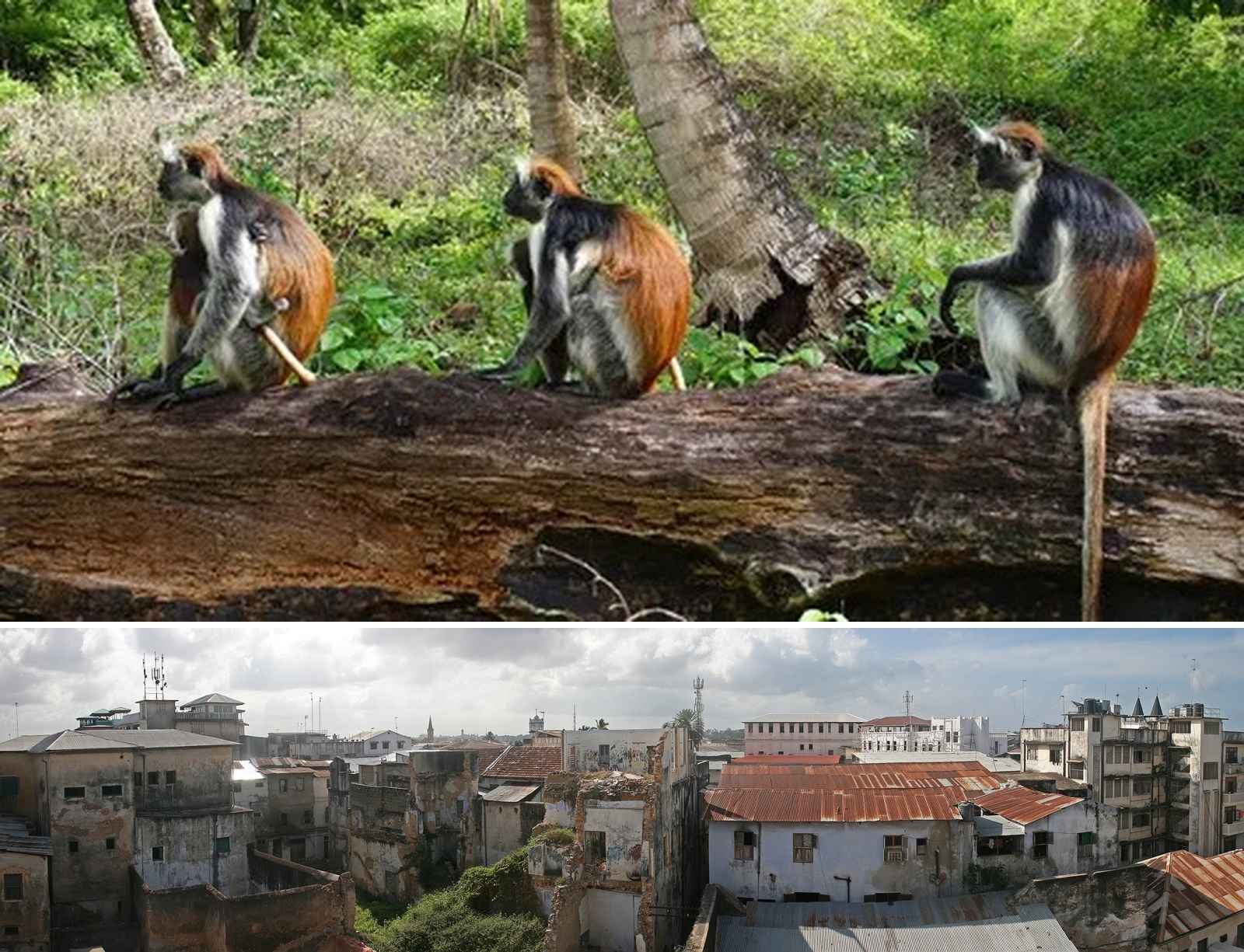
Coral Stone and Red Colobus: Two Faces of Zanzibar
The sea breeze carries the scent of cloves through the narrow lanes of Stone Town, where carved doors seem to whisper stories from centuries past. Less than an hour away, a different Zanzibar waits beneath a green canopy, where red-furred monkeys leap through the branches like acrobats. Together, Stone Town and Jozani Forest show an island of history and wilderness.
Overview: A City of Stone and a Forest of Mist
Stone Town is the old heart of Zanzibar City, on the island of Unguja. Its labyrinth of alleys is too narrow for cars, and its coral-stone buildings blend Arab, African, Indian and European influences. It became a World Heritage site in 2000.
Jozani Forest lies to the south-east, within Jozani Chwaka Bay National Park. It is the only national park in the Zanzibar archipelago, and it shelters mahogany forest, mangroves and salt marsh in a compact area of roughly 50 square kilometres.
History: Spices, Sultans and Shadows
Stone Town grew into a thriving trading port, and it is widely linked with the clove and spice trade under the Omani sultans in the 19th century. Its darker chapter is the East African slave trade, which brought immense suffering to the region. That history is still visible. The Anglican Cathedral, completed in the 1870s, stands on the site of the old slave market. Beneath it, small underground chambers where people were held survive as a sobering memorial.
Other landmarks tell lighter parts of the story. The House of Wonders, built in 1883, earned its name as the first building in Zanzibar to have electricity and an elevator. Meanwhile, the Old Fort was built around 1700 by Omani Arabs to defend against the Portuguese.
Stone Town Attractions: A Walk Through Living History
Wandering is the best way to meet Stone Town. A few highlights include:
- The Old Fort: Its thick walls now enclose craft stalls, a café and an amphitheatre, so a former garrison has become a cultural hub.
- Anglican Cathedral and Slave Market site: A moving, essential stop for understanding the island's past.
- House of Wonders and Palace Museum: Grand seafront landmarks. The House of Wonders suffered a partial collapse in 2020, and sources suggest interior access may still be limited, so it is wise to check locally.
- Forodhani Gardens: A waterfront park where food stalls light up at dusk.
- Darajani Market and carved doors: Colourful stalls and ornate wooden doors give the town its distinctive texture.
- Prison Island: A short boat ride away, it is known for its giant Aldabra tortoises.
Jozani Forest: Where the Island Breathes
Jozani is a small, cool refuge on an island better known for beaches. Boardwalks wind through the mangroves, and shafts of light fall through the canopy.The star of the show is the Zanzibar red colobus, an endangered monkey found only on this island. Visitors also commonly report Sykes' monkeys, bushbabies, duikers and many bird species.
Jozani is thought to be one of the best places to see the red colobus at close range, often only a few metres away. The monkeys are said to nibble charcoal from burnt wood, possibly to help them digest toxic leaves, which makes them an endearing curiosity.
Conservation: Protecting a Small but Precious Refuge
The red colobus is rare, and its future depends on protecting forest habitat. Fees paid by visitors support forest maintenance and protection, and guides trained in forest ecology help visitors understand the park's fragile balance. Challenges seem to include habitat loss, pressure from nearby farmland and the risk of animals crossing roads. Community involvement is widely seen as key, because people who benefit from the forest have a reason to guard it.
Transport Routes: Getting There and Around
Zanzibar is reached by air or sea.
- By air: Flights land at the international airport, a short drive from Stone Town.
- By sea: Ferries link Zanzibar with Dar es Salaam on the mainland, and the crossing usually takes a couple of hours.
- Within Stone Town: Most sights are reachable on foot, which is the ideal way to explore its alleys.
- To Jozani: The park lies about 38 km south of Stone Town. Options include organised tours, taxis, rented vehicles and local minibuses (dala-dalas), and the trip often takes roughly 45 minutes to an hour.
Best Time to Visit: Timing Your Trip
The drier months from June to October are generally the most comfortable, with cooler, sunnier days. December to February is also dry, but hotter and busier.
The long rains usually arrive from March to May, and heavy downpours can make forest paths muddy. Wherever you go, early morning is often best at Jozani. The red colobus are said to be active and feeding by about 8:30 AM, before the tour buses arrive.
Fascinating Facts
- Freddie Mercury, lead singer of Queen, was born in Stone Town, and a small museum[Freddie Mercury Museum] honours him.
- The House of Wonders' doors were reportedly made extra wide so the Sultan could enter on an elephant.
- Stone Town's famous carved doors are often read as symbols of a household's status.
- The 1896 Anglo-Zanzibar War is often described as one of the shortest wars in history.
Conclusion: Two Worlds, One Island
Stone Town and Jozani Forest tell different halves of Zanzibar's story. One is a town of coral stone, spices and memory, the other a forest of mist, mangrove and monkeys.Visiting both can leave a lasting impression, as long as travellers tread gently, respect local communities and keep the island's fragile heritage in mind.