

Sleeping in the Front Row: The Masai Mara's Finest Luxury Camps and Lodges
The Mara does not whisper. Lions call across the plains at two in the morning, the grass runs to the horizon like a slow green sea, and the sky performs twice a day without charging admission. Choosing where to sleep in all of that is arguably the single biggest decision of a Mara trip.
Luxury here rarely means marble and chandeliers. It usually means space, silence, and a guide who has spent twenty years learning which thicket a leopard favours. The best properties sell access rather than opulence, and the difference shows up in what you see rather than what you photograph of your room.
Reserve or conservancy?
This choice tends to shape the whole holiday, so it is worth understanding early.
The National Reserve itself holds the famous river crossings and the greatest density of game. It also allows day visitors, which means a good sighting can gather a dozen vehicles by mid-morning.
The conservancies that ring the reserve, including Olare Motorogi, Mara North, Naboisho and Olderkesi, work differently. Maasai landowners lease the land to a handful of camps, vehicle numbers are capped, and off-road driving, night drives and walking safaris are generally permitted. You typically pay a conservancy fee of around USD 100 per person per night, and in return you often have a cheetah to yourself
.
Angama Mara
Angama sits on the Oloololo Escarpment, perched above the plains like a hawk on a fence post. Its glass-fronted tents face the valley where the film Out of Africa was shot, and the view does most of the talking.
Service is polished without being stiff. There is a beading studio, a photographic studio with loan lenses, and a picnic site on the famous hill. Rates usually sit near the top of the Kenyan market.
Mahali Mzuri
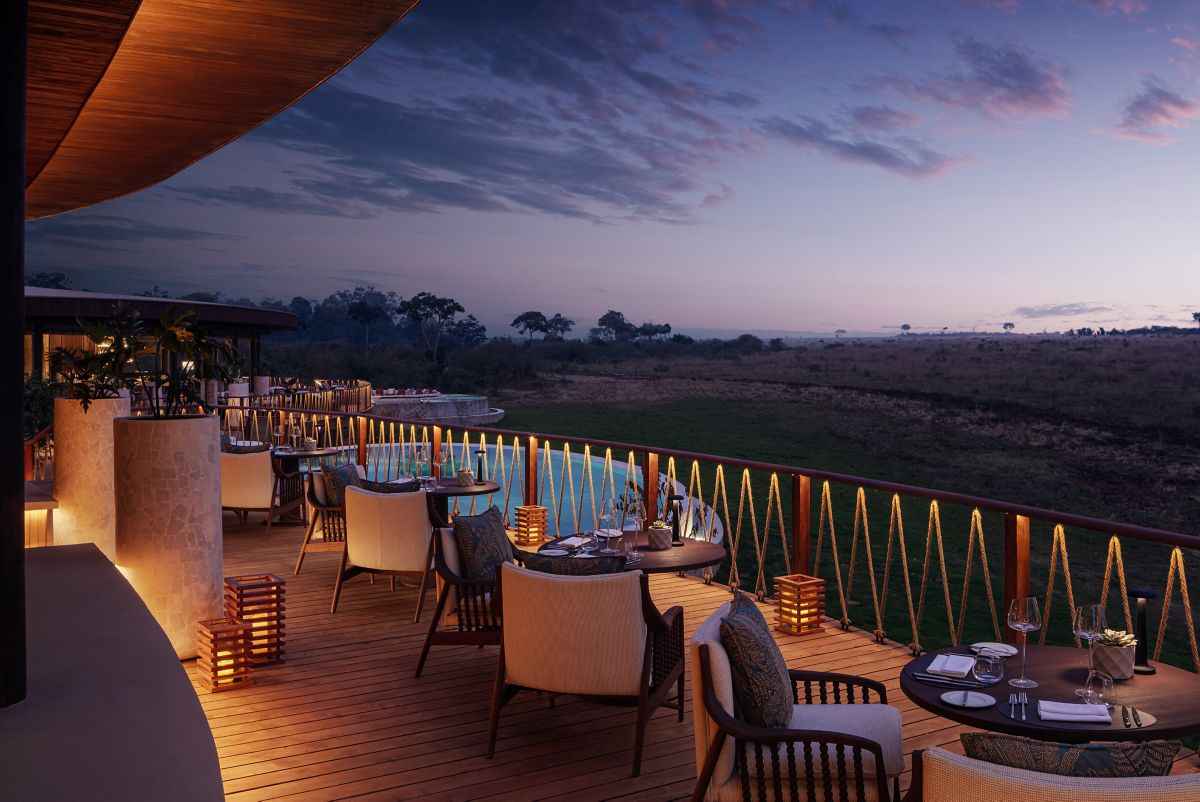
Richard Branson's camp occupies a hillside in Olare Motorogi Conservancy, and its twelve tented suites look like something designed for a film set. Floor-to-ceiling glass, an infinity pool cut into the slope, and a wildebeest highway running beneath it during migration months.
Guiding here is consistently strong, and the conservancy setting means sightings are rarely crowded.
Cottar's 1920s Safari Camp
Cottar's trades in nostalgia and does it convincingly. Persian rugs, campaign furniture, silver service under canvas, and a family that has guided in East Africa for more than a century.
It sits in the private Olderkesi Conservancy on the Tanzanian border, which tends to feel genuinely remote. Guests who want the old safari romance usually find it here.
Sanctuary Olonana
Olonana hugs a bend of the Mara River inside the reserve's northern edge. Suites come with private plunge pools and decks that hang over the water, where hippos grunt through the night like distant engines.
It arguably offers the best balance of river drama and reserve access, and it suits travellers who want comfort without a long transfer.
Little Governors' Camp
Reached by a hand-pulled ferry across the Mara River, Little Governors' feels delightfully theatrical before you even check in. Seventeen tents curve around a waterhole that elephants treat as a daily appointment.
It is smaller and quieter than its larger sister camp, and the location inside the reserve puts you close to the crossing points in season.
What you should expect to pay
High-season rates at this level commonly run from USD 700 to USD 2,500 per person per night, sharing. Full board, drinks, laundry and twice-daily game drives are usually included, though balloon safaris and the reserve entry fee of roughly USD 200 per person per day are generally not.
Low season, broadly April through early June, can cut those figures substantially. A few camps close entirely during the long rains.
A word on timing
The migration typically reaches the Mara between July and October, and the crossings are the headline act. Resident game, however, stays all year, and the green months offer newborn antelope, dramatic skies and far fewer vehicles.
Book early either way. The best camps hold fewer than twenty rooms, and the good ones often fill a year ahead.
In the Mara, you are not really buying a bed. You are buying a seat.