

Kenya Safari for Indian Families: Three Generations, One Great Migration
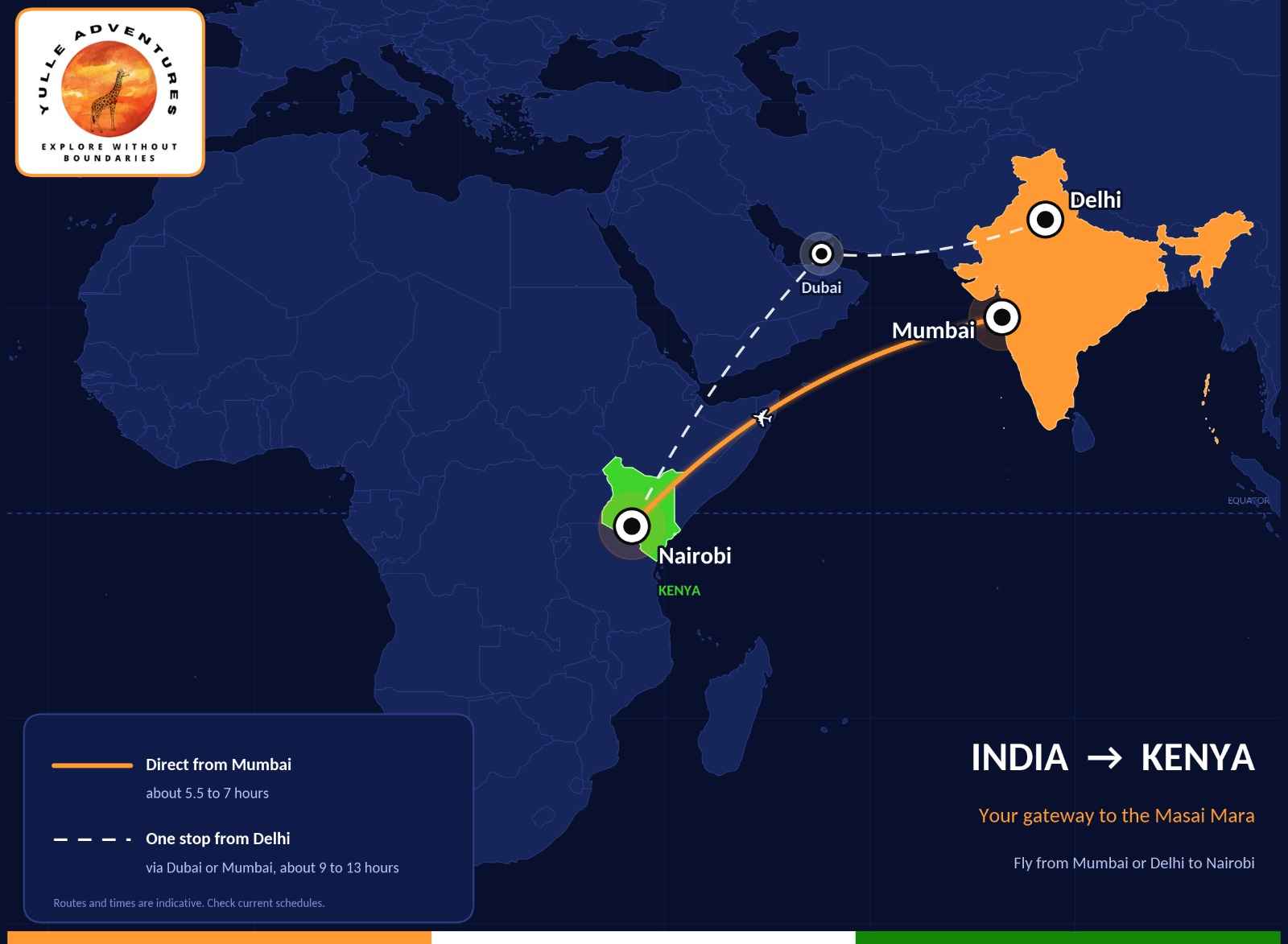
For many Indian families, Kenya is the perfect first safari. The flight from Mumbai is only about 5.5 to 7 hours on Kenya Airways, depending on the schedule. The time difference is just two and a half hours, and the country has a long, warm connection with the Indian community. Add the Great Migration, open savannah, and lodges that happily cook vegetarian and Jain meals, and you have a holiday that works for grandparents and toddlers as well.
This guide walks you through what to expect on a Kenya safari for Indian families: when to go, where to stay, what to eat and how to plan the practical details.
Kenya at a Glance
- Capital: Nairobi
- Languages: English and Kiswahili are widely spoken, alongside many local languages.
- Time: East Africa Time (GMT 3), 2.5 hours behind India.
- Dialling code: 254
- Currency: Kenyan shilling (KES)
- Climate: Tropical and near the equator. The coast is warm and humid, around 30°C. Nairobi and the highlands are milder, around 20 to 25°C, with cooler nights.
- Seasons: One operator calls July to October peak, November to March high and April to June low.
Why Kenya Works So Well for Indian Families
- Short, convenient flights. Direct flights connect Mumbai and Nairobi, and there are one-stop options from other Indian cities. Always check current schedules with your airline.
- A familiar feel. Nairobi and Mombasa have long-established Indian communities, Hindu temples, Gujarati and Punjabi restaurants and Indian grocery stores.
- Easy to combine. You can pair a safari with a beach stay on the coast, a day in Nairobi, or a lakeside stop at Naivasha or Nakuru.
- Suitable for all ages. Many lodges offer family rooms, child-friendly activities and flexible game drives.
Getting to Kenya from India
Kenya Airways flies Mumbai to Nairobi direct, with flight times from about 5.5 to 7 hours depending on the schedule. The direct service is an overnight flight that leaves in the evening, and arrivals are often early morning, so you can start the safari the same day.
Delhi has no direct flight. Connect through Mumbai on Kenya Airways, or take one stop via Dubai (Emirates), Doha (Qatar Airways), Abu Dhabi (Etihad) or Addis Ababa (Ethiopian Airlines), for a total journey of roughly nine to thirteen hours. Bengaluru, Chennai and Hyderabad connect in the same ways.
Return fares are roughly US$350 to US$600 from Mumbai and US$400 to US$700 from Delhi via the Gulf. July to October is peak season for flights as well as lodges, so book early. Direct options change, so check current schedules.
Nairobi’s Two Airports
International flights land at Jomo Kenyatta International (JKIA), but small bush flights to the Mara or Samburu leave from Wilson Airport across town. The transfer is about 45 minutes, but morning traffic can stretch it to two hours. Keep at least four hours between landing and any bush flight, or spend a night in Nairobi.
A night in Nairobi is rarely wasted. Nairobi National Park, the Sheldrick elephant orphanage, the Giraffe Centre and Karen Blixen’s house make a gentle start after the flight. Read our guide to the tourist attractions in Nairobi.
Fly-In or Road Safari?
Fly-in safaris use light aircraft from Wilson Airport to airstrips in the Mara, Amboseli, Samburu and Laikipia. A flight of 45 minutes to an hour replaces a five- or six-hour drive and leaves more time in the bush, which is why it is the usual choice for mid-range and luxury trips. The trade-off is a luggage limit of about 15 kg per person in soft-sided bags.
Road safaris cost less and let you watch the Rift Valley change on the way, but the drive to the Mara takes five to six hours on a mix of tarmac and rough road. Many itineraries combine the two: drive to Lake Naivasha, then fly on to the Mara. If grandparents are travelling, favour flights over long, bumpy drives.
Best Time to Visit Kenya from India
- July to October: Peak season. The Great Migration crosses the Mara River in the Masai Mara, and wildlife viewing is at its best. Book early.
- January to February: Warm, dry and excellent for game viewing. Quieter than July to September.
- March to May: Long rains. Fewer tourists and lower prices, but some roads and camps are affected.
- November to December: Short rains. Green landscapes, good birdlife and festive-season holiday options.
School holidays. Indian school breaks fall in expensive windows. The Dussehra and Diwali break in October sits in peak season, and prices jump again after 15 December. Travelling in January after the 2nd, or in February, can save a lot: January to March prices are roughly 30 to 40% below peak, with dry weather and short grass that makes animals easier to spot. Amboseli in January often gives clear mornings with Kilimanjaro in view.
Choosing a window. July to October is Great Migration season in the Masai Mara, with river crossings mostly from August into October. It is also the busiest and priciest period, so book six months or more ahead. April and May bring the long rains and rough roads, which suit a first family trip less well, although travellers who want lush scenery, newborn animals, few vehicles and the lowest rates sometimes choose them. December to February is excellent for big cats, but the Christmas and New Year weeks are very expensive, so aim for early December or late January.
Kenya by the Indian Holiday Calendar
- May to June (summer school holidays begin): The migration builds in the Mara. It is green and uncrowded.
- July to September (peak summer holidays): Great Migration river crossings in the Masai Mara.
- October to November (Dussehra and Diwali): The migration heads south and the short rains begin. Good value.
The sweet spot for most Indian families is July to September. You travel during the school break, escape the Indian monsoon and arrive into the Migration, when close to two million wildebeest and zebras cross the Mara River. Honeymooners often prefer the shoulder seasons for value and atmosphere.
Top 6 Destinations for a First Family Safari
- Masai Mara National Reserve: Kenya’s most famous reserve and the heart of the Great Migration. Expect lions, elephants, cheetahs, giraffes and enormous herds of wildebeest and zebras, close to two million of which funnel across the Mara River between July and October. Most families spend two to three nights here. See our guide to the best time to visit Masai Mara.
- Lake Nakuru National Park: Known for rhinos, both black and white, as well as buffalo, Rothschild’s giraffes and abundant birdlife, including flocks of flamingos. It is compact, which makes it easy for children.
- Lake Naivasha: A relaxed freshwater lake with boat rides, walking safaris at Crescent Island and plenty of hippos. A good place to slow down between longer drives.
- Amboseli National Park: Famous for large elephant herds with Mount Kilimanjaro in the background, great for photographs, in a landscape where open savannah meets swamps.
- Nairobi National Park and the Giraffe Centre: Only minutes from the city. A good option for a short first or last day, including visits to the Giraffe Centre and the elephant orphanage run by the David Sheldrick Wildlife Trust.
- Diani or Mombasa beach extension: If your family wants sun and sand after the bush, the Kenyan coast is a natural add-on, with beach resorts, water sports and historic sites such as Fort Jesus in Mombasa. Read our guide to Diani Beach.
Sample Itineraries for Indian Families
5 days: short and simple
- Day 1: Arrive in Nairobi, rest, optional visit to the Giraffe Centre.
- Days 2 to 4: Drive or fly to the Masai Mara for game drives.
- Day 5: Return to Nairobi and fly home.
7 to 8 days: the classic family safari
- Day 1: Arrive in Nairobi.
- Day 2: Nairobi to Lake Nakuru, with a game drive.
- Day 3: Lake Naivasha, boat ride and walking safari.
- Days 4 to 6: Masai Mara, with full-day and morning and evening game drives.
- Day 7: Return to Nairobi.
- Day 8: Departure, or extend to the coast.
7 days: Mara and Amboseli. Three nights in the Mara for big cats and the migration, then a short flight to Amboseli for two or three nights of elephants beneath Kilimanjaro.
10 days: family bush and beach. Laikipia and the Mara with a few relaxed days on the coast, in family-friendly stays with interconnecting rooms and junior-ranger activities. Browse our Kenya safari packages for more itineraries.
A Day on Safari
Days follow the animals’ rhythm. You head out on an early game drive, often before sunrise, when predators are active and the light is soft. After a late breakfast and a rest in the warm middle hours, an afternoon drive ends with a sundowner on the plains. Private conservancies also allow night drives, which reveal leopards, genets and bushbabies, and guided walks with an armed ranger and a Maasai guide. If it is your first safari, read our guide to a Kenya safari for first-time visitors.
Where You Will Sleep
Tented camps have proper beds, en-suite bathrooms with hot showers and canvas walls between you and the night sounds. Lodges are stone, thatch and glass buildings, often with pools, spas and family rooms.
Most camps are all-inclusive, bundling accommodation, meals, game drives and often park fees into one nightly rate. Conservancy camps cap the number of beds and vehicles, which buys exclusivity and off-road access. In the highland forests of the Aberdares and Mount Kenya, some itineraries include treehouse-style lodges overlooking a waterhole.
Food: Vegetarian, Jain and Indian Meals
This is one of the biggest worries for Indian families, and one of the easiest to solve.
- Tell your tour operator at booking about vegetarian, vegan, Jain or no-onion-no-garlic needs, so every camp can prepare in advance.
- Mid-range and luxury camps usually serve buffets with vegetarian dishes at every meal, such as dal, rice, chapati and vegetable curries. Budget camps are simpler, often rice, beans and a basic stew, so pack extra snacks.
- Jain meals need more planning. Many camps understand “veg” but not “no root vegetables”. Give notice to every camp on the route, and consider hotels with a long record of hosting large Indian groups. For instance, Sarova Mara and Sarova Lion Hill at Nakuru have chefs who understand Jain requirements.
- If the food feels bland, ask for kachumbari, a tomato and onion salad with fresh chilli, similar to kachumber.
- Pack your own comforts: tea masala (camps often serve plain tea bags), achar, and snacks such as theplas, khakhra, namkeen and instant poha or upma. Check airline and customs rules on food items.
- In Nairobi, Parklands is the heart of the Indian community, with familiar restaurants and shops.
- Drinking water: Stick to bottled or filtered water. Camps provide it.
- Halal: Halal meat is widely available in East Africa, which has large, long-established Muslim communities, and kitchens are used to preparing it. Prayer facilities and the qibla direction are easy to arrange when you ask in advance.
Travelling with Children and Seniors
- Game drives are long. Morning drives often start around 6 am, and road transfers between parks can take five to six hours. Plan rest days and flexible schedules.
- Ask about age limits. Some camps restrict young children or walking activities. Family-friendly lodges usually allow all ages on game drives, and many offer family tents, interconnecting rooms and junior-ranger activities, while walking and conservancy camps often set minimum ages.
- Mobility. Safari vehicles have high steps. Ask your operator for vehicles with pop-up roofs and easy access, and whether a short flight to the Mara is possible instead of a long drive.
- Vehicle size. Safari Land Cruisers are rugged and loud rather than plush. For a family of more than four, ask for a stretched vehicle so everyone gets a window seat.
- Medication. Carry enough for the whole trip with prescriptions, in your hand luggage.
- Keep it relaxed. Two to three hours in the vehicle, then a break at the lodge, suits most families better than eight hours straight.
Visas, Health and Documents
Entry rules change, so confirm everything with the official Kenyan government portal and your airline before you travel.
- Entry authorisation: Indian passport holders need a Kenya eTA, not a traditional visa. It costs about US$30 and approval usually comes within about 72 hours, so apply a week or two before you fly to be on the safe side. Apply only on the official site, etakenya.go.ke, and carry a printed copy. There is no visa on arrival. Read our step-by-step guide to the Kenya visa for tourists.
- Mandatory travel health insurance: Since 6 October 2026, most foreign visitors must buy Kenya’s inbound travel health insurance as part of the eTA application. The policy covers at least US$50,000 and must come from a Kenyan-licensed insurer. The premium is about US$44, and reported tests put the total at around US$52 per traveller with fees. Each family member needs their own. Read our guide to mandatory Kenya travel insurance.
- Passport: Valid for at least six months from the date of arrival, with two or three consecutive blank pages.
- Yellow fever: Kenya requires a certificate if you arrive from or transit a country with yellow fever risk, so check your routing (for example, via Addis Ababa). Get vaccinated at least 15 days before departure. It is a one-time shot with a lifetime certificate. Confirm current rules with your doctor.
- Malaria: Kenya has malaria-risk areas. Speak to your doctor about preventive medication, and use repellent and long sleeves in the evenings.
- Your own travel insurance: Essential. The nearest hospital from the Mara is in Nairobi, 5 to 6 hours by road. AMREF Flying Doctors handles air evacuation, at about US$25 for a standalone monthly policy if your camp does not include it.
- Vaccines and routine health: See a travel doctor four to six weeks before you go.
eTA Checklist
The eTA replaced the old visa system for international visitors from 1 January 2024, and it applies to children too. You can apply up to three months before travel, and it is wise to apply as soon as your flights and accommodation are booked. Have these ready:
- A passport valid for at least six months beyond your arrival date
- A recent passport-style photo or a clear selfie
- Your email address and phone number
- Your arrival and departure details and where you will stay in Kenya
- A credit card, debit card or Apple Pay for the fee
Money, Phones and Power
- Currency: Kenyan shilling (KES). US dollars are widely accepted at lodges and parks.
- Check every dollar note. Kenyan banks and lodges often reject older US bills, with some insisting on notes printed in 2013 or later. Indian forex counters sometimes hand out older notes, so inspect each one before you leave. Torn, stamped or creased notes can be refused too.
- Forex cards: Standard multi-currency cards can be unreliable at remote lodges. Better results are reported with cards such as Niyo Global and BookMyForex, but still carry US$200 to US$300 in crisp, recent notes for tips and system outages. Carrying more than US$5,000 in total cash may draw customs questions.
- Cards and M-Pesa: Cards work at lodges, hotels and in cities, but ATMs are scarce in the bush, so sort out cash before flying to camp and tell your bank you are travelling. M-Pesa is the local mobile money system, but carry some cash for small purchases.
- Tipping: Guides, drivers and lodge staff usually receive tips. Ask your operator for current guidelines.
- SIM and data: A local SIM or eSIM is cheap and easy, and Safaricom has the widest coverage. Most camps offer Wi-Fi in main areas, if not always in the tents.
- Power: Kenya uses British-style three-pin Type G plugs at 240V. Many Indian universal adaptors do not fit the deep sockets in safari tents, so bring a dedicated UK adaptor.
- Time difference: Kenya is 2.5 hours behind India.
Safari Etiquette and Safety
- Always stay inside the vehicle unless your guide says otherwise.
- Keep voices low and never feed or approach wildlife.
- Follow your guide’s instructions at all times.
- Respect local customs and ask before photographing people.
- Choose operators registered and licensed in Kenya.
Nairobi Tips
The main safari circuits have run commercial tourism since the 1960s, with licensed guides, park rangers and lodge security, but Nairobi needs ordinary city awareness: use Uber and avoid displaying jewellery at night. Many Indian guests spend a night in Nairobi before or after the safari, which also avoids the two-airport rush.
Estimating Your Kenya Safari Budget for Indian Families
Costs vary by season, camp level and group size. The figures below are for two people sharing a private 4x4 Land Cruiser with a licensed guide. All figures are in US dollars and exclude international flights.
5 days: Naivasha and Mara
- Budget, January to June: US$1,850
- Mid-range, January to June: US$2,275
- Luxury, January to June: US$3,450
- July to October peak: US$2,925 to US$4,900, from budget to luxury
9 days: Amboseli, Naivasha, Mara and Nakuru
- Budget, January to June: US$3,325
- Mid-range, January to June: US$4,025
- Luxury, January to June: US$5,975
- July to October peak: US$5,000 to US$8,450, from budget to luxury
14 days: adds Samburu, Ol Pejeta and Diani beach
- Budget, January to June: US$5,350
- Mid-range, January to June: US$6,425
- Luxury, January to June: US$9,600
- July to October peak: US$7,400 to US$12,925, from budget to luxury
Prices drop slightly from November to 14 December and rise over the holiday period from 15 December to 1 January. For the wider picture, see our guide to how much a Kenyan safari costs.
Usually included:
- Private 4x4 Land Cruiser with pop-up roof and licensed guide
- Full-board meals at camps, with vegetarian options
- Park and reserve entry fees
- Named camp accommodation for your tier
- Nairobi airport pickup and drop-off
- Two game drives a day and drinking water
- Domestic flights where the package lists them
Usually extra:
- International flights, the eTA (about US$30) and the mandatory Kenya health insurance (about US$44 to US$52)
- Your own travel insurance
- Tips, alcohol and laundry
- Balloon safaris (about US$500 per person) and the Mara bed-night levy (US$40 per night)
Plan Your Kenya Safari for Indian Families with Yulle Adventures
A Kenyan safari is more than a wildlife holiday. It is a chance for several generations of one family to share something unforgettable. Ready to plan? Tell us your dates, group size, food needs and budget, and we will build a trip to match. Call us on 254 769 841 010 for itineraries and quotations, browse our Kenya safari packages, or request a quote.