

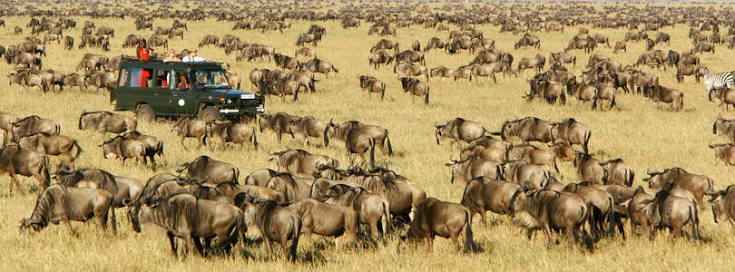
How Americans Can Plan a Kenya Safari
By Yulle Adventure
A Kenya safari is a bucket-list trip for many American travelers, and it is easier to plan than most people expect. The key is to work backwards from your dates: flights, entry requirements, health preparations and camps all have lead times. This guide gives you a clear plan, from the first idea to your first game drive.
Start with the big decisions
- When to go. July to October is peak season for the Great Migration, but January, February and June are quieter and often better value.
- How long to stay. Allow at least seven days on the ground, and ten to fourteen if you are flying from the United States, since the journey is long.
- Which parks. The Masai Mara is the headline choice, and Amboseli or Lake Nakuru make good additions.
- What style. Budget group, midrange private or luxury.
- Budget. Decide a per-person total, including flights, safari, entry costs and tips.
Getting there from the United States
There are one-stop routes to Nairobi from many US cities, usually through Europe, the Middle East or other African hubs, and some nonstop services depending on the season. The trip often takes 15 to 24 hours. Kenya is seven to eight hours ahead of US Eastern time, so plan a rest day on arrival. Check schedules and airlines when you book, since routes change.
Entry requirements for US passport holders
- Electronic Travel Authorization (eTA): apply online at the official portal before you travel. Americans are not on the exemption list. Each traveler, including children and infants, needs one. See our step-by-step eTA guide.
- Passport: valid for at least six months beyond arrival, with blank pages.
- Return ticket: carry proof of onward travel.
- Travel health insurance: Kenya has set a minimum cover of US$50,000 for foreign visitors, with implementation details still being finalized and reports saying policies must come from a Kenyan-licensed insurer. See our insurance article.
- Official advice: read the US State Department travel advice for Kenya before you book and before you travel.
Health
See a travel medicine clinic six to eight weeks before departure. Ask about routine vaccines, yellow fever, typhoid, hepatitis and malaria prevention. Bring your regular medications in your hand luggage, in their original packaging, with a copy of the prescription. Buy travel insurance that includes emergency medical evacuation, because many US health plans do not cover you abroad.
Best time for American travelers
| MonthWhy go | |
| January to February | Warm and dry, good game viewing, lower Mara fee, escape the winter |
| June | Quiet and good value |
| July to October | The Great Migration, peak demand, higher fees |
| November to December | Green season with fewer visitors, busy over the holidays |
In the Masai Mara, non-resident adults pay US$100 per day in January to June and US$200 per day in July to December in 2026. See our guide to the best time to visit Kenya.
Costs and money
Safari prices are generally quoted in US dollars, which makes budgeting simple. 2026 Masai Mara guides put budget safaris at about US$250 to 350 per person per day, midrange at US$350 to 600 and luxury at US$700 to 1,500 or more. Add the cost of flights, the eTA, insurance and tips. See our Kenya safari cost guide.
Tipping: a common guideline is about US$10 per person per day for the guide, with camp staff tips on top, though policies vary. Carry small US bills in good condition.
Cards and cash: cards work in Nairobi and larger lodges, but not in remote camps. Tell your bank you are traveling.
A sample 10-day trip from the US
- Day 1: depart the United States on an overnight flight.
- Day 2: arrive in Nairobi, transfer to your hotel and rest.
- Days 3 to 6: the Masai Mara, with morning and afternoon game drives and an optional balloon flight.
- Day 7: travel to Amboseli.
- Day 8: Amboseli game drives with Kilimanjaro views.
- Day 9: return to Nairobi, visit the Giraffe Centre or the national museum.
- Day 10: fly home.
Add the coast for a beach extension, or Lake Nakuru for a different landscape.
What to pack
Layers for cold dawns, neutral clothing, closed shoes, a hat, sunglasses, binoculars, a camera with a zoom lens, spare batteries and a power adapter. Kenya uses UK-style three-pin plugs and 240 volts, so check that your devices handle the voltage. Pack in a soft duffel bag if you will fly on small aircraft with strict baggage limits.
Safety and responsible travel
Safaris are well organized, and your guide is your safety expert. Follow instructions, keep a respectful distance from wildlife and avoid buying wildlife products.
Frequently asked questions
Do Americans need a visa for Kenya? An eTA is needed before you travel.
How far ahead should I book? Nine to twelve months for peak months, and at least four to six months otherwise.
Can I combine Kenya with Tanzania or Zanzibar? Yes. See our Kenya vs Tanzania guide. Check each country's entry and insurance rules.
Is it safe? Safaris are very well organized. Check the State Department advice and follow your guide.
Plan your Kenya safari with Yulle Adventure
Tell us your dates, group size and budget, and we will build a trip that fits. Browse or Contact us for a quotation.