

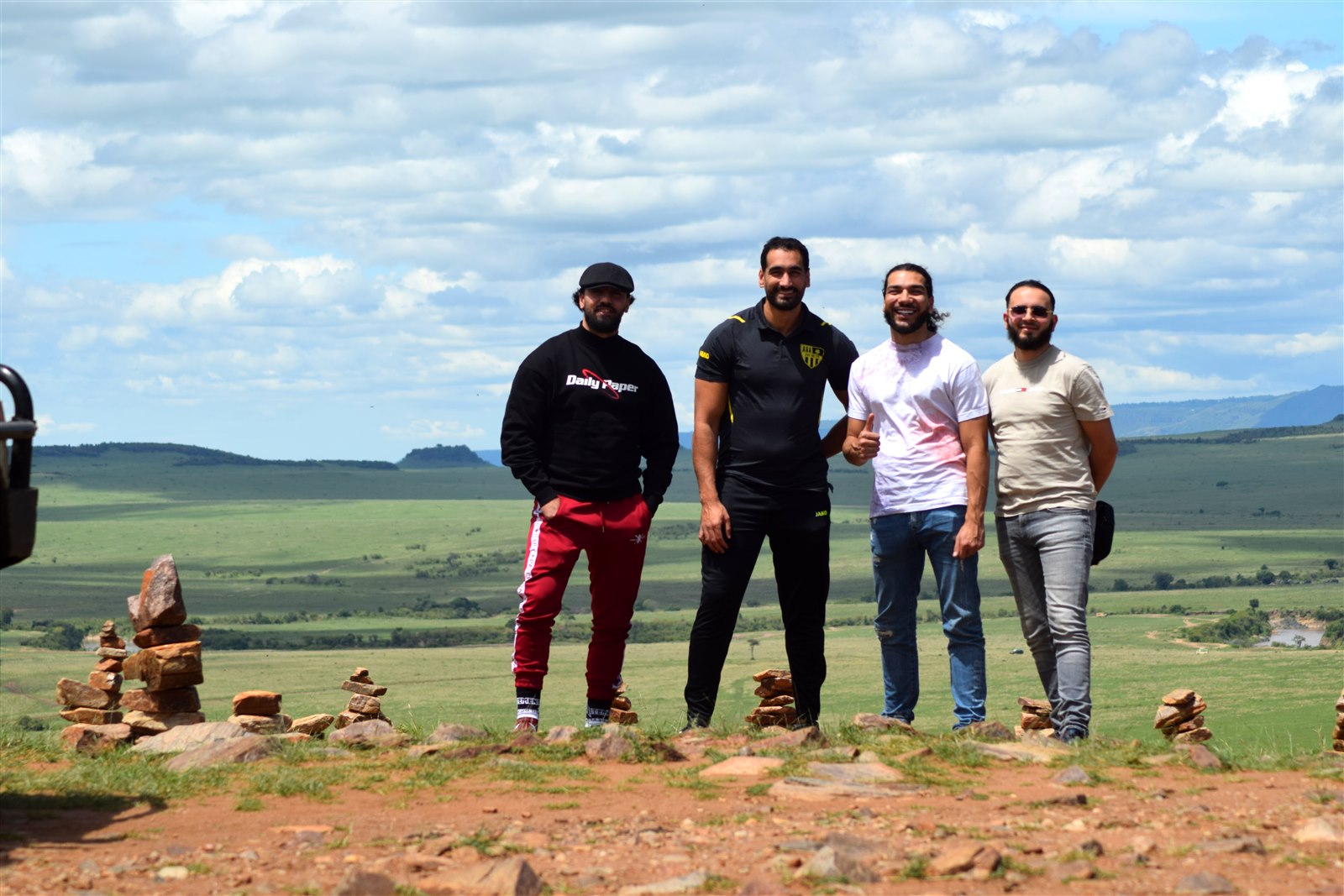
FIT vs group safaris is one of the first things a US tour operator needs to think through when briefing a Kenya and Tanzania DMC, because the two models need genuinely different things from a ground partner: different vehicles, different lodge contracting, and different communication during the trip itself.
This guide breaks down what to ask for and expect from your DMC depending on whether you are selling fully independent travel (FIT) or packaged group departures.
In This Guide
- FIT and Group Safaris Defined
- Vehicle and Guide Allocation
- Room Blocking and Lodge Contracting
- Itinerary Flexibility
- How Pricing Differs
- Mobile Camps vs Fixed Camps for Each Model
- Marketing Each Model to Clients
- Insurance and Liability Differences
- Which Model Suits Your Client Base
- Guide Allocation and Language Needs
- Special Requests: Dietary, Mobility and Celebrations
- Blending the Two Models on One Departure Calendar
- Choosing a DMC Based on Your Primary Model
- Frequently Asked Questions
FIT and Group Safaris Defined
An FIT, or fully independent traveler, safari is built around one booking: typically a couple, family or small group of friends traveling together with their own private vehicle and guide for the whole trip. A group safari instead combines multiple unrelated bookings, or a pre-sold departure, into one shared vehicle and fixed schedule. Our guide to private vs group safari covers this from the traveler's point of view; this article covers what it means for your DMC relationship.
There is also a hybrid worth knowing about: a series of fixed departure dates sold to independent bookers who are then grouped together only once enough seats are sold. This model behaves like FIT from a sales perspective, since each booking is taken individually, but behaves like a group safari operationally once the departure is confirmed, which means your DMC needs the planning discipline of both models at once.
Vehicle and Guide Allocation
FIT bookings need a DMC with enough fleet depth to dedicate one vehicle and guide to a single party for the trip's full duration, even on quieter dates when utilization is lower. Group departures need the opposite: a DMC that can reliably fill and run a shared vehicle on a fixed date, and that communicates clearly if a departure is close to being undersold. Ask any prospective DMC how they handle a group that falls short of the minimum traveler count on a confirmed date, since this is where many group programs run into trouble.
For larger groups, ask specifically how many travelers share each vehicle. A DMC that packs more seats into a vehicle than it comfortably holds, just to hit a lower headline price, is trading your clients' comfort and photography angles for margin, and this is a common source of disappointment on group safaris that otherwise run smoothly.
Room Blocking and Lodge Contracting
Group programs usually need a DMC that can hold a block of rooms, often 4 to 12, at the same property on the same nights, which requires a stronger existing relationship with that lodge than a one-off FIT booking does. FIT bookings have more freedom to mix and match properties, including smaller camps that cannot accommodate a group block at all. Our Kenya Tanzania lodge portfolio notes which properties in our own network suit group blocking well, such as Sopa Lodges' larger room counts, versus smaller, FIT-friendly camps like Zebra Plains Collection's Hillside tents.
Ask how far in advance a DMC typically needs to confirm a group room block relative to a single FIT room, since the lead times can differ by months rather than weeks, particularly for peak-season group departures at larger, popular properties.
Itinerary Flexibility
FIT safaris can change pace or route mid-trip far more easily, since only one party's preferences are in play; our 5 Day Arusha, Serengeti and Ngorongoro Crater Safari is a good example of a route built around one traveling party's flight times rather than a fixed shared schedule. Group departures run on a published, fixed itinerary precisely because every traveler on board needs to agree on the same schedule, which is why group safaris are usually announced well in advance with little room to customize individual days.
A DMC with real experience in both models will be upfront about which changes are genuinely possible mid-trip and which are not, rather than promising flexibility on a group departure that it cannot actually deliver once the vehicle and lodge bookings are locked in for the whole cohort.
How Pricing Differs
FIT quotes scale per person based on 2, 4 or 6 travelers sharing one vehicle, with the vehicle and crater or park vehicle fees divided among that specific group. Group departures price per seat on a shared vehicle across the whole cohort, which usually brings the per-person cost down for solo travelers and couples who would otherwise pay a higher FIT rate for a smaller private party.
Ask your DMC to show you both pricing structures side by side for the same route, so you can see exactly where the savings in a group model come from, and compare that against the loss of flexibility and privacy your client gives up in exchange.
Mobile Camps vs Fixed Camps for Each Model
Fixed lodges and permanent tented camps work well for both FIT and group travel, since rooms are allocated individually regardless of how the vehicle and guide are shared. Mobile or seasonal camps, which move to follow the migration, are more commonly used on FIT and smaller group itineraries, since repositioning a camp for a large group adds cost and complexity that most group programs are not priced to absorb. If a group program does want to include a mobile camp stay, confirm with your DMC well in advance that the camp's capacity actually matches your group size for the specific dates in question.
Marketing Each Model to Clients
FIT safaris sell well on privacy, flexibility and pacing tailored to the client, and marketing material for this model should emphasize the private vehicle and the ability to adjust the day's plan. Group departures sell well on price, a sense of shared adventure, and a fixed, easy-to-plan-around calendar, and marketing for this model does better when it leans into a clear departure date, a known total cost, and the social aspect of traveling with others. Asking your DMC for sample day-by-day itineraries in both formats is a good way to see how it naturally frames each model before you build your own marketing around its content.
Insurance and Liability Differences
Group departures carry a different risk profile than FIT bookings simply because more travelers are affected by any single operational failure, such as a vehicle breakdown or a missed connection. Ask your DMC how its own liability and vehicle insurance scales with group size, and whether it maintains a higher standard of backup vehicle availability specifically for group dates. For your own agency, check whether your errors and omissions policy treats group and FIT bookings differently, since some do.
Which Model Suits Your Client Base
If most of your bookings are couples, families or small groups of friends traveling together, FIT is almost always the better fit, since it gives your clients maximum flexibility and a private experience. If you are building a packaged program around a fixed departure calendar, aimed at solo travelers or loyalty club members, a group model lets you hit a lower headline price point. Many US operators run both in parallel, using FIT for custom, higher-margin bookings and group departures for volume and marketing reach.
Guide Allocation and Language Needs
FIT bookings let you match a driver-guide to a client's specific interests and language needs well in advance, which matters for specialist requests such as a birding-focused guide or a guide fluent in a language other than English. Group departures usually assign a single lead guide for the whole cohort, which works well when the group shares similar interests but can disappoint a traveler with a niche request that the rest of the group does not share. Ask your DMC how far in advance it can confirm a specific guide for a specialist FIT request, since the best guides in each category are often booked well ahead during peak season.
Special Requests: Dietary, Mobility and Celebrations
Dietary requirements, mobility needs and celebration requests such as a honeymoon or an anniversary are usually easier to accommodate on FIT bookings, since lodges and camps can tailor the room, meals and any small touches to one specific party. Group departures can still handle most dietary requirements, since lodges are generally well practiced at this, but mobility accommodations are more constrained by the group's shared vehicle and schedule. Flag any special request to your DMC as early as possible regardless of model, since lodges need lead time to prepare appropriately, particularly for less common dietary needs in more remote camps.
Blending the Two Models on One Departure Calendar
Some US operators successfully run a hybrid program: a published group departure calendar for marketing and price-anchoring, alongside a standing offer to run the same route as a private FIT booking at a higher per-person rate for clients who want privacy. This lets one itinerary serve two different client segments without maintaining two entirely separate product lines. Ask your DMC whether it can price and run both versions of the same route consistently, since this is a reasonable thing to request from an established partner with enough fleet depth to support both models.
A practical way to test this hybrid approach is to launch it with a single route first, watch how bookings split between the FIT and group options over one or two seasons, and then decide whether to expand the model across more of your itinerary catalog. This avoids committing to a larger dual-pricing structure before you know how your specific client base actually responds to the choice.
Choosing a DMC Based on Your Primary Model
If your business is built primarily around FIT bookings, prioritize a DMC's fleet depth and flexibility during vetting over its group-handling track record. If group departures are your main product, prioritize references from other operators' group programs specifically, and ask pointed questions about how the DMC has handled an undersold departure in the past, since this is the scenario that most reveals a group-focused DMC's operational discipline.
Operators running both models at meaningful volume should weight both sets of questions roughly equally, and are often best served by a DMC that can demonstrate a genuinely mixed client base of its own, rather than one that is clearly strongest in only one model and treats the other as a secondary service.
Frequently Asked Questions
Can a DMC run both FIT and group safaris at once? Yes, most established Kenya and Tanzania DMCs run both models simultaneously, often from the same vehicle fleet scheduled across different dates.
Is FIT always more expensive than group travel? Per person, usually yes for smaller parties, since the vehicle, guide and any crater vehicle fee are divided among fewer travelers; larger FIT groups of 6 can approach group-style per-person costs.
What minimum numbers do group safaris typically need? This varies by DMC and route, but 4 to 6 travelers is a common minimum to make a shared-vehicle group departure financially viable.
Do group safaris still allow private rooms? Yes, travelers on a group departure usually still have their own rooms at each lodge; it is the vehicle, guide and daily schedule that are shared, not the accommodation.
Can a FIT booking be upgraded to a private guide for part of a group trip? Occasionally, for an additional fee, though this depends on vehicle availability on the specific dates and is best requested as early as possible.
How do cancellations work differently for each model? Group departures often have stricter, earlier cancellation deadlines because room and vehicle blocks are committed further in advance; always confirm the specific policy for each booking type in writing.
Can a solo traveler join a group departure to save money? Yes, this is one of the main reasons solo travelers choose group safaris, since a solo FIT booking otherwise absorbs the full vehicle cost alone.
Do FIT and group safaris use the same lodges? Often yes, since most lodges accept both booking types; the difference is in how rooms are blocked and how the vehicle and guide are allocated, not which properties are available.
How much notice does a DMC need to convert a FIT quote into a group quote, or vice versa? This depends on how far ahead the request comes; converting early, before rooms and vehicles are confirmed, is straightforward, while converting close to departure can be constrained by what is already booked.
Is tipping different between FIT and group safaris? Tipping guidance is broadly similar per person in both models, though group departures sometimes pool tips for the shared guide rather than each party tipping separately.
Which model is easier to sell to first-time safari clients? FIT is often easier to sell on its merits, since first-timers tend to value flexibility and privacy highly, though a well-priced group departure can also appeal strongly to budget-conscious first-timers.
Do mobile network and connectivity differ between the two models? Not meaningfully; connectivity depends on the specific park and camp rather than on whether the booking is FIT or group.
Plan Your Next FIT or Group Program
We run both FIT and group departures across Kenya and Tanzania with our own fleet. See our 9 Day Masai Mara, Serengeti and Ngorongoro Crater Safari as an example FIT route, or contact us to discuss a group program for your client base.