

Choosing between two Kenyas favourites-Masai Mara and Amboseli
Most first-time visitors to Kenya end up choosing between these two, and the brochures rarely help. Both promise the Big Five. Both show you a photograph of a sunset. Both look, from a distance, like the same holiday.
They are not the same holiday at all.
The Mara is a grassland reserve built around predators and sheer numbers. Amboseli is a dry lake bed built around elephants and a mountain. Once you understand that, the choice usually makes itself.
The landscape
The Maasai Mara is 1,510 square kilometres of rolling savannah, broken by the Mara and Talek rivers and the Oloololo Escarpment along its western edge. Grass runs to the horizon in every direction, and the sheer openness of it is what most visitors remember.
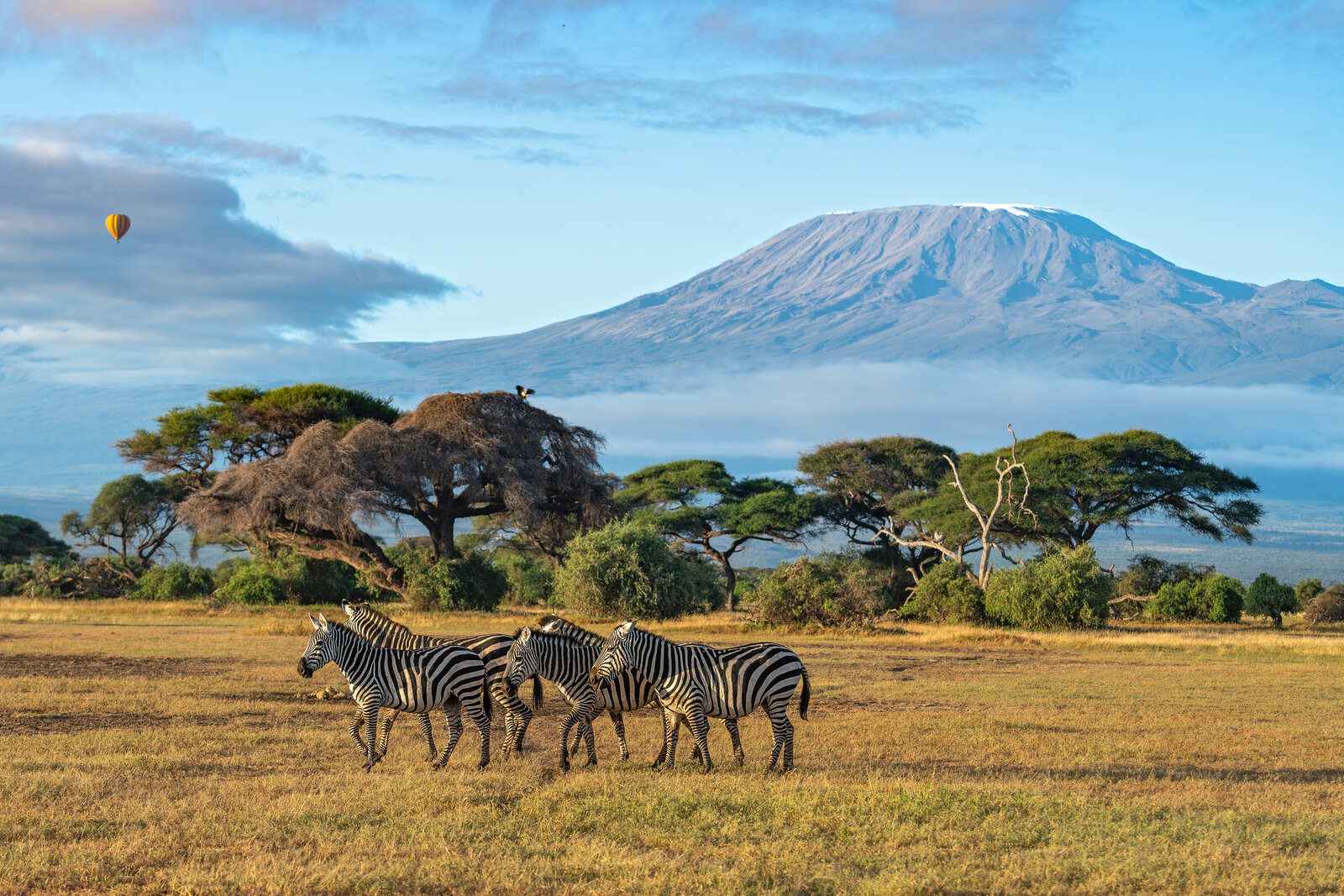
Amboseli covers only about 392 square kilometres and feels entirely different. Much of it is a dry, dusty lake bed, cut through by green swamps fed by melt water filtering down from Kilimanjaro. The ground is pale, the dust hangs in the afternoon light, and the mountain fills the southern sky.
One is a sea of grass. The other is a desert with a mountain behind it.
The wildlife
Choose the Mara for predators. It holds one of the densest lion populations in Africa, and most guests find lion on the first or second drive. Cheetah hunt in the open here, leopard rest in the riverine figs, and the reserve supports well over 450 bird species.
Choose Amboseli for elephants. The park is famous for its big tuskers, some carrying ivory heavier than anything left elsewhere in Kenya, and the herds are unusually relaxed around vehicles after decades of research presence. You will also see buffalo, hippo, giraffe, zebra and wildebeest in good numbers.
Amboseli has fewer predators and, critically, no rhino. If the Big Five checklist matters to your travellers, say so before they book.
The photograph they came for
In the Mara it is the migration crossing, or a lion on a mound against open sky.
In Amboseli it is an elephant herd with Kilimanjaro behind. Nowhere else on earth gives you that frame, and it is arguably the single most recognisable safari image in existence.
The catch is that the mountain hides. Cloud builds through the day and Kilimanjaro often shows only for an hour after dawn and again before sunset. Guests expecting it all day are regularly disappointed.
Timing
The Mara's headline act is the Great Wildebeest Migration, which typically arrives from July and stays into October. River crossings happen in that window and nowhere else in the year. Outside it, the Mara is still excellent, just without the spectacle.
Amboseli runs more evenly. The dry months, June to October and January to February, concentrate game around the swamps and give the clearest mountain views. The long rains in April and May turn the pans to mud and the mountain disappears behind cloud for days.
If your clients are travelling in August and want crossings, the Mara is not optional. If they are travelling in February, Amboseli arguably gives better value.
Getting there
Amboseli is closer and easier. Roughly 240 kilometres from Nairobi, about four hours on tarmac almost the whole way.
The Mara is about 280 kilometres but takes five to six hours, with the last stretch on rough murram that tests both vehicle and patience. Flights from Wilson Airport take 45 minutes and many guests consider the cost well spent.
What it costs
Park fees tell much of the story. Non-residents pay around USD 200 per adult per day for the Maasai Mara in peak season and USD 100 off-peak. Amboseli sits near USD 90 per adult per day year round.
Over three nights for a family of four, that difference alone can exceed a thousand dollars. Accommodation follows the same pattern, with Mara camps generally pricing above their Amboseli equivalents.
Fees change, so confirm current rates before committing.
So which one?
Go to the Maasai Mara if this is a once-in-a-lifetime trip, if the migration is the point, if your travellers want big cats, or if they have a week and want the full spectacle.
Go to Amboseli if the budget is tighter, if time is short, if elephants matter more than lions, or if they want that mountain photograph above all else.
Or do both
Here is what most experienced operators actually recommend: two nights in Amboseli, three in the Mara, with a night at Lake Naivasha in between to break the drive.
It gives your travellers two completely different landscapes rather than two versions of the same one, and it fits comfortably into seven days. The variety is what people talk about afterwards.
Contact Yulle Adventures for a tailored quotation and we will build the combination around your dates, your budget and the animals you most want to see.