

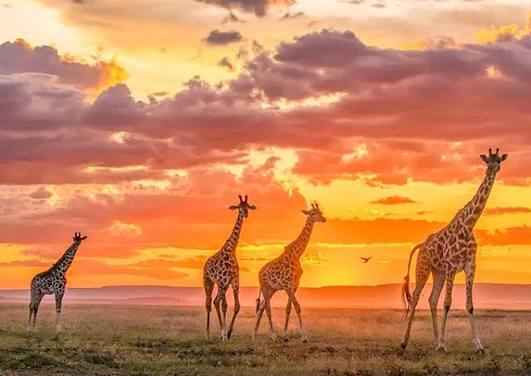
Best Kenya Safari for First-Time Visitors
Where to go, when to travel and what to expect on your first safari in Kenya
There is a particular moment on a first safari that people rarely forget. The vehicle rolls to a stop, the engine falls silent, and a lioness lifts her head from the grass fifty metres away. Everything you have seen on a screen suddenly becomes real. Kenya is one of the best places in the world to have that moment, and it is also one of the easiest countries in Africa to do it in.
Kenya is where the modern safari industry took shape, and it shows. Distances between top parks are short, guiding standards are high, accommodation runs from simple tented camps to world-class lodges, and Big Five sightings are reliable. If you are planning your first trip, this guide explains which parks to choose, when to go, what it costs and how to avoid the common beginner mistakes.
Why Kenya Suits First-Time Safari-Goers
Kenya combines wildlife density with convenience. Compared with many safari countries, transfers are shorter, so more of your holiday is spent watching animals rather than sitting in a vehicle. Both the Maasai Mara and Amboseli are about 45 minutes from Nairobi by light aircraft, and the variety on offer is wide: open savanna, a Rift Valley soda lake, elephant country under Africa's highest mountain, and the semi-arid north.
The classic first-timer route is also compact. Nairobi, Amboseli, Lake Nakuru and the Maasai Mara fit together neatly in about a week, and each stop changes the scenery and the wildlife, which keeps the trip from feeling repetitive.
The Best Parks for a First Safari
1. Maasai Mara National Reserve: the safe first choice
If you can only visit one place, make it the Mara. It is the most famous reserve in Kenya for good reason: big cat sightings are frequent, the landscapes are the classic rolling golden plains, and wildlife appears quickly, which matters when you are new to safaris and still learning to spot animals. Hot air balloon flights at sunrise add an unforgettable perspective.
The headline event is the Great Wildebeest Migration. Herds cross the Mara River into the reserve from roughly July to September, producing some of the most dramatic wildlife scenes on Earth. Even outside the crossings, the Mara delivers lions, elephants, giraffes, hippos, hyenas and enormous herds of plains game.
2. Amboseli National Park: elephants beneath Kilimanjaro
Amboseli is the best place in Kenya for elephants and for photography. Large herds walk across open plains with Mount Kilimanjaro rising behind them, a view that is hard to beat on a clear morning. It is a gentle, easy introduction to safari life, and two or three days gives you enough time to experience it properly. June to September is the best window, although July and August can feel busy.
3. Lake Nakuru National Park: rhinos and birdlife
Lake Nakuru is one of the best places in East Africa to see rhinos, and its compact size makes wildlife easy to find. It is a good year-round stop and pairs well with either the Mara or Amboseli, breaking up a longer route through the Rift Valley.
4. Nairobi National Park: a safari at the city's edge
Only about fifteen minutes from the city centre, Nairobi National Park is ideal if you have a long layover or a single free morning. You can see giraffes, zebras, buffalo and lions with skyscrapers in the background. It will not replace a multi-day safari, but it is a memorable way to start or finish your trip.
What about Tsavo and Samburu?
Tsavo East and West, Kenya's largest protected area, are known for red-dust elephants and far fewer vehicles. Samburu in the north offers rare dry-country species. Both are superb, but they are usually better as a second trip, once you have the classic circuit behind you and want something quieter.
Parks at a Glance
| Park | Best for | Highlights | Ideal stay |
| Maasai Mara | Big cats, migration, classic safari | Lions, leopards, cheetahs, wildebeest river crossings, balloon rides | 3 nights |
| Amboseli | Elephants and photography | Big herds with Mount Kilimanjaro behind them | 2 nights |
| Lake Nakuru | Rhinos and birdlife | Rhino sanctuary, flamingos, Rift Valley scenery | 1 night |
| Nairobi National Park | Short on time | Wildlife with the city skyline in view, minutes from town | Half day |
Best Time to Visit
- July to September: Peak season. The migration reaches the Mara, skies are clearer and the ground is drier, which makes game viewing easier. It is also the busiest and most expensive period.
- October to December: Fewer crowds and good wildlife viewing, with short rains possible later in the period.
- January to February: Warm, dry and excellent for wildlife, with lower Mara park fees than the second half of the year.
- March to May: The long rains. Expect lush scenery and lower prices, but some roads and camps are harder to use. Samburu is best avoided in April and May.
Money-saving tip: The Mara's non-resident park fee is USD 200 per adult per day from July to December 2026, and drops to USD 100 per day from January to June. If you are flexible, travelling in the first half of the year can cut your costs noticeably.
How Much Does a First Kenya Safari Cost?
Most safari quotes bundle accommodation, meals, game drives, a guide and park fees into a single daily price, so it is easiest to budget per person per day. For the Maasai Mara in 2026, typical all-in costs are:
- Budget camping safari: about USD 250 to 350 per person per day.
- Midrange lodge or tented camp: about USD 350 to 600 per person per day.
- Luxury camp: USD 700 to 1,500 or more per person per day.
Park fees vary. Beyond the Mara, non-resident adult fees at parks such as Amboseli and Lake Nakuru are around USD 90 per day, and Nairobi National Park is about USD 80. East African citizens and residents pay considerably less. Fees change, so always ask your operator to list park fees as a separate line in writing, in the correct category for your passport and travel dates.
If you want to skip the long road transfer, fly-in packages combine return flights from Nairobi with park fees, full-board accommodation and game drives. A three-day fly-in Mara safari starts at roughly USD 1,850 per person.
A Simple 7-Day Itinerary for First-Timers
- Day 1: Arrive in Nairobi. Optional morning or afternoon game drive in Nairobi National Park.
- Days 2 to 3: Amboseli for elephants and Kilimanjaro views.
- Day 4: Travel to Lake Nakuru for rhinos, flamingos and Rift Valley views.
- Days 5 to 7: Maasai Mara for big cats, plains game and, in season, the migration. Return to Nairobi on the final day.
If your time is limited, a three-to-four-day trip focused solely on the Maasai Mara is still a very rewarding first safari.
Practical Tips Before You Go
- Spend at least three nights in the Mara. One rushed night rarely does the reserve justice.
- Choose a good guide. A skilled, knowledgeable guide improves a safari more than any luxury amenity.
- Pack neutral colours. Khaki, olive and beige are best. Bring layers, because early mornings are cool even when afternoons are hot.
- Bring binoculars and a zoom lens. They help you appreciate distant sightings and small details.
- Do not overpack your itinerary. Fewer parks with longer stays beat a rushed tour of many.
- Check health and entry requirements. Speak to a doctor about vaccinations and malaria prevention, and confirm current visa or travel authorisation rules before you book.
Final Thoughts
For most first-time visitors, the best Kenya safari is a simple one: the Maasai Mara at its heart, with Amboseli or Lake Nakuru added for contrast if time allows. Choose a reputable operator, travel in the right season for your budget and give yourself enough nights to slow down and look properly. Kenya will do the rest.
Ready to start planning? Decide on your travel month first, then your budget, and ask for itineraries built around two or three destinations rather than five. That one decision shapes almost everything else about your trip.
Contact Yulle Adventures for a tailored quotation and we will build your Kenya safari around the places you most wanted to visit
Note: Park fees and seasonal rates are accurate for 2026 at the time of writing and can change. Confirm current prices with your safari operator before booking.