

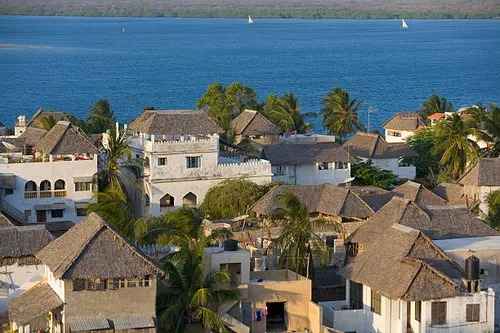
The Island Where Donkeys Rule and Time Moves at Dhow Speed
Picture a town where nobody is in a hurry. There are no cars and no traffic jams. Instead, you hear the clip-clop of donkeys in narrow stone alleys, the call to prayer drifting over rooftops, and the creak of wooden dhows heading out to sea at sunset. This is Lamu, on Kenya's northern coast, and it is one of the few places in East Africa where life still moves at the pace of the tide.
Where is Lamu Lamu is a small town on Lamu Island, part of the Lamu Archipelago off Kenya's northern coast, and it is the headquarters of Lamu County. The road from Mombasa that ends at Mokowe Jetty, where you cross a sea channel by boat to reach the island. Only about 25,000 people live in the town, so everything is within walking distance, and the journey itself sets the tone for what follows.
Kenya’s oldest living town.
Lamu is believed to have been founded in 1370, which makes it Kenya's oldest continually inhabited town and one of the original Swahili settlements on the East African coast. It appears in writing as early as 1441, and over the centuries it grew rich on trade across the Indian Ocean. Its story is full of outside powers. The Portuguese forced Lamu to pay tribute in 1506, and the town later rebelled and turned to Oman for help. From the late 17th to the early 19th century, Lamu was an Omani protectorate, and this was its golden age. Ruled by a council of elders, it became a center of poetry, arts, crafts and trade, and many of its finest buildings date from this time. The poet Mwana Kupona wrote one of the best-known works of early Swahili literature here in 1858.Later, the Germans and the British arrived. A German post office opened in Lamu in 1888, the first on the East African coast, and it is now a museum.
A World Heritage Site In 2001, UNESCO named Lamu Old Town a World Heritage Site, describing it as the oldest and best-preserved Swahili settlement in East Africa. Its architecture shows centuries of influence from Europe, Arabia and India, built with traditional Swahili techniques. Among the landmarks is the seafront Lamu Fort, completed in the early 1820s. Lamu also has 23 mosques, and most of its people are Muslim, so faith and community shape daily life. It is a living town, not a museum, where families still trade, pray and gather in the same streets their ancestors walked.
The Island Without Cars
This is the detail most travellers remember. The island has no motorised vehicles, so heavy work is done by donkeys, and there are roughly 3,000 of them. They carry building stone, water, shopping and luggage through lanes too narrow for anything else. A local campaigner once put it simply: all this town has been built by donkeys.The Lamu Donkey Sanctuary, which opened in 1987, treats the island's donkeys free of charge, and you can visit it during your stay. Everyone else gets around on foot or by dhow, the traditional wooden sailing boat that remains central to island life.
Life on the Water
A sunset dhow trip is the classic Lamu experience. You sail out as the sun drops behind the horizon, with the sail glowing orange and the old town fading into silhouette. You can also sail across the channel from Shela Beach to Manda Island, where the ruins of Takwa, a 16th-century Swahili settlement, sit quietly in the forest. Shela itself is a long, calm stretch of sand a short distance from town, ideal for a slow afternoon.
Festivals Worth Planning Around Lamu is at its liveliest during its festivals. The Maulidi Festival celebrates the birth of the Prophet Muhammad, drawing pilgrims from several African countries for singing, donkey races, dhow sailing and swimming competitions. Its dates follow the Islamic calendar, so check before you plan. The Lamu Cultural Festival, a colorful carnival usually held in late August, features traditional dancing, crafts and dhow races. There is even a Donkey Awards day, held around March or April, with prizes for the finest donkeys on the island.
What to Eat
Swahili food is a highlight. Coconut, mango and fresh seafood such as crab and lobster feature widely, and the town's market and waterfront restaurants are good places to try them.
Planning Your Trip
Most visitors fly to Manda Airport, about 450 kilometers by air from Nairobi, which is served by several domestic airlines with daily flights to Nairobi, Mombasa and Malindi. A short boat ride then takes you across to Lamu Town.
| Planning | What to know |
| Climate | Hot all year, with daily highs of roughly 27 to 32 °C |
| Driest months | January to March, with very little rain |
| Wettest months | May is the wettest, with April and June also rainy |
| How long to stay | 3 to 5 nights |
| Dress code | Dress modestly in town, with more than shorts or bikinis, out of respect for the Muslim community |
| Who it suits | Couples, history lovers, photographers and anyone wanting a slow, cultural beach escape |
Lamu and safari: A perfect pair After days of early starts and bumpy game drives, Lamu is the perfect place to slow down. It offers something no national park can: a living Swahili town where history is part of daily life, and where the best way to end the day is on a dhow at sunset. Ready for a safari with a slower chapter? Contact us at Yulle Adventures to add Lamu to your Kenyan itinerary or to plan a standalone cultural beach escape.