

Arabuko Sokoke: Last Great Coastal Forest in Kenya
A Yulle Adventures guide to the green heart of the Kenyan coast
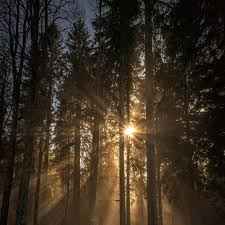
Drive north from Mombasa along the coast and, somewhere past the creeks and the palm-fringed beach towns, the landscape begins to change. The air cools a few degrees. The noise of the road fades behind a wall of green. You have arrived at Arabuko Sokoke, the largest surviving patch of coastal forest in East Africa and one of the most remarkable places in Kenya that many visitors never see.
Most people come to this stretch of coast for the white sand and warm sea, and who could blame them? But just minutes inland from Watamu and Malindi lies a forest packed with creatures found almost nowhere else on Earth: a long-nosed mammal with a golden rump, a shy little antelope, a pocket-sized owl, and butterflies in more shades than you can count. For travellers who love quiet trails, birdsong, and the thrill of spotting something rare, it is an adventure waiting just off the tourist map.
In this article, we take you inside Arabuko Sokoke: what it is, what lives there, who protects it, and how to explore it responsibly. Whether you are a keen birder, a family looking for something different from the beach, or a local who has never stepped under its canopy, we hope you will finish reading ready to pack a bag and go.
What Is Arabuko Sokoke?
Arabuko Sokoke lies in Kilifi County on the Kenyan coast, roughly 110 kilometres north of Mombasa and close to the town of Malindi. Estimates of its size vary depending on how the boundaries are counted, but it covers somewhere around 400 square kilometres. That makes it the biggest remaining fragment of the coastal forests that once ran in a nearly unbroken belt from Somalia down to Mozambique.
Most of those ancient forests have vanished, cleared for farms, firewood, timber, and towns. What is left is a scattering of small islands of green, and Arabuko Sokoke is by far the largest of them. That is why conservationists treat it as a global priority. It belongs to the East African coastal forest biodiversity hotspot, BirdLife International has ranked it as the second most important forest for bird conservation on mainland Africa, and Kenya has placed it on its tentative list for World Heritage status.
The forest has been protected for a long time. It was first set aside as a Crown Forest in 1943, and a small portion became Arabuko Sokoke National Park in 1990. Today the reserve is managed jointly by the Kenya Forest Service and the Kenya Wildlife Service, working alongside the National Museums of Kenya, research institutions, and community forest associations. Its name is said to come from the Waata people and to mean something like “forest of the thin elephant”, a nod to the elephants that have wandered here for generations.
Three Forests in One
One of the great surprises of Arabuko Sokoke is how much it changes as you move through it. Rather than a single uniform woodland, it is made up of three main types of vegetation, and each has its own mood, its own light, and its own residents.
Mixed forest. In the east, on pale, sandy soils, you find a tangle of many tree species growing close together. It is shady, humid, and full of sound, and it is the kind of place where birds hide high in the canopy and you hear them long before you see them.
Brachystegia woodland. Through the central part of the forest, the trees thin out and the woodland feels lighter and more open. Sunlight reaches the ground, the walking is often easier, and the whole place feels airier than the dense forest around it.
Cynometra forest and thicket. In the west and north-west, the vegetation becomes darker and denser, a thick green maze that rewards patient walkers. This is the hardest part of the forest to see into, and the hardest to leave without wondering what was watching you from the shadows.
Different rare animals favour different habitats, which is one reason serious naturalists try to explore more than one corner of the forest rather than staying on a single trail.
Small Wonders: The Wildlife
Ask a wildlife lover what makes Arabuko Sokoke special and the answer is rarely the big animals. It is the small, strange, and secretive ones. The golden-rumped elephant shrew is the forest’s unofficial mascot: a quick, long-nosed little mammal with a flash of gold at its back end, found in only a handful of places in the world. Spotting one as it darts across the leaf litter is the sort of moment people remember for years.
Then there is Ader’s duiker, a small forest antelope that is also found on the island of Zanzibar, and the Sokoke bushy-tailed mongoose, another elusive resident. Both are very hard to see, and even experienced guides count a sighting as a lucky day. The forest is also home to the suni, a tiny antelope, as well as civets, baboons, and vervet monkeys, and it is recognised as an important centre of amphibian diversity, with frogs calling loudly after rain.
And yes, there are elephants. Local reports put the number at around 200, and they move quietly through the trees despite their size. A long, solar-powered fence has been built around the forest to reduce conflict between elephants and the farms along its edges, which has helped both people and animals. There have even been reports in recent years of a leopard, probably wandering in from the Tsavo region, a reminder that this forest is connected to a much larger wild landscape.
A word of advice: wildlife here is shy, and forest animals do not behave like the lions and zebras of the savannah. You are unlikely to see everything in a single walk. Move slowly, stay quiet, look at the ground as well as the trees, and let the forest come to you.
A Birdwatcher’s Paradise
If wildlife is the forest’s quiet charm, birds are its headline act. More than 230 bird species have been recorded here, and some counts go considerably higher. Six are globally threatened, which is a remarkable number for a single forest, and they draw birdwatchers from all over the world.
Clarke’s weaver is the prize. This small yellow-and-black bird lives nowhere else on Earth, so every sighting is truly a once-in-the-world experience. Other specialists include the Sokoke scops owl, the Sokoke pipit, the Amani sunbird, the East Coast akalat, and the spotted ground thrush. Several of these have extremely limited ranges, found in only a handful of places in East Africa, so seeing them here is a genuine achievement for any bird lover.
Just beyond the forest edge, Mida Creek adds another layer. This sheltered, mangrove-fringed inlet is a gathering place for shorebirds, including wintering species such as the crab plover and the Terek sandpiper. Combine a morning in the forest with an afternoon at the creek and you can build a list that would take weeks to match elsewhere.
For first-time birders, the best advice is simple: go early, go slowly, and go with a local guide. The forest guides know the calls, the favourite perches, and the quiet corners where rare birds tend to appear. Many of them have spent decades in these trees, and their eyes and ears are far better than any app.
Butterflies and the People Who Protect Them
Arabuko Sokoke is also a forest of butterflies. Around 263 species have been recorded here, out of roughly 870 in the whole of Kenya, and in the rainy season the glades seem to flutter with colour. But the butterflies are more than a pretty sight. They are at the heart of one of Kenya’s best-known community conservation stories.
The Kipepeo Project, whose name means “butterfly” in Swahili, began in 1993 with a simple idea: if local people could earn a living from the forest without cutting it down, the forest would be worth more standing than cleared. Farmers living near the forest join the project, collect butterflies under a permit, and raise them in cages. The pupae are then sold through the project’s centre at Gede and exported to butterfly houses abroad. The project is run with the National Museums of Kenya, and it has given many households an income that depends on keeping the forest healthy.
It is not without challenges. Production rises and falls with the seasons, and Kenyan farmers compete with large producers in other countries. But as a model, it has been closely watched around the world, and it shows something important: conservation works best when the people living beside a forest have a stake in its future. Visitors can see the butterflies up close at the Kipepeo butterfly house, and visiting helps support the people behind the project.
A Forest with a Human Story
Arabuko Sokoke is not just a natural place. It is a cultural one. The forest has long been tied to the Mijikenda communities of the coast and to the Waata, who are regarded as its traditional protectors. Within and around the forest are kaya sites, sacred groves where elders gather and rituals are held, and visitors can learn about this heritage at the forest’s culture centre and shrine.
A few minutes away stand the Gede Ruins, the remains of a Swahili town that thrived for centuries before being abandoned, now half swallowed by trees. Visiting both on the same day gives a rare picture of the coast: ancient stone streets and living forest, each telling part of the story of how people and nature have shared this land for a very long time.
Threats, and Reasons for Hope
It would be dishonest to write about Arabuko Sokoke without saying that it is under pressure. The forest has faced illegal logging, the harvesting of firewood, the poaching of valuable trees, illegal hunting, and the steady push of farms and settlements at its edges. Because it is now an island of forest in a landscape of farmland, its edges are especially vulnerable, and a growing population needs land, fuel, and food.
Yet there is real reason for hope. Forest guards patrol the reserve. The elephant fence has eased conflict. Community forest associations give local people a voice in how the forest is managed. Projects like Kipepeo show that protection and livelihoods do not have to be enemies. And every visitor who pays an entry fee, hires a local guide, or buys from a local business helps prove that a living forest is worth more than a cleared one.
Planning Your Visit
The good news is that Arabuko Sokoke is easy to reach and easy to combine with a coastal holiday.
Getting there. The main entrance is at the Gede Forest Station, a short drive from both Malindi and Watamu, and easy to reach by car, tuk-tuk, or a taxi arranged through your hotel. Jilore and Sokoke forest stations offer alternative ways in for those who want a quieter route.
Fees and hours. The ticket office at Gede has generally opened early in the morning and closed in the evening, and fees differ for citizens, residents, and non-residents. Prices and payment methods can change, so confirm the details with the Kenya Forest Service or your host before you travel.
What to do. The classic option is a guided nature walk, with a nature trail starting at the main Gede gate. Other choices include birdwatching, guided cycling with forest guards, and camping for those who want to hear the forest at night. The Nyari viewpoint is a highlight, offering a view over Mida Creek and out toward the Indian Ocean. Add the Kipepeo butterfly house and the culture centre and you have a full day.
Best time to go. Early morning is the best hour in any season, when the air is cool and birds and animals are most active. The dry months make walking easier, while the rainy periods turn the forest lush and bring out the butterflies and frogs. The coast has long rains from about April to June and shorter rains toward the end of the year, so check the weather and avoid walking in the heaviest downpours.
What to bring. Closed, comfortable shoes, light long-sleeved clothing, a hat, insect repellent, and plenty of drinking water are the essentials. Binoculars and a camera make the trip much richer, and a small daypack keeps your hands free.
A sample day. Arrive at the Gede gate soon after it opens and join a guide for a slow morning walk, keeping your eyes open for birds and perhaps an elephant shrew. Break for lunch in Gede or Watamu, then spend the afternoon at the Kipepeo butterfly house and among the Gede Ruins. If you still have energy, finish at the Nyari viewpoint for the sweeping view over Mida Creek and the ocean. It is an unhurried day, with something new around every corner, and it will almost certainly leave you wanting a second one. If you are a keen birder or photographer, plan for two days, because the forest rewards a return visit.
Hire a guide. This is the single best tip. The trails can be confusing, the markers can be far apart, and it is surprisingly easy to lose your bearings in dense forest. A guide keeps you safe, finds the wildlife you would walk right past, and shares stories no guidebook can.
Visiting Responsibly
A forest this special deserves careful visitors. Stay on the marked trails, keep your voice low, and carry out everything you carry in. Never feed or chase animals, and keep a respectful distance from elephants, following your guide’s instructions at all times. Ask permission before photographing people, treat kaya and other cultural sites with respect, and spend your money locally on guides, food, and crafts so the benefits stay close to the forest.
Why Arabuko Sokoke Belongs on Your Itinerary
There are bigger parks in Kenya and louder ones. There are places with lions on every ridge and zebras in every plain. But there is nowhere quite like Arabuko Sokoke: an old forest on the edge of the sea, holding species that exist nowhere else, protected by a mix of rangers, scientists, farmers, and elders who have decided it is worth keeping.
At Yulle Adventures, we believe the best journeys are the ones that slow you down and show you something you did not know was there. This forest does exactly that. Spend a morning on its trails and you will leave with a different picture of the coast: not only sand and surf, but shade, birdsong, and a living green world that has survived against the odds.
Have you walked in Arabuko Sokoke, or is it on your list? Tell us in the comments what you saw, or what you hope to see, and share this article with a friend who loves wild places. We would love to hear your stories.